Short answer
The best bathroom floor tile ideas start with a tile that is safe when wet: porcelain with a matte or textured finish that the maker rates for wet floors. From there, the popular looks are large marble-look tile, hexagon and mosaic floors, herringbone, wood-look plank, checkerboard and patterned encaustic-look tile. Large tile needs a flatter floor, and patterns need more cuts and more tile. Plan the grout colour, the shower floor and the transition at the door at the same time as the look.
The bathroom floor is the one surface everyone in the house walks on barefoot, wet and in a hurry. That makes choosing bathroom floor tile different from choosing wall tile. It has to look good, but it also has to grip, wear well, sit flat and meet the shower and the hallway cleanly. The bathroom floor tile ideas below are the ones we see chosen most, each with a practical note on what it takes to install.
For ideas aimed at compact rooms and powder rooms, see small bathroom tile ideas. This guide covers bathroom floors of any size.
What the best tile for a bathroom floor has to do
Before the look, three things decide whether a tile suits a bathroom floor. The first is the material. Porcelain is the usual choice: it is dense, absorbs very little water and stands up to wear. Glazed ceramic floor tile works in lighter-use bathrooms if the maker rates it for floors. Natural stone looks beautiful but needs sealing and gentler cleaners. Our guide to how to choose tile covers materials, sizes and finishes in more depth.
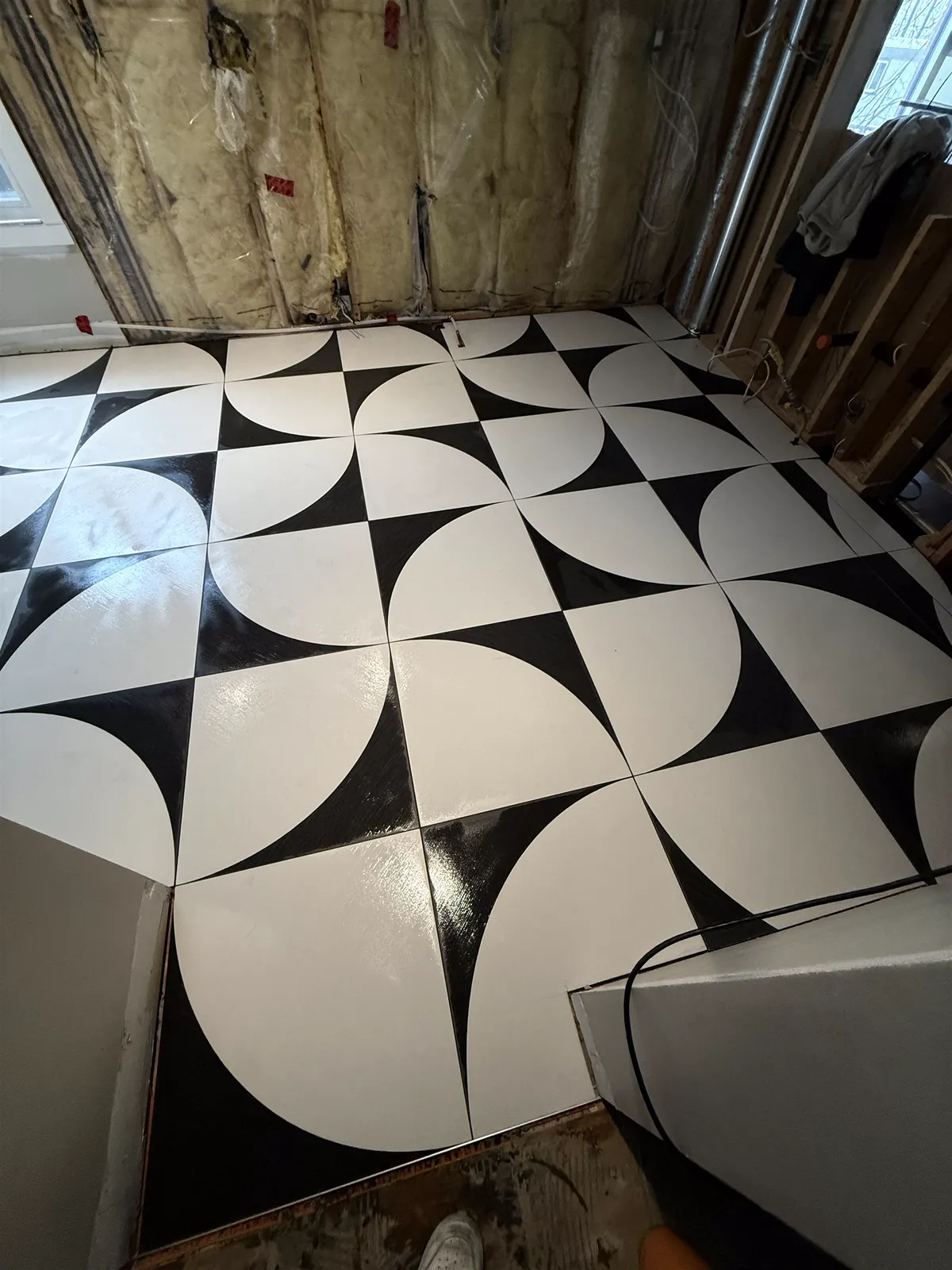
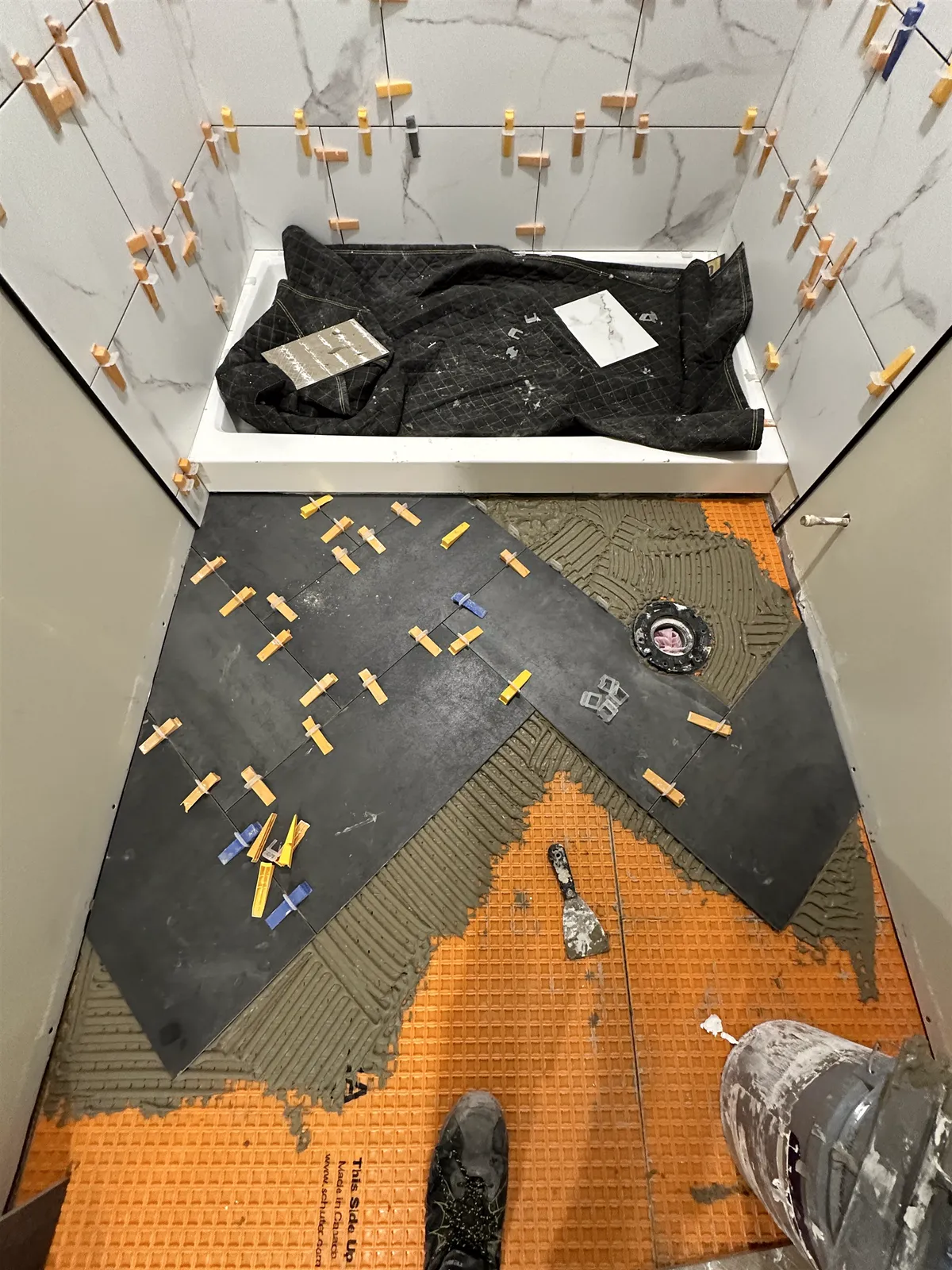
The second is grip, covered in the next section. The third is what is underneath. Tile is rigid, so the floor below has to be stiff and flat. Over a wood subfloor, an uncoupling membrane such as Schluter-DITRA is common, as in the photo above, and with its seams sealed it also waterproofs the bathroom floor. A floor that bounces or dips will crack or lip the nicest tile, whatever the pattern.
Non-slip bathroom floor tile: DCOF and finish
A non-slip bathroom floor tile is one the maker rates for floors that get wet. Most makers publish a slip-resistance value called DCOF, measured with a standard wet test. Many use 0.42 as the benchmark for level interior floors that are walked on when wet, and a bathroom floor falls in that group. Shower floors are sloped and soapy, so look for the maker's rating for wet areas or shower floors before putting a tile there. Treat the number as a guide, and read the spec sheet for where the maker says the tile can go.
Finish matters as much as the number. Matte, honed, textured and lightly structured finishes grip better than polished or glossy ones. Polished porcelain looks wonderful in a showroom and can be slippery with wet feet. Grout joints add grip too, which is one reason small tile and mosaics feel secure underfoot.
There is a trade-off. A strongly textured tile grips best but holds more dirt and takes a little more scrubbing. For most bathrooms, a matte porcelain with a good wet rating is the balance between safety and easy cleaning.
Large and calm bathroom floor ideas
1. Large-format marble-look tile
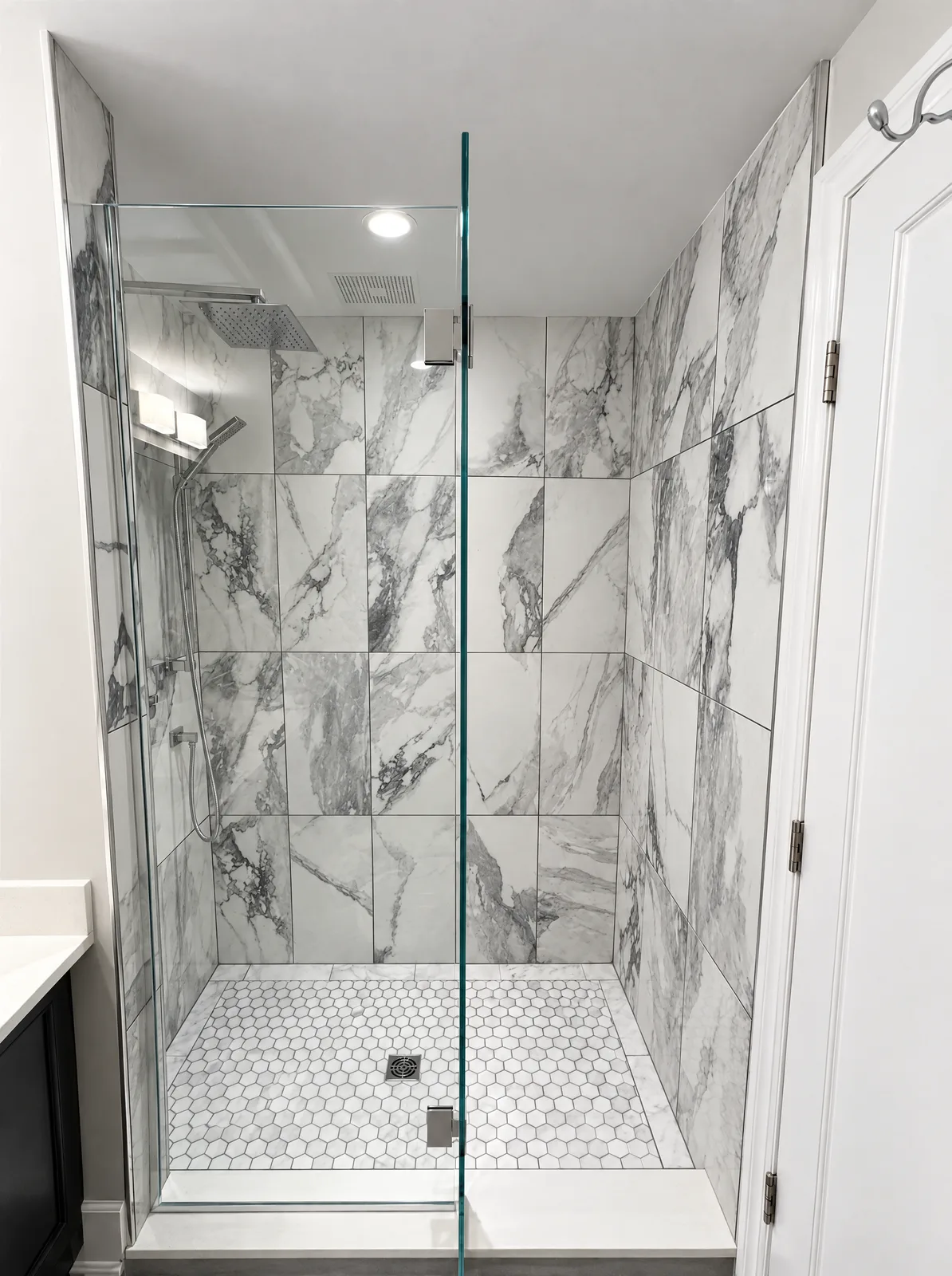
Marble-look porcelain in sizes such as 12" × 24" or 24" × 24" gives a bathroom the look of stone with far less care. Fewer grout lines make the floor read as one surface, which suits modern and classic bathrooms alike. A honed or matte version keeps the marble look without the slipperiness of polished stone.
Installation note: large tile needs a very flat floor, because a long tile bridges any dip and its edges end up uneven. That often means grinding high spots or pouring a self-levelling compound first. Large tiles also need a mortar made for large and heavy tile, back-buttering and levelling clips. Long tiles are usually offset by no more than a third of their length to limit lippage. See our large-format tile guide.
2. One tile on the floor and up the walls
Running the floor tile up the walls, or using a matching wall tile, makes the bathroom feel like one calm shell. It works especially well with marble-look and concrete-look porcelain.
Installation note: the floor tile must be rated for the floor, and the joints line up best when floor and wall layouts are planned together from the start. The joint where floor meets wall gets flexible sealant, not grout.
Small-scale and graphic floor ideas
3. Hexagon and mosaic floors
A hexagon bathroom floor is a classic for good reason. Small hexagons on mesh sheets suit vintage and modern rooms, give good grip and look right in white, black or a mix. Larger single hexagons, such as 8" or 10" pieces, look more contemporary. Penny rounds and small squares are other mosaic options.
Installation note: sheet mosaics have to be set so the joints between sheets disappear. Grout colour matters a lot, because a mosaic floor is mostly grout lines. Large hexagons need many cuts at walls and around the toilet. See our hexagon tile guide.
4. Checkerboard
Two colours of square tile in alternating rows give a bold, timeless floor. Black and white is the classic. Softer pairs, such as cream and terracotta or two greys, look current. A checkerboard can be laid square to the room or on the diagonal.
Installation note: the pattern is simple to lay but unforgiving. Both colours must be the same size and thickness, the layout is centred on the doorway so the cuts at both walls match, and the colours have to stay in the right order through every cut piece. On the diagonal, it needs more cuts and more tile.
Patterned bathroom floor tile ideas
5. Encaustic-look and patterned tile
Patterned tile turns a small bathroom floor into the feature of the room. Real cement (encaustic) tile has the pattern made through the body of the tile. Patterned porcelain prints a similar design on a dense, low-care body. In a bathroom, the porcelain version is usually the easier choice, because real cement tile is porous and needs sealing.
Installation note: patterned tile has a repeat, often across four tiles. It is dry-laid first, centred on the room or the doorway, and turned so each tile completes the design. A single tile set the wrong way breaks the pattern. A border of plain tile around the edge can avoid cutting through motifs at the walls. Our cement tile guide compares the two.
6. Herringbone
A herringbone floor sets rectangular tiles in a zigzag, with the end of each against the side of the next. It looks crafted and high-end, and it draws the eye across the room. Marble-look, wood-look and plain glazed tile all work.
Installation note: herringbone takes careful layout from a centre line, an angled cut at every wall, more labour and more extra tile than a straight layout. Smaller tiles let the pattern repeat several times in a bathroom instead of being cut off at the walls. The floor in the photo above is going down over an uncoupling membrane. See herringbone tile floors.
7. Wood-look plank tile
Porcelain plank tile gives the warmth of wood with none of wood's problems in a wet room. It doesn't swell, it works over a heated floor and it suits a basement bathroom on concrete. It can run from the bathroom into a hallway of matching tile.
Installation note: long planks are often slightly bowed, so they need a flat floor, levelling clips and a limited offset, usually no more than a third of the length. Mixing tiles from several boxes avoids repeating the same printed grain side by side. See wood-look tile.
Colour ideas: dark floors and matching the shower
8. A dark floor
A charcoal, black or deep green floor grounds a white bathroom and makes the walls look brighter. It shows dust, lint and light-coloured hair more than people expect, though. Dark matte tile also shows water spots and soap residue.
Installation note: dark tile shows a light haze from grout or hard water, so cleaning after grouting has to be thorough. A mid-tone or dark grout suits it best. A variegated dark tile, with some movement in the colour, hides everyday dirt better than a solid one.
9. Matching the bathroom floor to the shower floor
Using the same tile, or a matching mosaic, on the bathroom floor and the shower floor ties the room together. With a curbless shower and a linear drain, the same large tile can run straight into the shower. With a centre drain, a small mosaic in the same colour often goes in the shower, while the larger version covers the main floor.
Installation note: the shower floor needs the maker's wet-area rating, which not every bathroom floor tile has. A curbless shower also needs the shower floor recessed so it can slope to the drain; see our walk-in shower guide.
A heated bathroom floor
10. Warm tile underfoot
A heated floor doesn't change how the floor looks, but it changes how it feels on an Ottawa winter morning. Tile and stone are excellent over floor heating because they carry the warmth well. It also helps the floor dry faster after a shower.
Installation note: the heating cable or mat goes under the tile, so it is decided before tiling. Systems such as DITRA-HEAT combine the cable and the uncoupling membrane. The cable runs only on open floor, not under the vanity or tub, so fixture sizes are chosen first, and a licensed electrician makes the final connection. See are heated floors worth it.
Grout colour on a bathroom floor
Grout colour changes a floor as much as the tile does. A grout that matches the tile lets the floor read as one surface and hides small differences in the joints. A contrasting grout outlines every tile, which makes hexagon, herringbone and checkerboard floors stand out, but also shows any uneven joint.
On a bathroom floor, very light grout picks up dirt at the joints, especially near the toilet and the door. A mid-tone grout close to the tile hides it best. High-performance cement grouts and epoxy grouts resist staining better than standard grout. Always choose from cured samples beside the actual tile, in the bathroom's own light.
Tile size vs room size: the small-tile myth
A common belief is that a small bathroom needs small tile. Often the opposite is true. Fewer grout lines make a floor look calmer and larger, so a 12" × 24" tile can make a small room feel bigger than a 4" × 4" tile with four times the joints.
The real limits are practical. In a very small room, the largest tiles can leave more cut pieces than whole ones, especially around the toilet, and slivers at the door look worse than any grout line. Large tile also needs a flatter floor. The way to decide is to draw the room to scale, or lay a few tiles on the floor, and see where the cuts land. Mosaics remain the best choice where the floor must bend to a slope, such as a shower. Our guide to tile patterns and layouts explains how cuts are balanced.
Continuing into the shower and the transition at the door
Two edges decide how finished a bathroom floor looks: where it meets the shower and where it meets the hallway.
At the shower, the bathroom floor can stop at a curb, often capped with a solid stone or porcelain piece, or continue into a curbless shower. If the floor continues, the grout lines should run straight through, and the waterproofing usually extends onto the bathroom floor near the entry.
At the door, a tile floor with its membrane and mortar often sits a little higher than the hallway floor. A marble threshold with a bevelled edge covers that step cleanly, and a metal profile works where the floors are close to flush. The classic detail places the change of floor under the closed door, so each room shows only its own floor. Plan floor heights early; our guide to floor transition strips covers the profiles.
Planning the floor and what drives the cost
A simple order helps. Choose the fixtures first, because the vanity, toilet and drain positions decide where the cuts fall. Then pick a floor tile with a good wet rating, decide the pattern, and check the layout from the doorway, where most people see the floor. Choose the grout colour last. Order extra tile from one batch, about 10% for a straight layout and about 15% or more for diagonal and herringbone, and keep a few spares for repairs.
Cost depends on the size of the floor, its condition, the tile size and the pattern. Levelling, an uncoupling membrane, a heated floor and patterns such as herringbone or checkerboard on the diagonal all add labour. Removing the old floor is a separate item. For typical prices, see tile installation cost in Ottawa. Agora Flooring has installed tile across Ottawa for 26+ years; our bathroom and shower tile page shows how we work.
Frequently asked questions
What is the best tile for a bathroom floor?
Porcelain with a matte or textured finish that the maker rates for wet floors. It is dense, low-maintenance and comes in every look, from marble to wood.
What tile is not slippery for a bathroom floor?
Tile with a good wet slip rating, shown as DCOF on the spec sheet, and a matte, honed or textured surface. Small mosaics add grip through their grout joints. Avoid polished tile on bathroom floors.
Should bathroom floor tile be lighter or darker than the walls?
Either works. A darker floor grounds the room and makes walls look brighter; a floor close to the wall colour makes the room feel larger. Contrast also helps people with low vision see where the floor ends.
Is large tile or small tile better for a small bathroom floor?
Often larger tile, because fewer grout lines make the floor look calmer and bigger. Check the layout first so the room doesn't end up with more cuts than whole tiles.
Are hexagon tiles good for bathroom floors?
Yes. Small hexagon mosaics give good grip and suit both vintage and modern bathrooms. Larger hexagons look more contemporary but need more cuts at the walls.
What colour grout is best for a bathroom floor?
A mid-tone grout close to the tile colour hides dirt best. Very light grout shows stains at the joints, and contrasting grout highlights every tile and any uneven joint.
Can the bathroom floor tile go into the shower?
Yes, if the tile is rated for shower floors. It works best with a linear drain and a curbless or low-curb entry, so the floor tile can stay flat as it slopes to the drain.