
Short answer
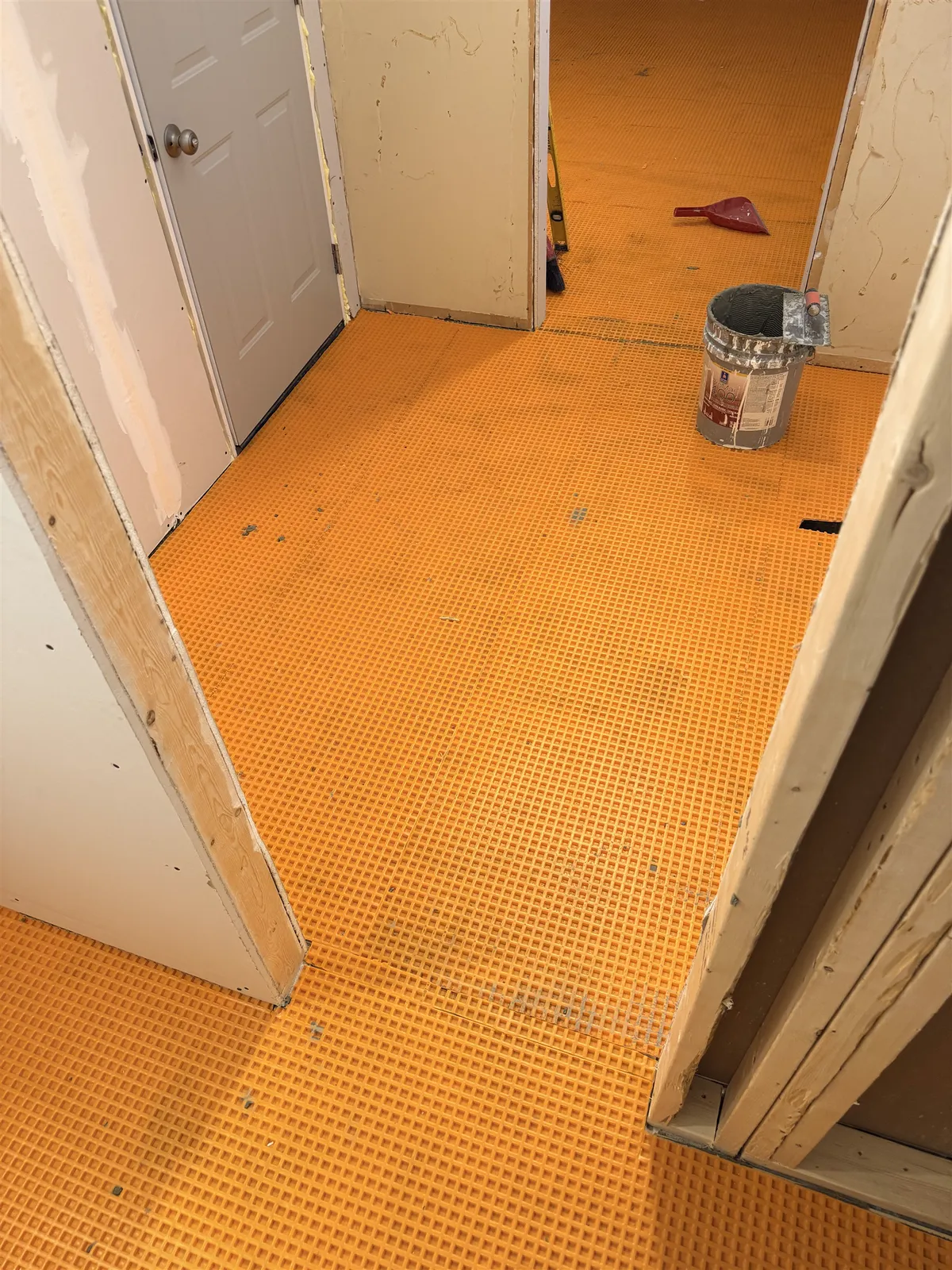
Schluter-DITRA is an uncoupling membrane: a thin plastic sheet with a grid of square cavities that goes between the subfloor and the tile. It lets the subfloor move slightly without cracking the tile or grout above. It is recommended over wood subfloors, over concrete that may crack, and under large tile. DITRA-XL is a thicker version for more demanding floors and for matching the height of neighbouring flooring.
If you have seen a renovation in progress, you have probably seen it: an orange sheet with a waffle pattern covering the floor before the tile goes down. That is an uncoupling membrane, and Schluter-DITRA is the best-known one. It is a small part of the cost of a tile floor and a big part of why it stays crack-free.
Why tile cracks in the first place
Tile and grout are rigid. The floor underneath is not: wood subfloors flex and swell and shrink with humidity, and concrete shrinks as it cures and can crack. Temperature changes also make different layers expand at different rates. If the tile is bonded directly to a surface that moves, the stress goes straight into the tile, and cracked grout lines or cracked tiles follow, often along the same line as a crack in the slab below.
What "uncoupling" means
DITRA is bonded to the subfloor with thin-set mortar through a fleece on its underside, and the tile is bonded to the top with thin-set pressed into its square cavities. The membrane itself can flex slightly between the two, so small movements in the subfloor are absorbed instead of being passed up into the tile. The tile is still firmly supported; it is just no longer locked to every movement below.
What else it does
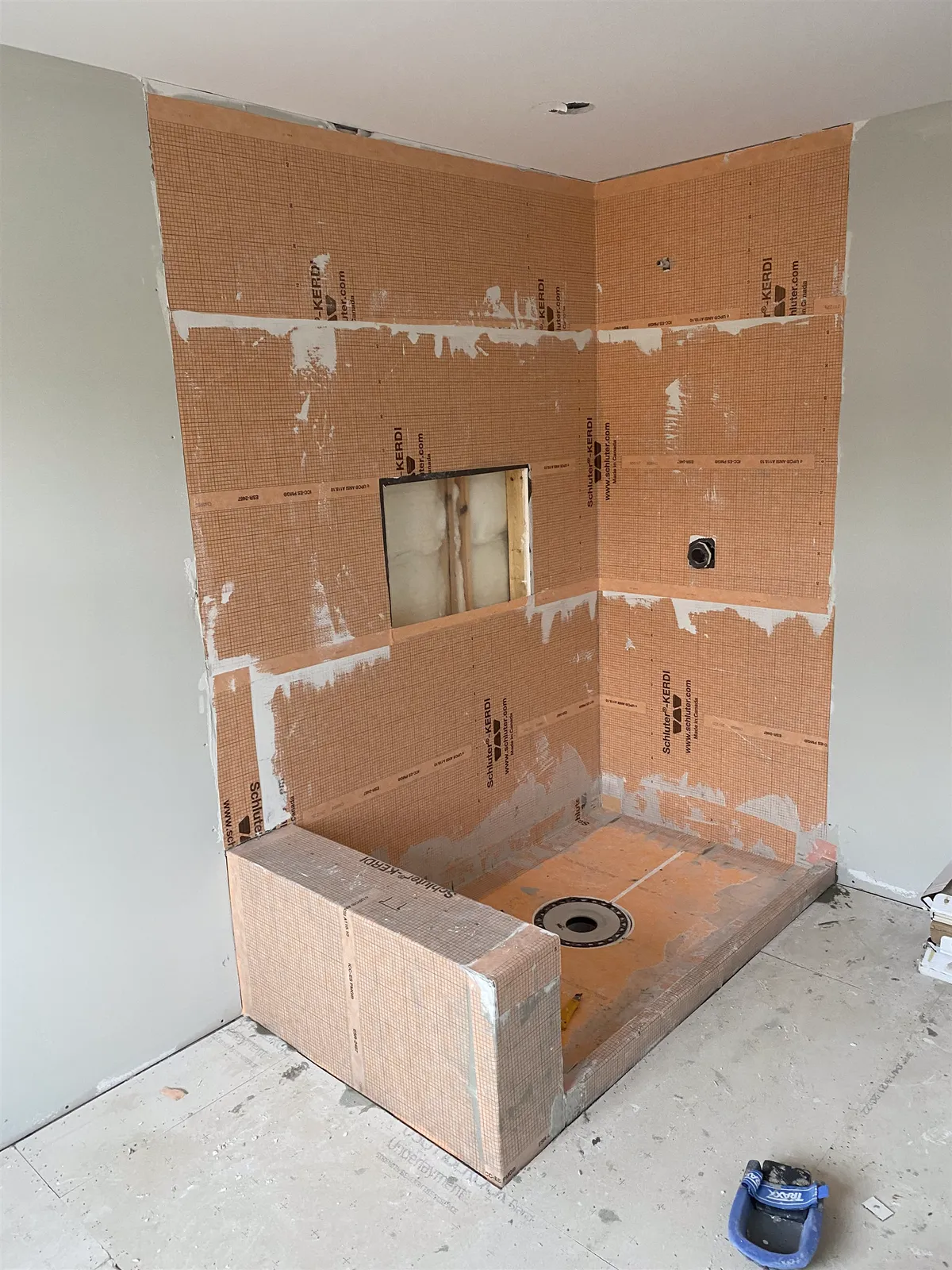
- Waterproofing: the membrane itself is waterproof, and with the seams and edges sealed using Schluter's KERDI-BAND it becomes a waterproof layer over the whole floor, useful in bathrooms, laundry rooms and entries.
- Moisture management: the channels on the underside let moisture vapour from the subfloor spread out and escape rather than building up under the tile.
- Load support: the mortar-filled cavities transfer weight down to the subfloor, so the floor stays solid under heavy use.
DITRA vs DITRA-XL
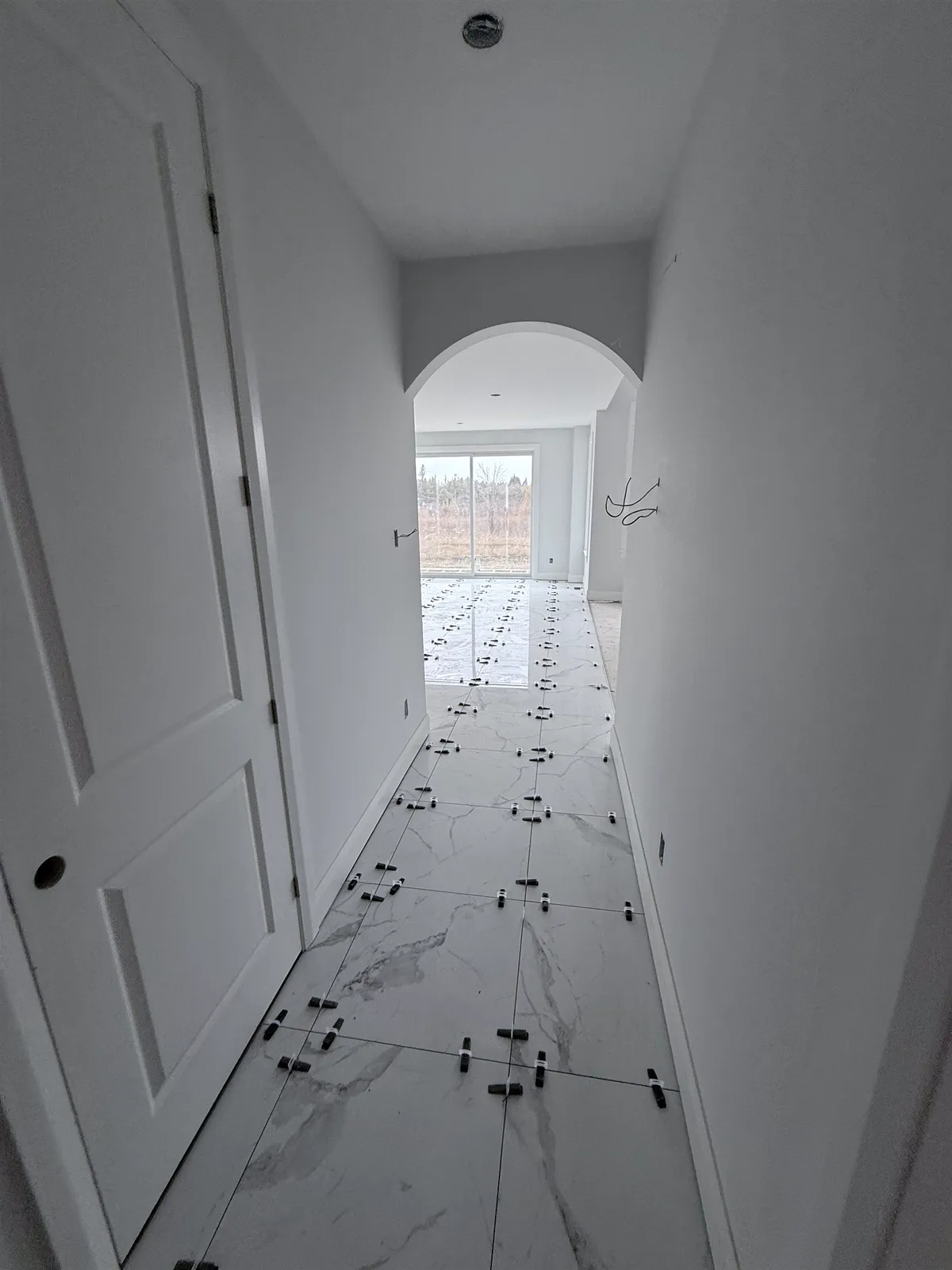
DITRA is about ⅛ inch thick and is the standard choice for most floors. DITRA-XL is about 5/16 inch thick. It is used where the wood subfloor structure is more flexible (for example, joists spaced further apart, within the limits Schluter allows), and where the finished tile needs to come up to the same height as a neighbouring hardwood floor. At 404 Ashbee Court, DITRA-XL was used under every tiled floor.
There is also DITRA-HEAT, a version with grooves that hold electric floor-heating cables, popular in bathrooms and basements.
When does a tile floor need an uncoupling membrane?
- Over a wood (plywood or OSB) subfloor: strongly recommended; wood moves.
- Over concrete: recommended where the slab has cracks or may crack, and in new concrete.
- Under large-format tile: helpful, since big tiles are less tolerant of movement (see our large-format tile guide).
- In wet areas outside the shower: useful as a waterproofing layer for the whole bathroom floor.
An uncoupling membrane is not a fix for a floor that bounces. The subfloor still has to be structurally sound and stiff enough for tile, which is why joist size, spacing and subfloor thickness are checked before any tile job.
Does it make the floor higher?
Slightly: about ⅛ inch for DITRA, more for DITRA-XL, plus the mortar layers. Plan transitions to neighbouring floors and door clearances before installation.