

Heating Membrane
Cables laid in a membrane made for floor heating, such as Schluter-DITRA-HEAT, which also uncouples and protects the tile.
Electric in-floor heating under tile, so bathrooms, kitchens, entries and basements are warm underfoot through an Ottawa winter, in homes from Nepean to Stittsville. Installed with the tile as one job.
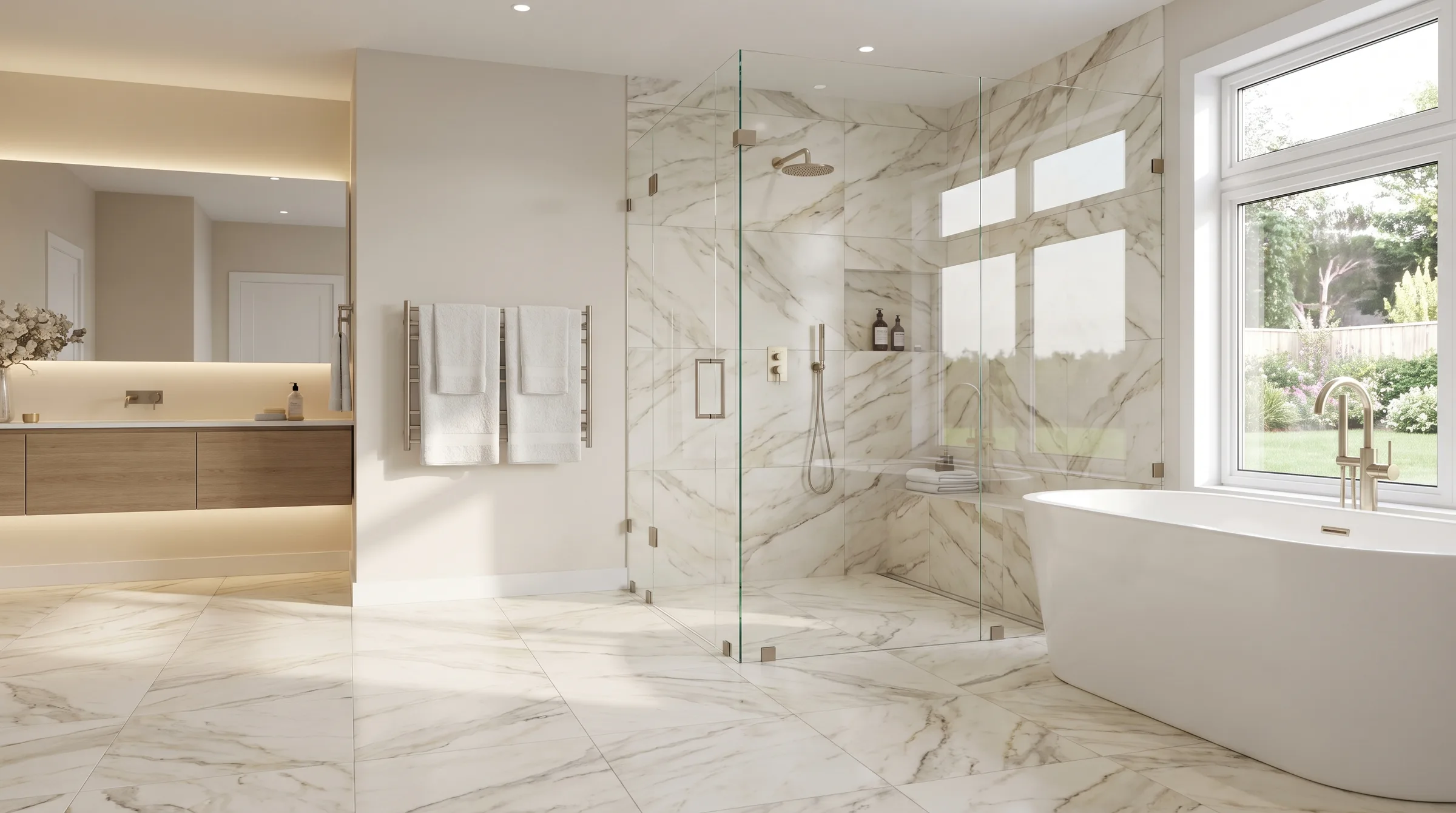
At a glance
Agora Flooring installs electric heated floors under tile in bathrooms, kitchens, entries and basements across Ottawa, including Nepean, Stittsville, Kanata, Barrhaven and Orléans, as one job with the tile. A heated bathroom floor is the most common: the heat goes on the open floor in front of the vanity, tub, shower and toilet. The cables are laid in a heating membrane such as Schluter-DITRA-HEAT and tested before, during and after tiling, and a licensed electrician makes the final connection. Estimates are free, with one written quote for the heating and tile.
How It Works
An electric radiant floor heating system warms the tile evenly, without the cold spots a forced-air vent leaves. It lives under the tile, so it's planned with the floor: where the cables run, where the thermostat goes, and which membrane carries it.
Cables laid in a membrane made for floor heating, such as Schluter-DITRA-HEAT, which also uncouples and protects the tile.
Heat where you stand (in front of the vanity, tub and shower) and none under cabinets or toilets.
The cable is tested before, during and after tiling, so a damaged cable is caught before it's covered.
A programmable thermostat so the floor is warm in the morning. The final connection is made by a licensed electrician.
The most popular rooms for heated tile, with the bathroom heated floor first. See bathroom tile.
Warm, dry tile at the door and over cold concrete slabs. See our basement flooring guide.
Planning Heated Floors
Most of the decisions happen before the tile goes down, so it pays to plan them with the floor.
Cable-in-membrane systems such as Schluter-DITRA-HEAT let us place heat exactly where you want it and also protect the tile from cracking. See our DITRA-HEAT guide.
Concrete slabs pull heat downward. A version with a built-in thermal break, such as DITRA-HEAT-DUO, warms up faster in basements and over slabs.
A programmable or Wi-Fi thermostat warms the floor before you wake up and turns it down when you leave, which keeps running costs low.
Heat where you stand: in front of the vanity, tub, shower and kitchen counters. We skip areas under cabinets, toilets and tubs.
Porcelain, ceramic and stone hold heat well. Large-format tile over heating needs a flat, well-supported floor. See large-format tile.
The floor needs a suitable circuit. The final connection and thermostat wiring are done by a licensed electrician, as Ontario requires.
Costs
How much does it cost to install in-floor heating? The installed price depends on the size of the heated area, the membrane, the thermostat and the tile. We price it with your tile after a free site visit.
| Factor | What it means |
|---|---|
| Heated area | the larger the area, the more cable |
| Membrane system | standard or with a thermal break |
| Thermostat | basic, programmable or Wi-Fi |
| Electrical work | by a licensed electrician |
| Item | Estimate |
|---|---|
| Heat output | about 12 watts per sq ft |
| 40 sq ft bathroom floor | about 0.5 kW while heating |
| 3 hours a day | roughly $5 – $9 a month |
Running costs are estimates and depend on your electricity rate, the heated area and your thermostat schedule. Installed prices for tile floors are in our Ottawa flooring cost guide and tile installation cost in Ottawa.
Good to Know
The best time to add floor heating is when the floor is already being replaced. Once the old flooring is out and the subfloor is checked, the heating membrane goes down, the cables are laid and tested, and the tile goes on top. Planning it early also settles the finished floor height, so doors and transitions to other rooms still line up.
Search for heated floor installation near you, or for heated floor contractors, and you will find tile installers, electricians and heating contractors. For electric floor heating installation under tile, most of the job is tile work, which is why heated tile floor installers are usually the ones who plan it. In an electric in-floor heating installation, we prepare the subfloor, install the heating membrane, lay the cable and the floor sensor, test the cable and set the tile. A licensed electrician runs the circuit, installs the thermostat box and makes the final connection under an ESA permit. Hydronic systems, with hot-water tubing, are designed and installed by a heating contractor. For floor heating in Ottawa bathrooms, kitchens and basements, that means one written quote from us for the heating and the tile, and the electrician's work alongside it.
Bathrooms and ensuites are the most common, followed by kitchens, basements on concrete, and entries or mudrooms, where warm tile also helps snow and slush dry faster. Each heated room is usually its own zone with its own thermostat, so you only warm the floors you are using, when you are using them.
The ensuite is where a heated bath floor gets used most: every morning and evening, often barefoot. Planning starts with the layout of the tub or shower, the vanity, the toilet and the door. The heat goes on the open floor that is left: in front of the vanity, along the tub or shower and around the toilet, kept back from the toilet flange by the distance the maker specifies. It doesn't go under the tub, the vanity or anything built in, because a covered floor traps the heat.
Because the fixtures cover part of the floor, the heated area is smaller than the room, and that heated area sets the cable length, the circuit and the running cost. Heating cable comes in fixed lengths and is never cut, so the fixtures are chosen and placed before the cable is ordered. In a renovation, the heated floor goes in with the new floor tile and shower; see bathroom tiling in Ottawa and what it costs to tile a shower.
Floor heating comes in two kinds of systems: radiant electric and radiant hydronic. Electric radiant systems come as loose cable in a membrane, or as pre-spaced mats. Electric in-floor heating systems sold in Canada should carry an approved certification mark, such as CSA or cUL, so check the box before you buy. Cable in a membrane, such as DITRA-HEAT, lets heat follow the shape of the room exactly and also uncouples the tile and can waterproof the floor, which is why we prefer it under tile. Hydronic radiant systems, such as Uponor radiant heating and other makers' systems, run hot water through tubing; they are designed with a home's main heating by a heating contractor and suit whole floors in new construction.
Radiant heat warms the floor and everything it touches, then the room from the bottom up. Because nothing is blown around, there are no drafts and no dust stirred up, which many people with allergies appreciate.
How many square feet will actually be heated? Will the thermostat be programmable or Wi-Fi? Is there room on the electrical panel for the circuit? Is the floor covering approved for heat? And who registers the warranty? We go through all of these during the site visit, so the system is planned with the tile.
We measure the area that will actually be heated, check the subfloor and the floor height, talk through where the thermostat should go, and look at the tile you have in mind. You then get one written quote for the heating system and the tile together.
The heat stays off until the mortar and grout have cured, as the maker instructs. Then the thermostat is set to your schedule. Heating systems come with the maker's installation rules and warranty terms; we install to those instructions, record the cable test readings and leave you the paperwork. Keep it, and avoid covering heated areas with thick rugs or rubber-backed mats, which trap the heat.
Electric floor heating is at its best under tile and stone. Some luxury vinyl and engineered hardwood products can also be heated, within the maker's temperature limits, so we check the flooring's approval before planning heat under anything other than tile. For tile floors in the rest of the house, see tile installation in Ottawa.
Cables are spaced to warm the areas you actually stand on; in a membrane system they clip into the studs at the spacing the maker specifies, which gives even warmth with no cold spots or warm stripes. The tile layout is planned on top of that: where full tiles land at the door, how the pattern lines up with the vanity, and where any movement joints go. Planning both together avoids cutting tile over a cable later.
Check the simple things first: the breaker, the thermostat's ground-fault test and its settings. If those are fine, the fault may be in the sensor or the cable. A cable fault can often be located with specialised equipment and repaired by opening only the tile over that spot, rather than replacing the whole floor.
In a condo, check the building's rules before planning heat: some boards want to approve electrical work and flooring changes, and many require a sound-rated underlayment under hard flooring. The suite's electrical panel also needs room for the heating circuit.
Many Nepean homes, from Bells Corners to Centrepointe and Craig Henry, date from the 1950s to the 1980s, and their bathrooms are often due for a rebuild from the studs. That is the best time to add a heated floor: the old tile is already out, the subfloor is levelled and screwed down, and the heating membrane goes in before the new tile. In an older house, it is worth checking early that the electrical panel has room for the heating circuit; the electrician confirms it. See tile and flooring in Nepean.
Much of Stittsville, including Fairwinds and Jackson Trails, was built in the last twenty-five years, so most heated floors here go in during ensuite upgrades and basement finishing rather than full rebuilds. When an acrylic shower is replaced with a tiled walk-in and the floor is retiled in large-format porcelain, the heat goes under the new tile. In a finished basement over the slab, a membrane with a thermal break, such as DITRA-HEAT-DUO, helps the floor warm up, and an entry or mudroom at the garage door is worth heating for the salt and slush of an Ottawa winter. See tile and flooring in Stittsville.
The thermostat reads a sensor set in the floor between two cable runs, so it controls the temperature of the tile rather than the air. A sensor can't be reached once it is tiled over, so a spare is often laid in at the same time. Programmable and Wi-Fi thermostats let you warm the floor for mornings and evenings and turn it down when you are away.
Questions
Thin heating cables are laid across the floor, usually in a membrane made for them, and covered by tile. A thermostat, often programmable, controls the floor temperature so it warms up when you need it.
Tile and stone are the best match because they conduct and hold heat well. Some engineered hardwood and luxury vinyl products are rated for in-floor heating; check the product's instructions before choosing.
We install the heating system under the tile. The final electrical connection and thermostat are completed by a licensed electrician, as Ontario's electrical rules require.
Both. As the heated bathroom floor installer, we put in the membrane, the heating cable and the floor sensor, test the cable before, during and after tiling, and set the tile on top. A licensed electrician runs the circuit, installs the thermostat and makes the final connection.
Electric floor heating goes under the tile, so it is installed when a floor is being tiled or re-tiled. It is easiest to add during a bathroom or kitchen renovation.
Electric floor heating puts out about 12 watts per square foot. A 40 square foot bathroom floor used about three hours a day typically costs roughly $5 to $9 a month, depending on your electricity rate and thermostat schedule.
Usually between 30 minutes and a couple of hours, depending on the tile and what is underneath. A programmable thermostat starts it before you need it.
It is usually comfort heat that warms the floor rather than the room's main heat source. In a small, well-insulated bathroom it can be enough on its own.
The open floor where you stand: in front of the vanity, along the tub or shower and around the toilet. The heat doesn't go under the tub, the vanity or other fixtures, so the heated area is smaller than the room. That heated area sets the cable length, the circuit and the running cost.
In an Ottawa bathroom or ensuite it usually is, because tile feels cold and the room is used barefoot every morning and evening. A small heated bathroom floor on a schedule typically costs a few dollars a month to run. See are heated floors worth it?
Yes. We install electric heated floors under tile across Ottawa, including Nepean, Stittsville, Kanata, Barrhaven and Orléans, and in nearby towns. The site visit is free, and you get one written quote for the heating and the tile.
Yes. We install electric heated tile floors across Ottawa, including Gloucester, Orléans, Nepean, Kanata, Barrhaven and Stittsville, and in nearby Rockland, Embrun and Russell.
More in our guides: are heated floors worth it?, how DITRA-HEAT works, what Schluter-DITRA does and tile vs vinyl for kitchens and bathrooms.
Where We Work
We install electric heated floors under tile in homes, condos and rental buildings across Ottawa, from Nepean, Stittsville and Kanata to Barrhaven, Gloucester and Orléans, and in nearby towns such as Rockland, Embrun and Russell.
How We Work
When your flooring is in stock, we can usually install it the same week, so your project doesn't sit waiting for months.
Free estimates in person, by phone, by email or online. Tell us about the project, send photos if you have them, or book a visit and we'll measure on site.
We stand behind every installation with a workmanship warranty. Ask us what it covers for your project.
Our favourite part! See your room finished in hyper-realistic 3D before anything is installed. From $150, and the design fee is waived when you hire us. See the packages.
Free Estimate
Tell us about the room and we’ll give you a free estimate in person, by phone, by email or online.