
Short answer
Tile is considered large-format when any side is 15 inches or longer. Big tiles mean fewer grout lines and a calmer look, but they need a much flatter floor, a mortar made for large tile, near-full coverage underneath, and careful layout. Most problems with large tile (uneven edges, hollow spots, cracks) come from skipping that preparation.
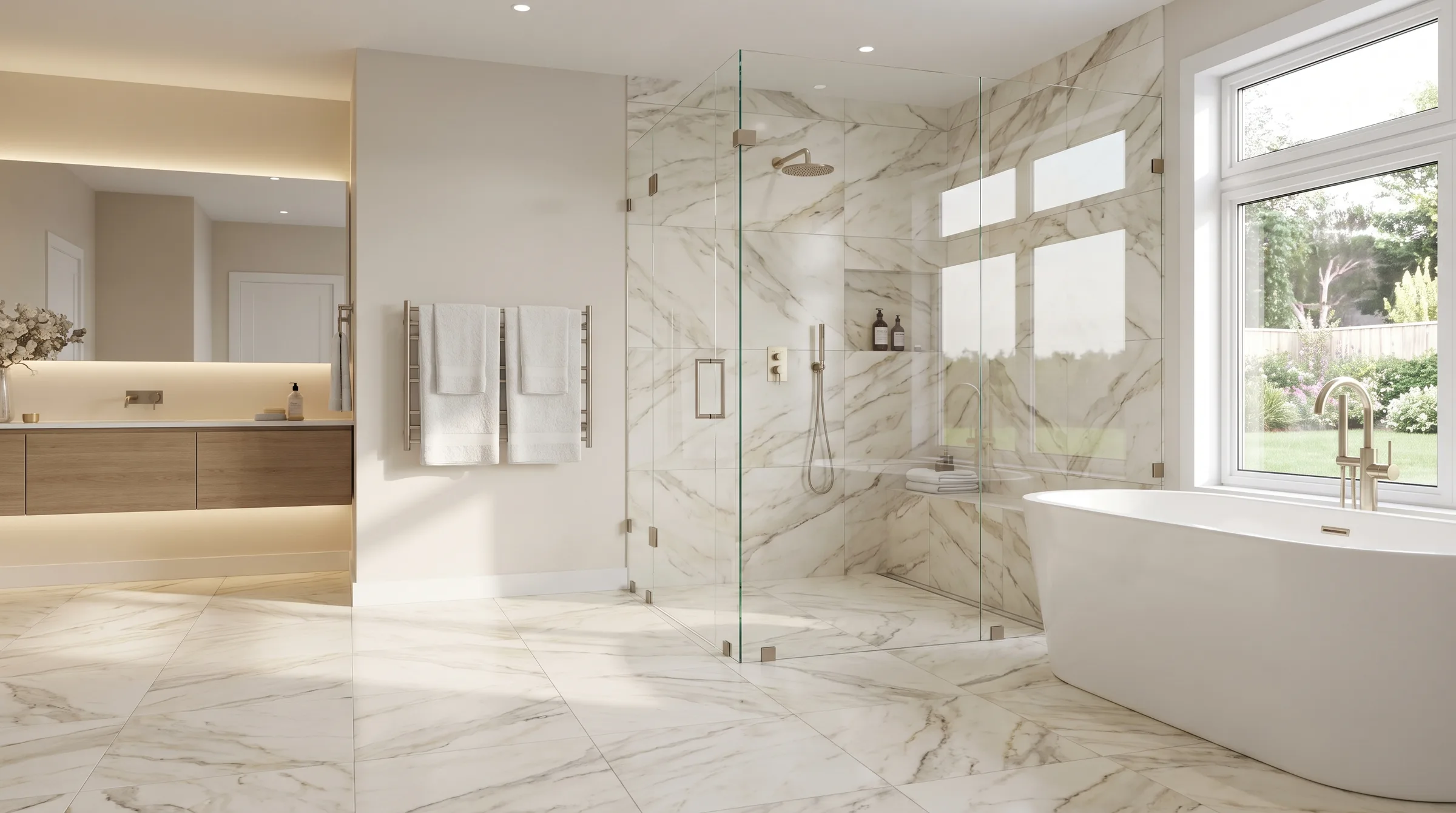
Large-format porcelain, from 12 × 24 inches up to 24 × 48 inches and slab-sized panels, has become the default look in modern homes and buildings. Fewer grout lines make a room feel larger and cleaner, and marble-look and concrete-look porcelain can pass for the real thing. The trade-off is that large tile shows every imperfection in the floor underneath.
What counts as "large-format"?
Industry standards treat any tile with at least one edge of 15 inches or more as large-format. That includes the very common 12 × 24 inch plank and rectangle. From that size up, the installation rules get stricter.
Why floor flatness matters so much
A small tile can follow a gentle dip in the floor. A 24 × 48 inch tile cannot: it bridges the dip, leaving a hollow underneath, and its edge ends up higher or lower than its neighbour. That height difference between tiles is called lippage, and it is the most common complaint with large tile. You can see it in raking light and feel it under bare feet.
For this reason, standards call for a much flatter surface under large-format tile than under small tile: no more than about ⅛ inch of variation over 10 feet, and 1/16 inch over 2 feet. Most floors are not that flat to begin with, so good installers check with a long straightedge and fix the floor first, with self-levelling compound, patching or grinding.
What good installation involves
- Flattening the substrate before any tile goes down.
- The right mortar: a mortar made for large and heavy tile that holds its shape under a big tile without slumping.
- Full coverage: the mortar has to contact nearly the whole back of the tile, which usually means back-buttering each tile and using a large-notch trowel. Standards call for at least 80 percent coverage in dry areas and 95 percent in wet areas, with edges and corners fully supported.
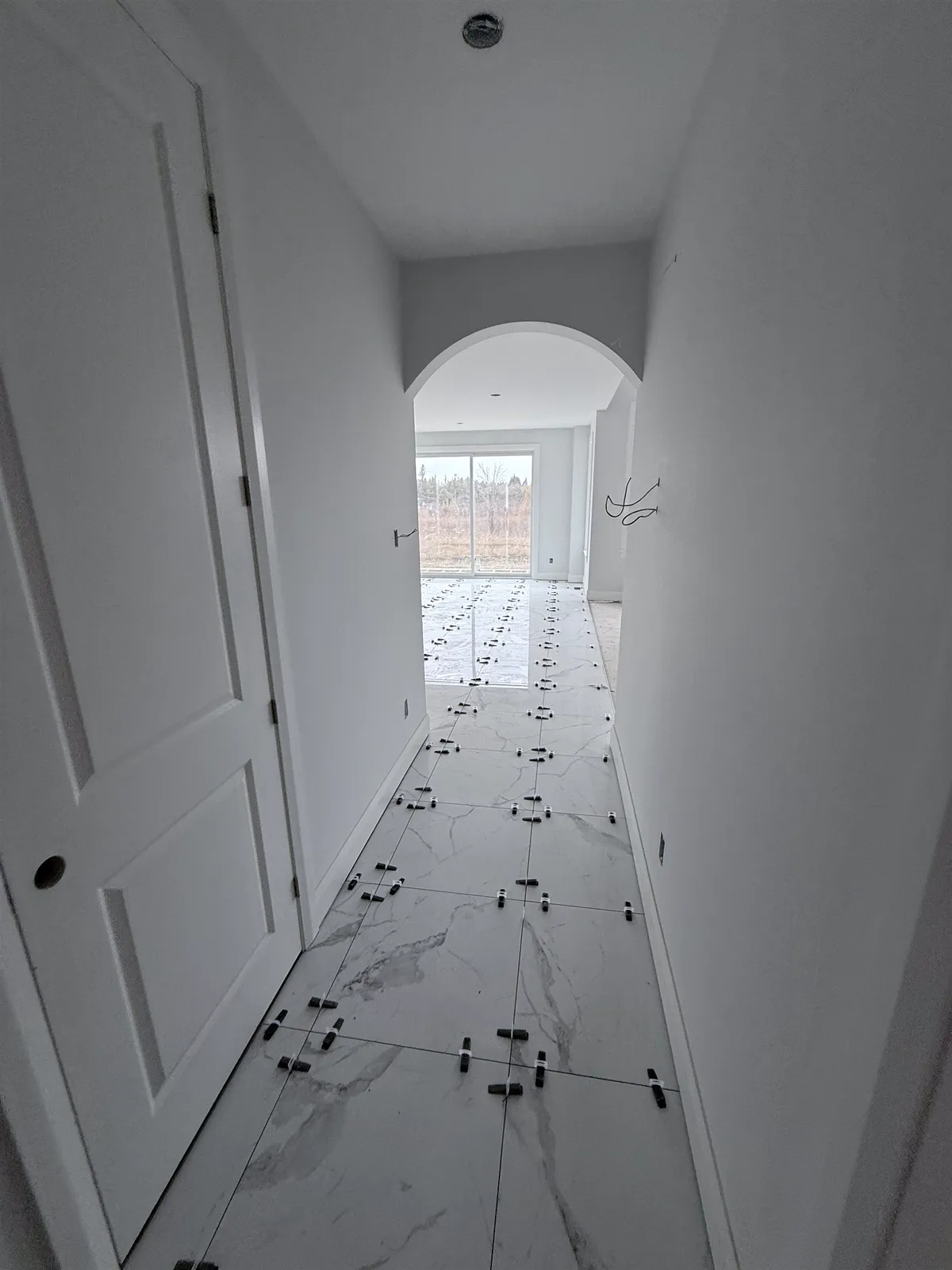
- A levelling system: clips and wedges that hold neighbouring edges flush while the mortar cures. They help control lippage, but they cannot make up for a floor that is not flat.
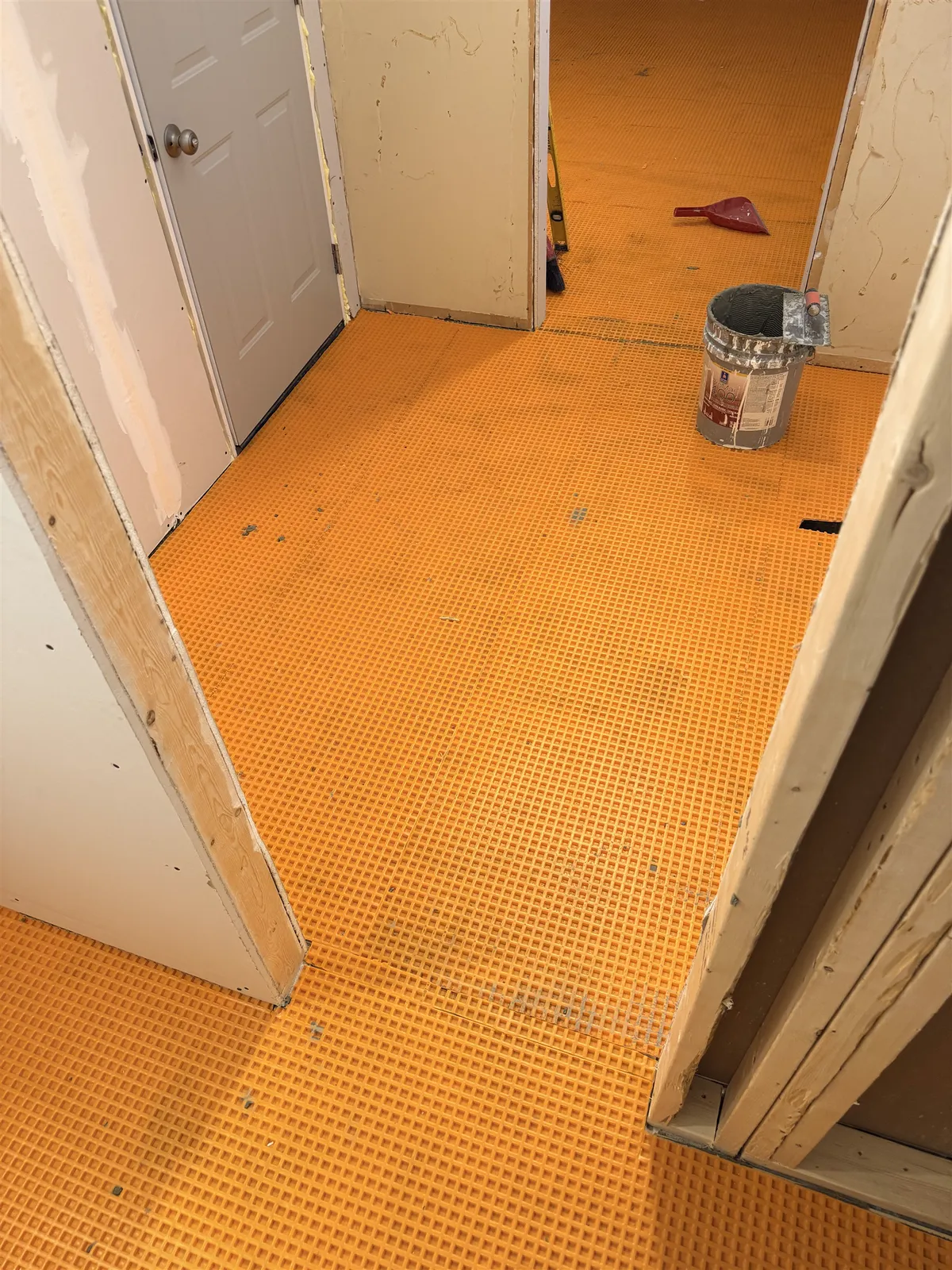
- An uncoupling membrane where the subfloor may move, such as Schluter-DITRA.
- Movement joints at the perimeter and in large areas, so the tile has room to expand and contract.
Layout and pattern choices
Large rectangular tiles are rarely perfectly flat; most have a slight bow in the middle. Offsetting them by half their length puts the high centre of one tile next to the low end of the next, which exaggerates lippage. That is why manufacturers and standards generally recommend an offset of no more than one-third for large rectangular tiles, unless the manufacturer says otherwise.
Plan the layout before starting, too: where the cuts land at doorways and walls, how the tile lines up with the room's focal points, and where it meets other floors.
Large-format tile on walls and in showers
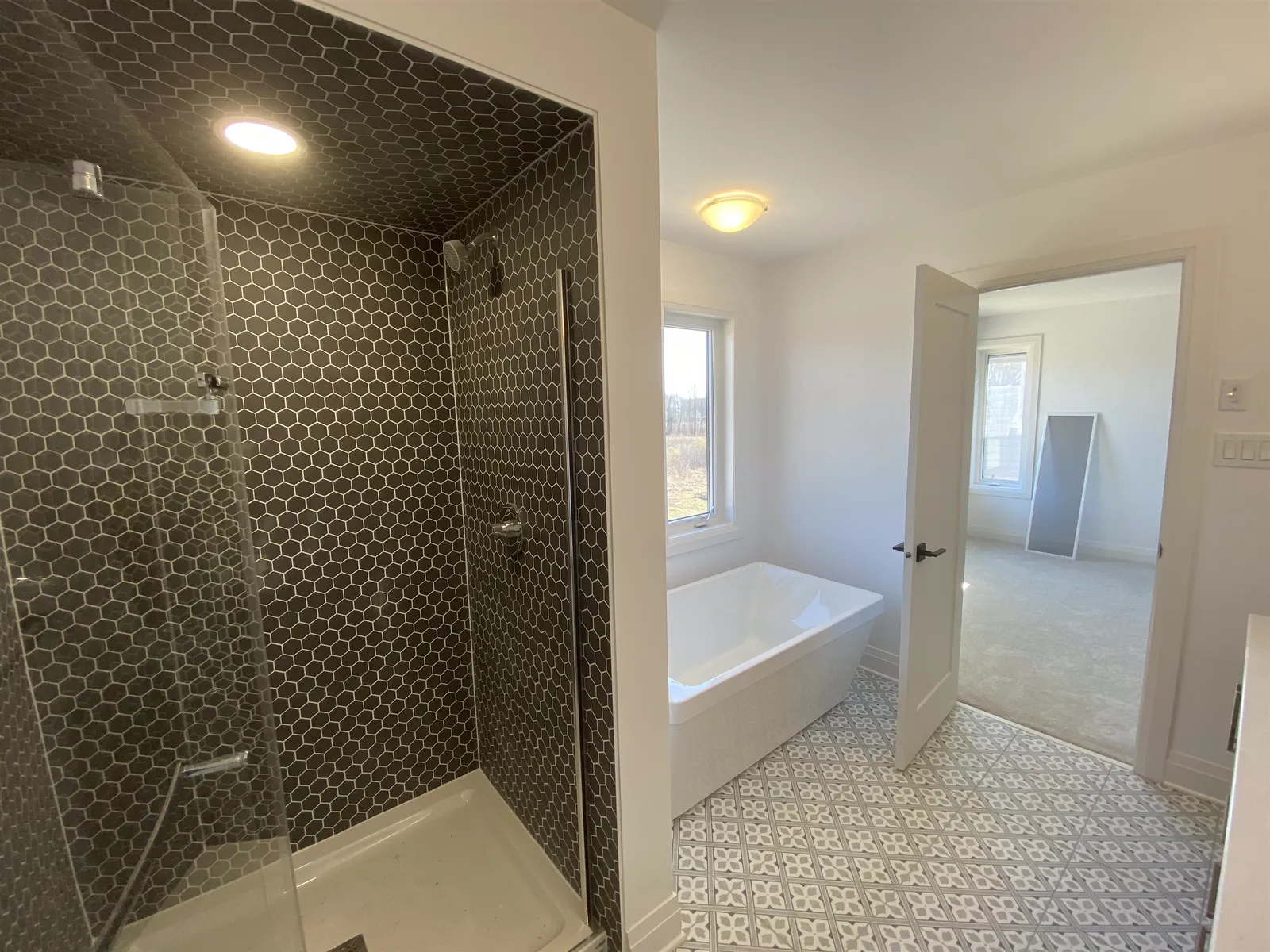
Big tile on shower walls means fewer grout lines to clean and a very modern look. Walls have to be flat and plumb, and the waterproofing goes on first (see how showers are waterproofed). On shower floors, large tiles need a single-direction slope, usually toward a linear drain, because they cannot bend to the four-way slope of a centre drain. Small mosaics are the traditional choice for centre-drain shower floors.
Is it worth it?
Yes, if it is installed properly. Large-format tile is one of the most popular choices for lobbies, corridors and open-concept homes. At the 288-unit Rideau Registry, 24 × 48 inch tile runs throughout the building. The look depends almost entirely on preparation, so ask any installer how they check and correct floor flatness before they start.