
Short answer
The shower tile ideas that work best pair one strong idea with a calm background: large-format marble-look walls, a vertical stacked or fish scale feature wall, a contrasting niche, or a mosaic floor. Every idea has an installation cost. Large tile needs flat walls, shaped tile needs careful cutting, and tile to the ceiling adds area. On the floor, use only tile the maker rates for wet floors; wall-only tile never goes on a shower floor.
Most people start a shower project with a few photos saved on their phone. The look is the fun part. What the photos don't show is what each look takes on site: how flat the walls must be, how many cuts it needs, and what changes behind the tile. This guide collects the shower tile ideas we are asked about most, for walk-in showers and tub-showers alike. Each comes with a practical note from the installer's side, so you can pick a look knowing what it involves.
Our guide to choosing shower tile compares porcelain, ceramic, glass and stone. This page is about how to use them.
What every shower tile idea has to work with
Before the ideas, three rules hold for every shower. First, the tile is not the waterproofing. Tile and cement grout let water through, so the walls and floor need a waterproofing system behind them, sealed at every seam, corner and pipe. That stays the same whatever tile goes on top; see how to waterproof a shower.
Second, the floor has a different job from the walls. Wall tile only has to look good and clean easily. Floor tile has to grip wet, soapy feet and follow the slope to the drain. Many beautiful wall tiles are made for walls only. They are too thin, too soft or too slippery for a floor, and they should never be used there, however well they match.
Third, the layout is decided before the first tile goes up. Where rows land against the niche, the valve, the bench and the ceiling decides whether a shower looks planned or patched. The more pattern a tile has, the more that matters.
Ideas for calm, easy-to-clean walls
1. Large-format marble-look porcelain
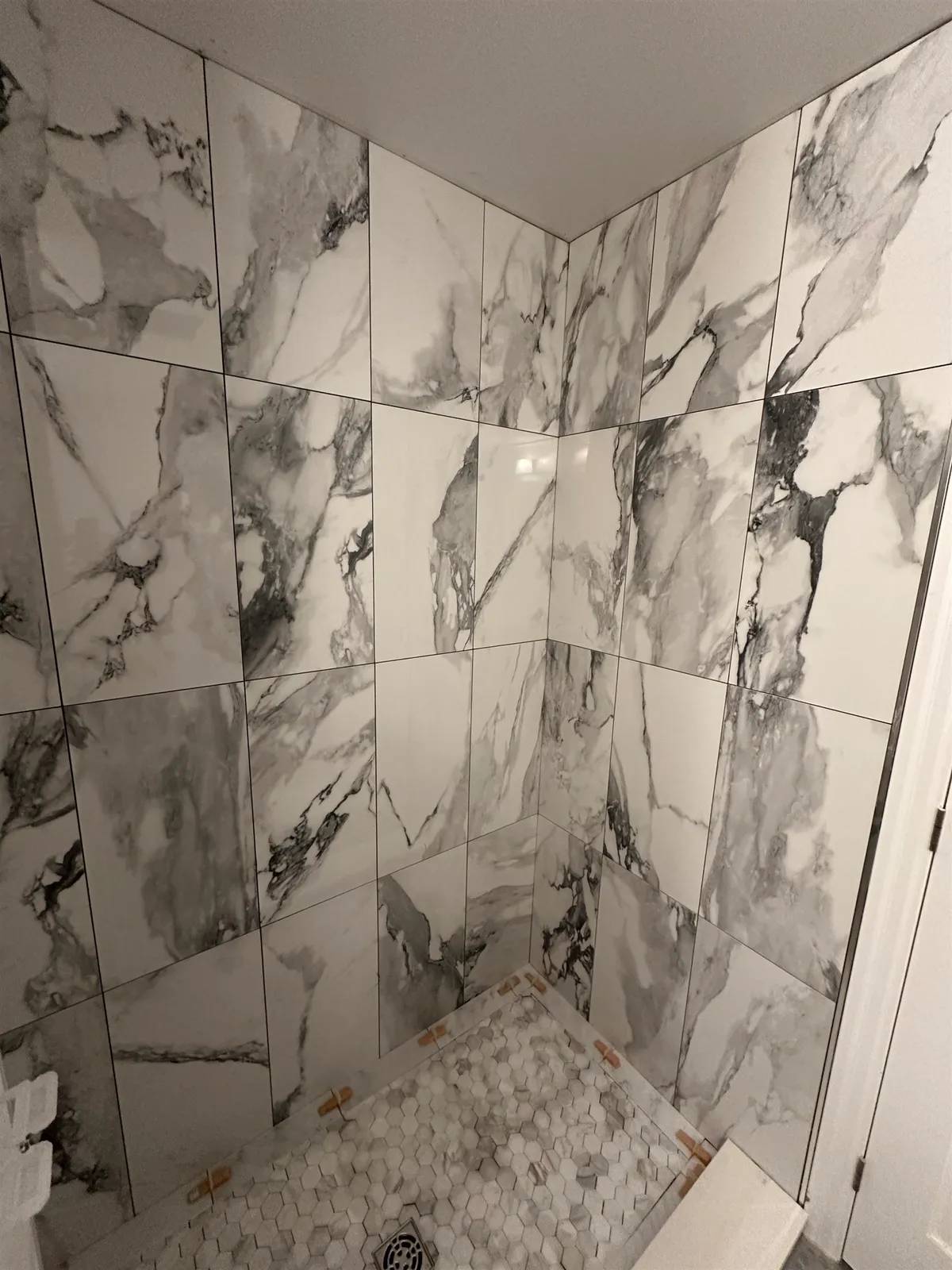
Big marble-look tiles, such as 24" × 48" porcelain, give a shower the look of stone slabs with very few grout lines. Fewer joints means less to scrub, and the veining reads as one surface. It is one of the most popular shower looks today.
Installation note: large tile shows every bump in the wall. The studs or board have to be very flat, and the tile needs a mortar made for large and heavy tile, back-buttering, levelling clips and full coverage. Large tiles also leave bigger cuts, so the layout around the niche and valve is planned carefully. The veining usually has a direction too, and the installer lays out pieces so the pattern flows. See our large-format tile guide.
2. Terrazzo-look tile
Terrazzo-look porcelain has flecks of stone in a plain base. It hides water spots well, works on walls and floors, and pairs easily with plain white tile above or below. A two-tone wall, with terrazzo-look tile on the lower part and a plain glossy tile above, is a popular way to use it.
Installation note: where two tiles meet on one wall, the change has to land on a planned line, with both tiles the same thickness or a trim between them. Our terrazzo tile guide compares real terrazzo with look-alike porcelain.
Shower wall tile ideas with shape and pattern
3. Vertical stacked tile
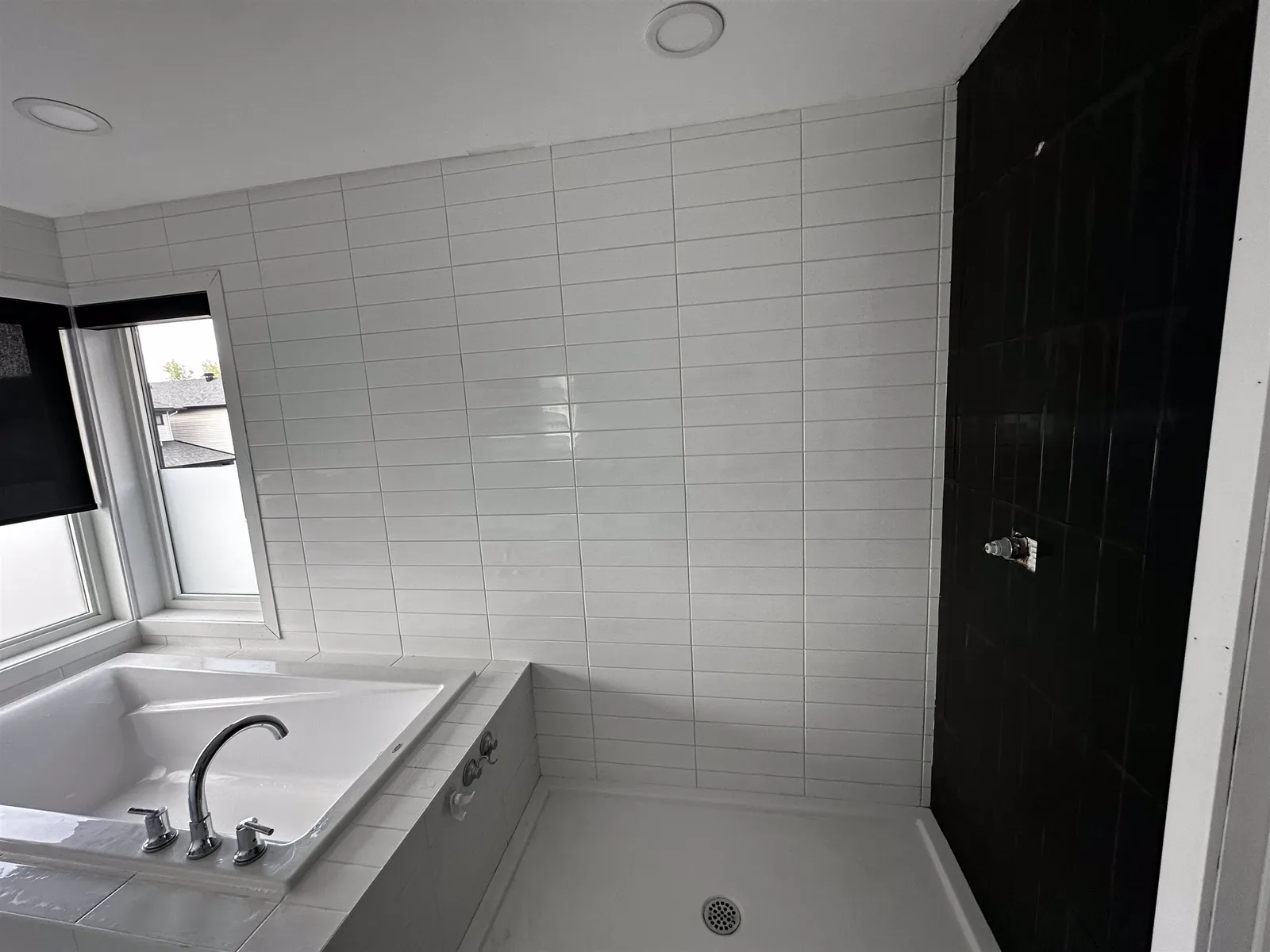
Long rectangular tiles stood upright in straight columns draw the eye up and make the ceiling feel higher. The look is clean and modern, and it suits glossy and matte tile alike.
Installation note: a stack shows every joint as a straight line from floor to ceiling. Any wall out of plumb, or any tile that varies in size, is obvious. Rectified tile, flat walls and a laser line are the keys. Stacking does avoid one problem: slightly bowed long tiles sit end to end, so their edges stay in line.
4. Fish scale and arched tile
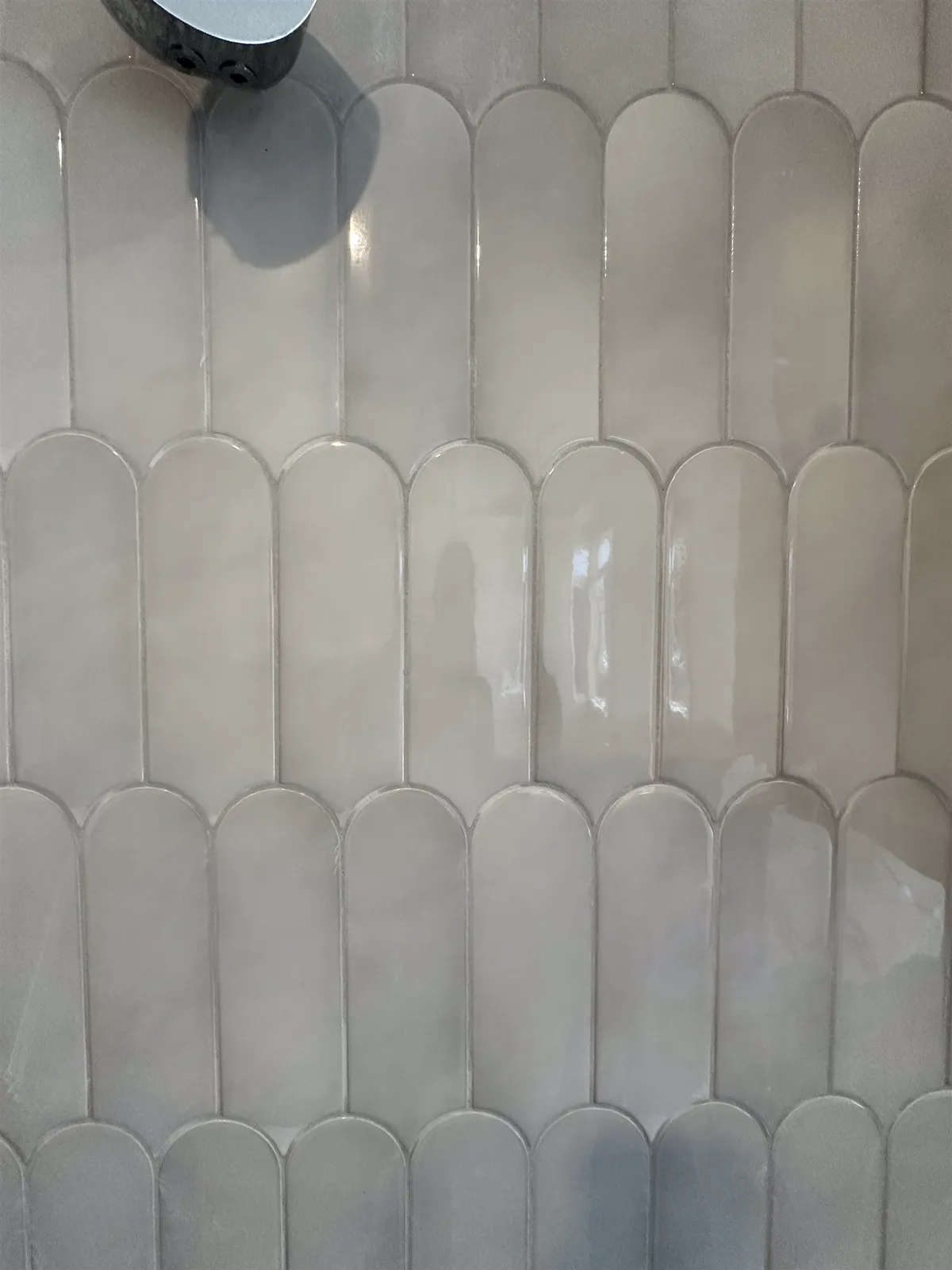
Fish scale tiles, also called scallop or fan tiles, are rounded at one end and overlap in rows like scales. Arched tiles are a newer variation with a rounded top. Both give a soft, decorative look, like the shower in the photo above, and look best in a single colour on one wall.
Installation note: shaped tile is slow. The curved edges have to line up row after row, and every piece at the corners, ceiling, niche and edges is cut along a curve or trimmed to a straight line. The end of each row needs a plan, usually a trim or a straight cut into an inside corner. Expect more labour and more waste than square tile of the same size, and keep spacing consistent so the scales don't drift.
5. Picket tile
Picket tiles are long, narrow pieces with pointed ends, like a fence picket. They interlock in a pattern that looks a little like a stretched herringbone. Laid vertically on a shower wall, they add height and texture.
Installation note: the pointed ends make the pattern, but they also make the edges harder. Each row ends in an angled cut, and the joints have to stay even for the interlocking shape to read. The pattern is usually centred on the wall the eye sees first.
6. Zellige-look tile
Zellige is handmade glazed tile from Morocco, with uneven faces, soft edges and strong colour variation. Zellige-look ceramic and porcelain give a similar handmade feel with more even sizing and easier care. Both catch light beautifully in a shower.
Installation note: real zellige varies in thickness and size, so some unevenness between tiles is part of the look, not a defect. It takes more mortar, more sorting and more time. Follow the supplier's guidance for wet areas. Our zellige tile guide covers both versions.
Feature walls, niches and accents
7. A feature wall in the shower
Using a bold tile on one wall of the shower, usually the back wall or the wall seen from the door, gives the room a focal point. The other walls stay quiet in a plain tile. It also keeps cost down, because the expensive tile covers only one wall.
Installation note: decide where the feature tile starts and stops. A feature that ends in an inside corner looks clean. One that ends on an exposed edge needs a profile or a finished edge. See our feature wall tile guide.
8. A niche in a contrasting tile
A recessed niche lined with a different tile, a mosaic or a strip of the floor tile turns storage into a detail. It is small, easy to see and easy to clean.
Installation note: the niche is sized to the wall tile, so its top and bottom land on grout lines. The contrasting tile should be close in thickness to the wall tile, or the edges won't finish cleanly. The niche is waterproofed with the rest of the shower and its sill sloped toward the shower; see shower niches.
9. Metal trim as a design line
Thin metal profiles at the outside edges, the niche opening and the top of the tile give a crisp line in brushed nickel, black, brass or other finishes. They can match the shower valve and the glass hardware.
Installation note: profiles are set in the mortar as the tile goes up, so they are chosen before tiling, in a height that matches the tile thickness. Mitred corners are the alternative where no metal should show.
Shower floor tile ideas
10. A mosaic floor
Small mosaics, such as 2" × 2" squares, hexagons or penny rounds, are a classic shower floor. Their many grout joints add grip, and the small pieces follow the four-way slope around a centre drain. A mosaic in the wall colour keeps the shower calm. A darker one grounds it.
Installation note: sheets must be set so the joints between them disappear. Grout colour matters a lot, because a mosaic floor is mostly grout lines. The pieces around the drain are cut and fitted one by one.
11. A linear drain with a single-slope floor
A linear drain is a long channel, usually along the back wall or at the entry. The floor slopes to it in one direction, as a single flat plane. That lets larger tile go on the shower floor, even the same tile as the bathroom floor, with no envelope cuts around a drain.
Installation note: the drain position is chosen with the plumber at the rough-in stage, and the drain is sized to the tile layout so you don't end up with slivers at its ends. See linear shower drains.
12. The bathroom floor running into a curbless shower
With no curb, the bathroom floor tile can run straight into the shower. The room reads as one surface and looks larger, which is why this is popular in small bathrooms.
Installation note: the shower floor has to be recessed below the bathroom floor so it can slope to the drain, which depends on the joists or slab. The waterproofing usually extends past the shower. Our walk-in shower guide explains curbless floors.
Taking the tile higher
13. Tile to the ceiling
Stopping the tile just above the shower head leaves a line across the wall and a strip of painted drywall that stays damp. Taking it to the ceiling looks more finished and is easier to clean. In a fully enclosed shower or a steam shower, the ceiling itself may be tiled.
Installation note: ceilings are rarely level, so the top row is the cut people notice. A good layout keeps that row a reasonable size and even. The joint at the ceiling is finished with sealant. Tiling overhead is its own job; see shower ceiling tile.
Grout colour ideas for a shower
14. Dark grout with light tile
Dark grout outlines every tile. With white subway, picket or fish scale tile, it makes the pattern the feature. It also hides the grey that light grout picks up over time in a shower.
Installation note: dark grout shows every uneven joint, so the joints have to be consistent. Dark cement grout can also leave a haze on light, porous or crackle-glaze tile, so test it on a spare tile first. Ask about a high-performance or epoxy grout, which resists staining.
15. Matching grout for a seamless look
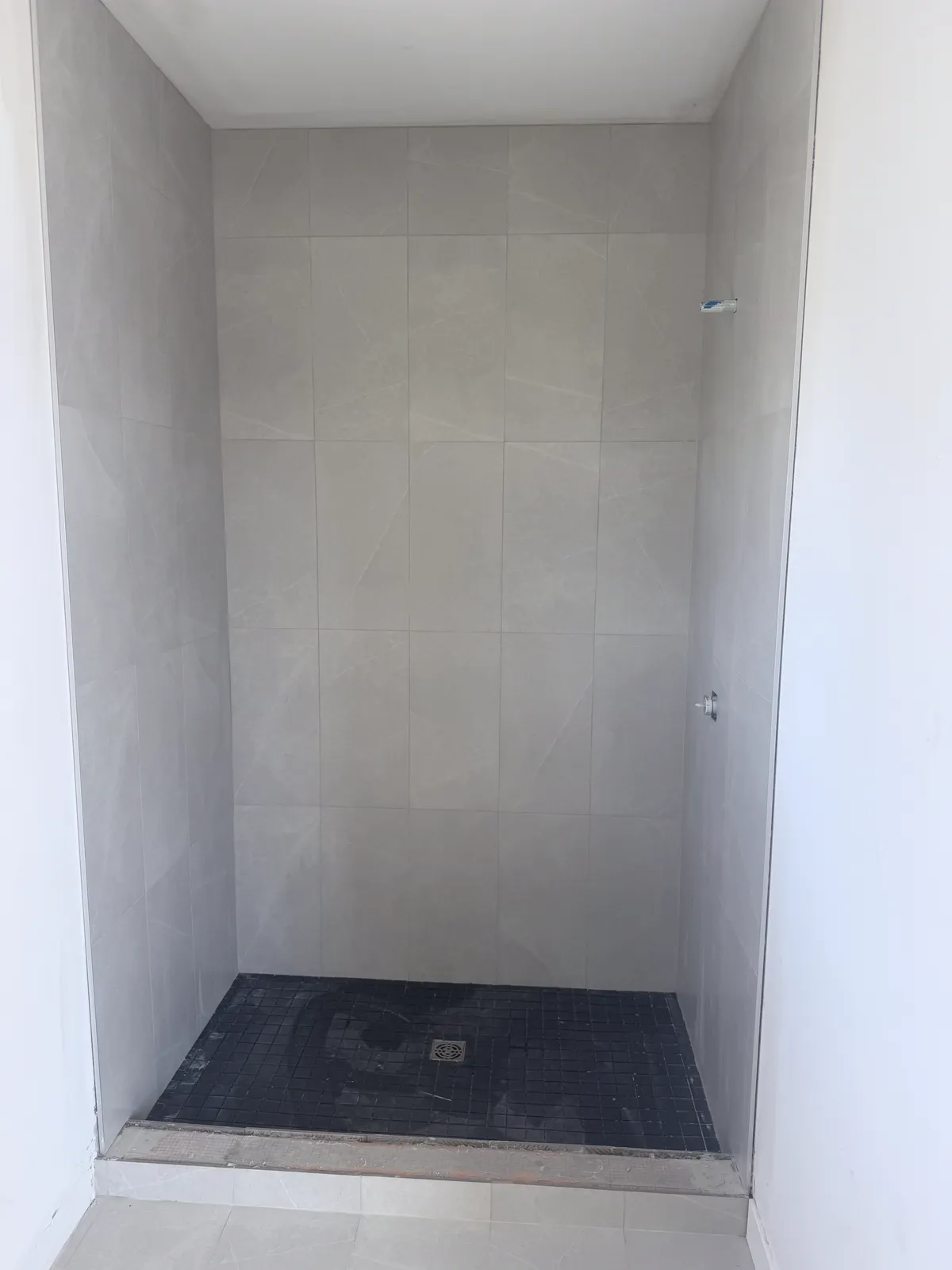
A grout close to the tile colour lets a large-format or marble-look wall read as one surface. It is the quietest choice and suits small showers.
Installation note: on a mosaic floor, a mid-tone grout often works better than a very light one, because it hides dirt in the many joints. Always choose from cured samples next to your actual tile.
Slip resistance and why wall-only tile never goes on the floor
A shower floor gets wet, soapy and sloped, all at once. Tile makers publish a slip-resistance value, often as DCOF, and many state which tiles suit wet floors or shower floors. Choose one the maker recommends for shower floors, with a matte, textured or honed finish. Small mosaics help, because the joints add grip.
Wall tile is a different product. Many glossy ceramics, glass tiles, fish scales, pickets and handmade tiles are rated for walls only. On a floor, they can be slippery, and they may crack or wear under foot traffic. A tile's spec sheet or box says where it can go. If it says walls only, keep it on the walls, even if that means a different tile on the shower floor. A matching floor tile in a similar colour almost always exists.
Putting the ideas together
A shower usually looks best with one star. A fish scale back wall pairs well with plain side walls and a simple mosaic floor. A large-format marble-look shower suits a quiet floor and a niche in the same tile. Two bold patterns side by side tend to fight, and too many materials make a small shower feel busy. Two or three tiles, used with intent, are usually enough.
A simple order helps. Pick the floor tile first, for grip and the drain. Then choose the wall tile for looks and cleaning, add one accent if you want one, and choose the grout colour last. For more ideas across the whole room, see small bathroom tile ideas and bathroom floor tile ideas. If you want to see a combination in your own room first, a 3D design consultation shows your shower with the tile, layout and grout colour before anything is ordered.
How shower tile ideas change labour and cost
The tile price is only part of the cost. Shaped tiles like fish scale, picket and arched tile take much longer to set and cut than square or rectangular tile. Large-format tile needs flatter walls and more care per piece. Mosaics take time on floors and in niches. Tile to the ceiling adds area, and every niche, bench and metal trim adds labour. The waterproofing behind the tile is about the same for every look.
For typical prices and what drives them, see what it costs to tile a shower in Ottawa. Agora Flooring waterproofs and tiles showers across Ottawa, including more than 350 showers waterproofed with Schluter-KERDI; our bathroom and shower tile page explains how we work.
Frequently asked questions
What is the most popular shower tile right now?
Large-format marble-look porcelain on the walls is one of the most popular looks, along with vertical stacked tile and handmade-look tile. Small mosaics and large tile with a linear drain are the common floor choices.
Can you use wall tile on a shower floor?
Not if the maker rates it for walls only. Shower floors need tile rated for wet floors, with a matte or textured finish. Check the box or spec sheet.
Should shower tile go to the ceiling?
It usually looks more finished and is easier to clean than stopping above the shower head. It adds tile and labour, and the top row needs a planned layout.
Is fish scale tile hard to install?
It takes more time than square tile. The curved rows have to stay aligned, and every edge piece is cut along a curve, so expect more labour and waste.
What tile is best for a walk-in shower floor?
Tile the maker rates for shower floors. Small mosaics suit a centre drain; larger tile works with a linear drain, which lets the floor slope in one plane.
Is dark grout a good idea in a shower?
It hides staining and makes the tile pattern stand out, but it shows uneven joints and can haze light or porous tile. Test it on a spare tile and consider a stain-resistant grout.