
Short answer
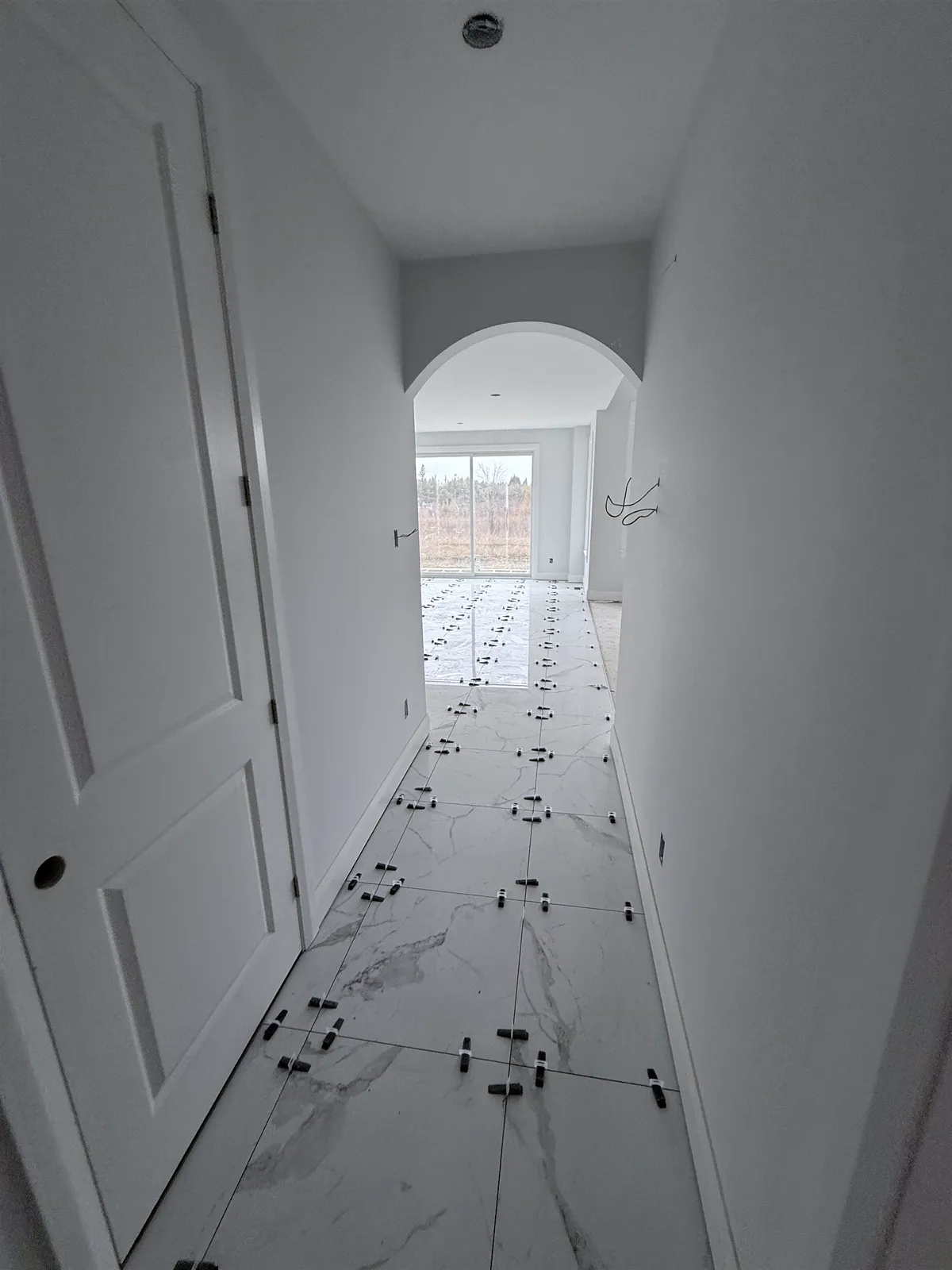
A linear shower drain is a long, narrow channel instead of a small square drain in the middle of the floor. Because water runs to a line, the shower floor only slopes in one direction. That lets you use large tile, carry the bathroom floor tile into the shower and build a curbless entry. It costs more than a centre drain and has to be planned before the plumbing and subfloor work, not after.
Linear drains used to be a high-end hotel detail. Now they are one of the most requested features in Ottawa bathroom renovations, mostly because people want bigger tile and fewer grout lines on the shower floor. Here is how they work, where they go, and what to decide early.
Why the drain shape changes the floor
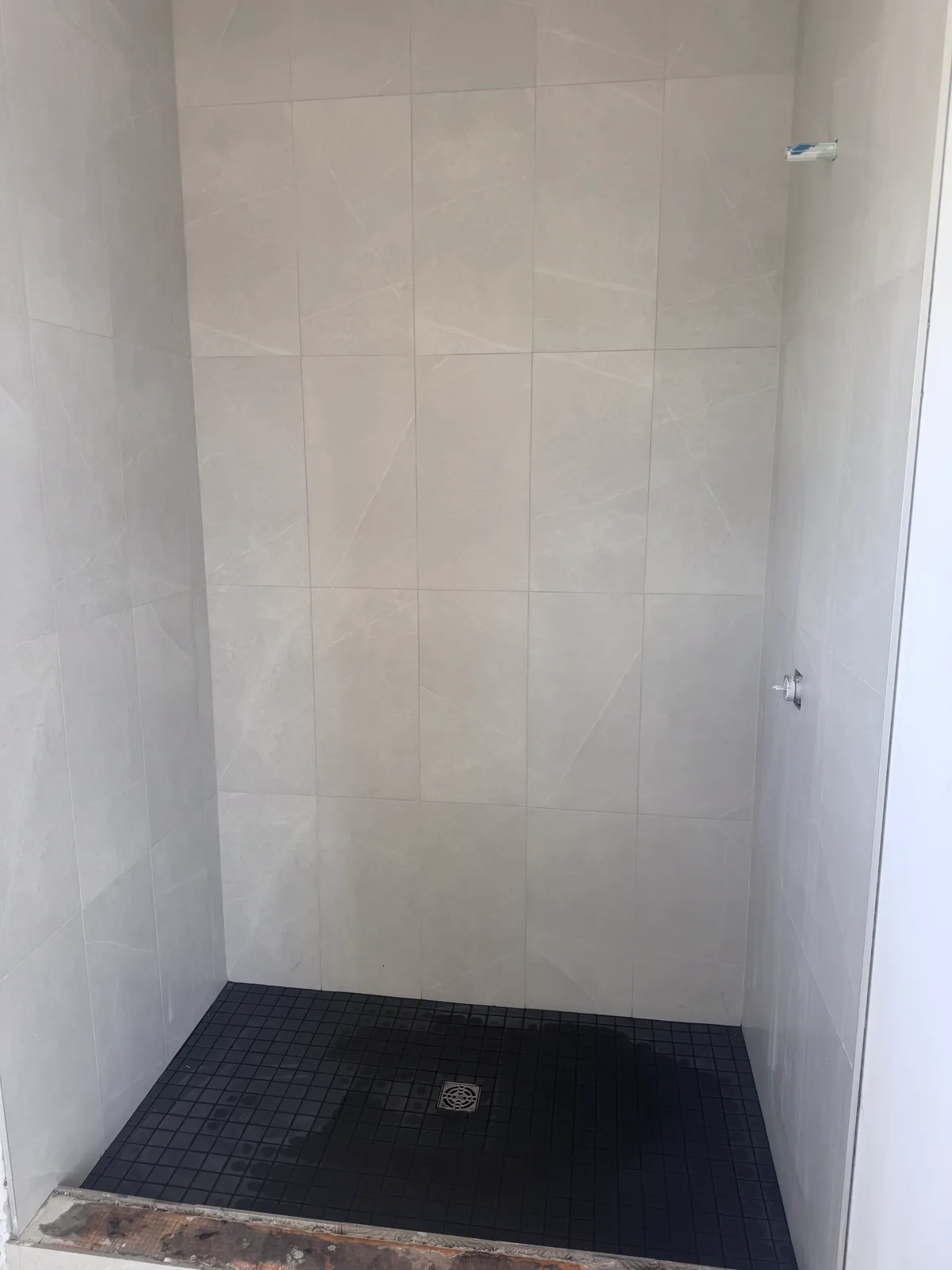
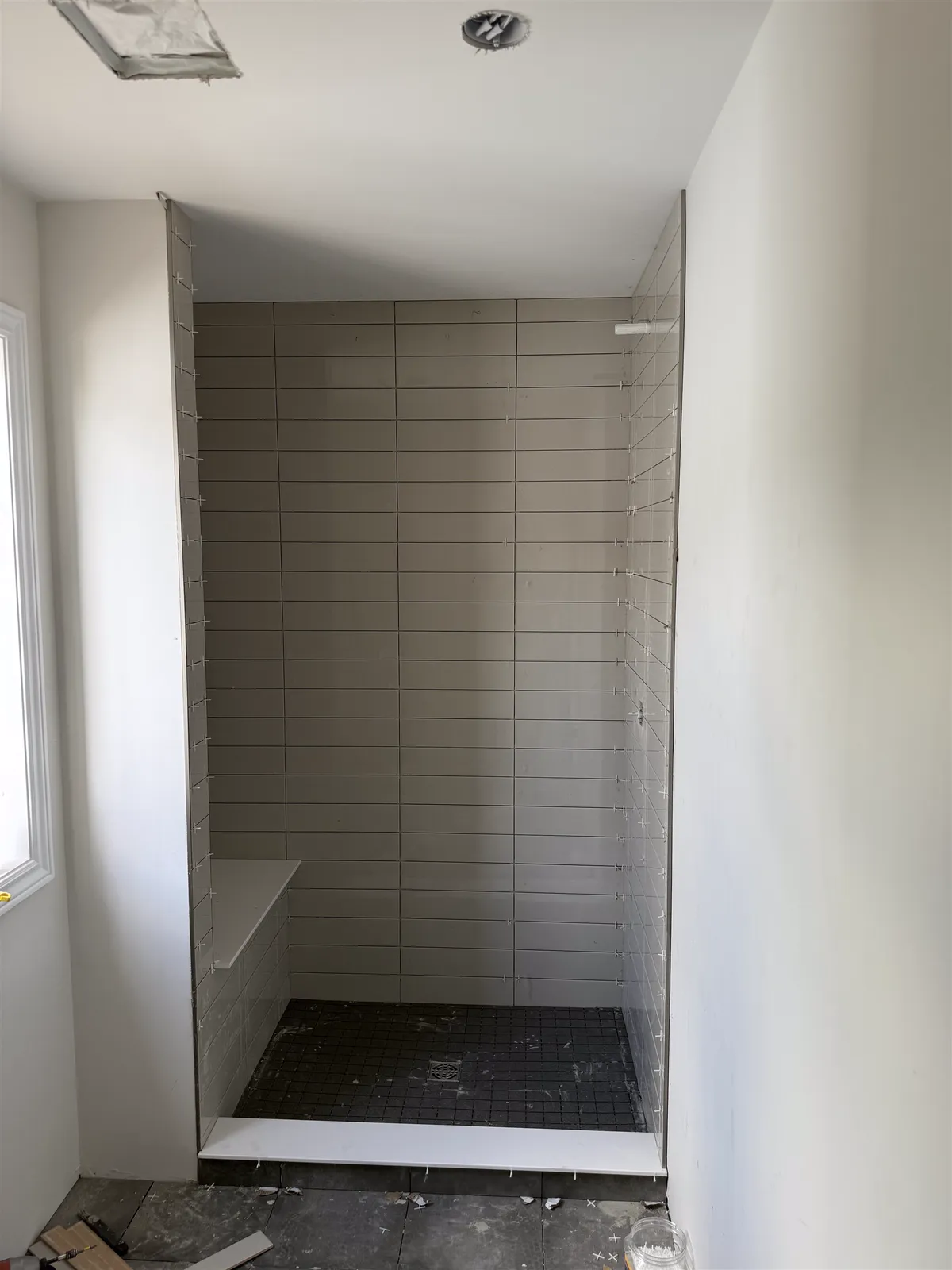
Every tiled shower floor slopes to the drain, usually about ¼ inch per foot. With a centre (point) drain, the floor slopes in from all four sides, like a shallow funnel. Large flat tiles can't follow that shape without being cut along the slope lines, so centre drains usually get small tile or mosaics.
With a linear drain, the whole floor is a single tilted plane running toward the channel. A flat plane can take large tile, even 24×48 porcelain, without extra cuts. For a side-by-side comparison of the two, see shower pan vs tiled shower floor (and linear vs centre drain).
Where to put a linear drain
- Against the back wall. The most common spot. The floor slopes away from the entrance, so water stays at the far end, and the channel lines up with the wall tile.
- At the entrance. Used for curbless showers: the channel catches water right where the shower meets the bathroom floor. The floor inside the shower slopes toward the entrance.
- Along the long side of a long, narrow shower, so the slope runs across the short width.
The drain position also decides where the plumbing goes, which joists may need work, and how the floor is built up. That is why it has to be chosen at the rough-in stage.
Grate styles
- Slotted or patterned grates in stainless steel, black, brass and other finishes.
- Tile-in (tile insert) grates, where a strip of the floor tile sits in the grate so the drain almost disappears.
- Wall-side channels that sit tight to the wall, leaving only a narrow gap.
Most linear drains come in set lengths from about 2 to 6 feet. Pick a length that suits the shower width and lines up with the tile layout, so you don't end up with thin slivers of tile at the ends.
Waterproofing a linear drain
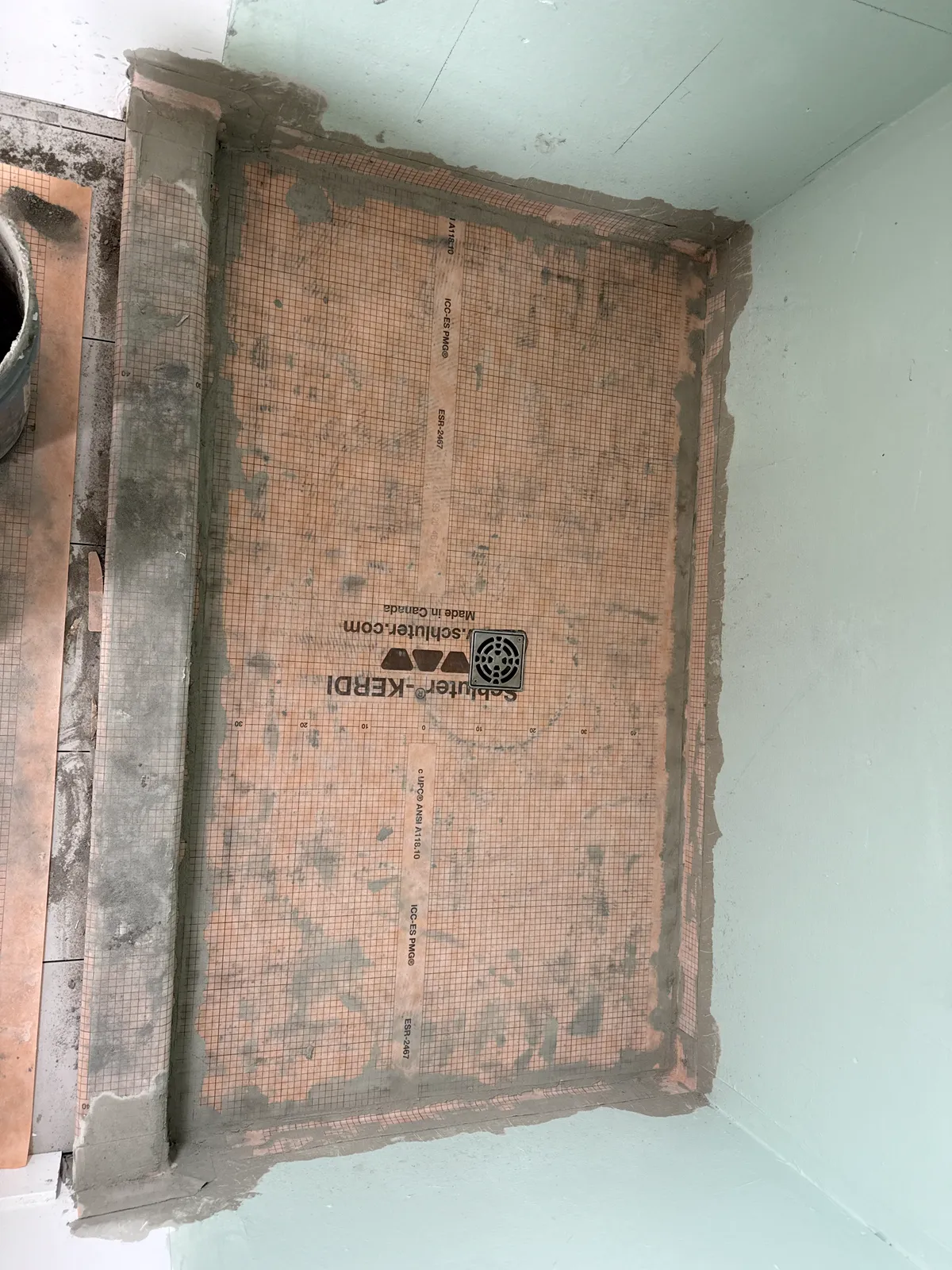
The drain is the most important joint in the waterproofing. The waterproofing membrane has to bond to the drain's flange so water that gets through the grout still ends up in the drain. Systems such as Schluter-KERDI-LINE are made for this: the KERDI membrane bonds directly to the drain body. See how to waterproof a shower and what Schluter-KERDI is.
Curbless showers
A curbless shower has no step in. To keep water inside, the shower floor has to drop below the bathroom floor, which usually means lowering or recessing the subfloor between the joists, or building up the rest of the bathroom floor. A linear drain makes this much easier because the slope runs in one direction. Curbless showers are popular for accessibility and aging in place.
Pros and cons
| Pros | Cons |
|---|---|
| Large tile on the shower floor, even the same tile as the bathroom | The drain costs more than a centre drain |
| Fewer grout lines to clean | Needs planning before plumbing and subfloor work |
| Makes curbless and walk-in showers practical | Precise slope and layout take more installation time |
| Clean, modern look | Hair collects along the channel and the trap needs regular cleaning |
When a centre drain makes more sense
- You like a mosaic or small tile floor: it bends into a four-way slope easily, and the extra grout lines give good grip.
- The plumbing is already in place and moving it is costly.
- The budget is tight and the shower has a curb anyway.
Frequently asked questions
Do linear drains clog more often?
Not more often, but hair collects along the channel. Most have a removable grate and a hair strainer that lifts out. Cleaning it every few weeks keeps water flowing.
Can I switch to a linear drain during a renovation?
Usually, yes, once the old shower is removed down to the subfloor. The drain line has to be moved to the new location, and the floor rebuilt with the right slope and waterproofing.
Are linear drains only for curbless showers?
No. Many go in showers with a normal curb, simply to allow large tile on the floor.
Can I use a shower base with a linear drain?
Yes. Some pre-formed bases and pre-sloped foam trays are made for linear drains. A tiled floor gives you more choice of size and tile.