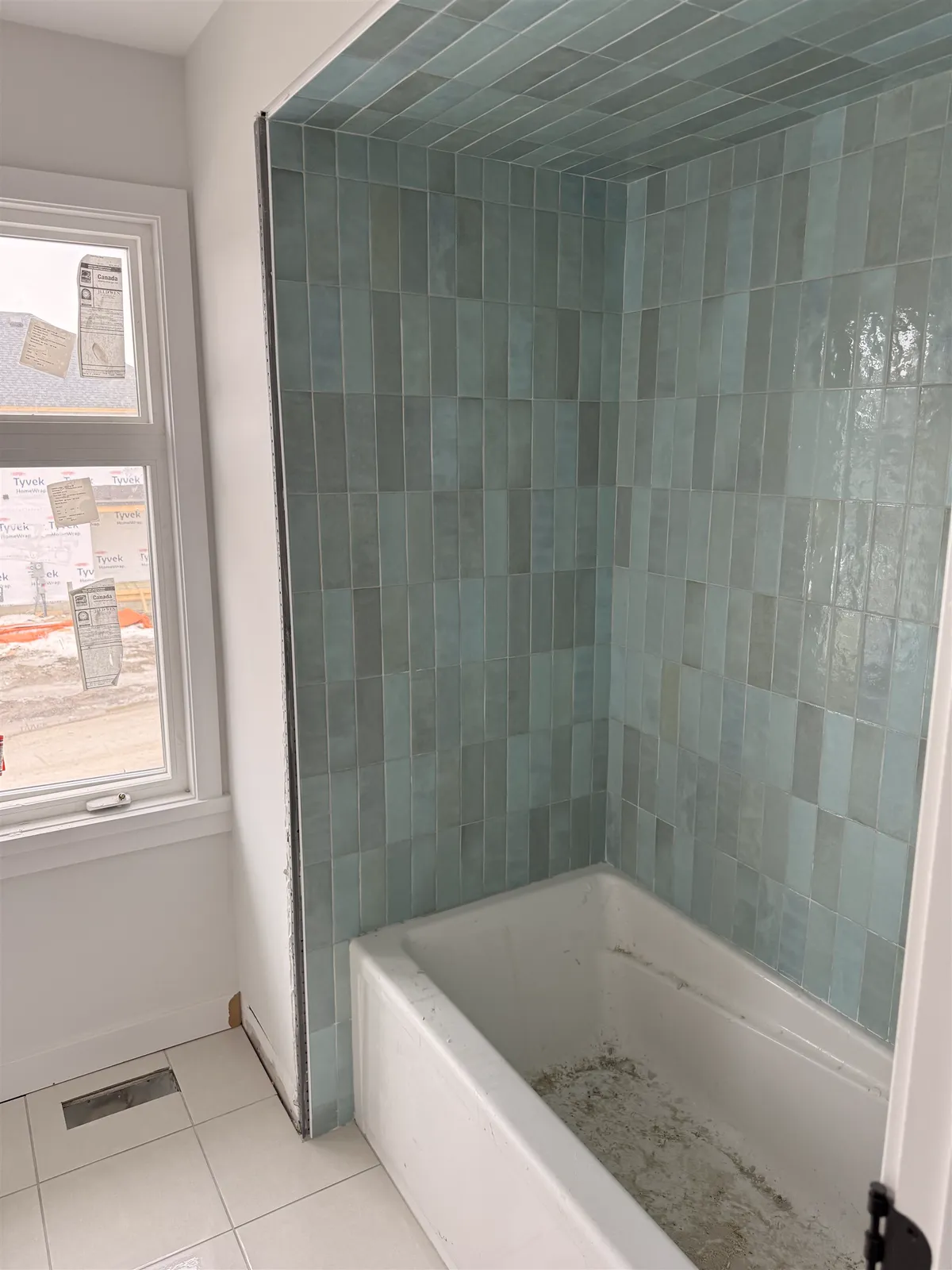
Short answer
Zellige tile is handmade glazed terracotta from Morocco. Every piece is shaped, cut and glazed by hand, so the faces are wavy, the edges chipped and the colour varies from tile to tile. That irregularity is the look, not a defect, and it changes the installation: more mortar and back-buttering, a tight joint or a slightly wider one, some lippage you accept, sealing before grouting where the supplier calls for it, and more sorting and waste. Zellige-look porcelain and ceramic give a similar shimmer with far less fuss.
Zellige tile is one of the most requested finishes for kitchen backsplashes and feature walls, and one of the most misunderstood. People fall for the shimmer in photos, then are surprised when the boxes arrive full of tiles that are different sizes, slightly warped and chipped at the corners. This guide explains what zellige is, where it works, how it compares with zellige-look porcelain, and what a careful installer does differently with handmade tile.
What zellige tile is
Zellige (also spelled zelige or zellij) is a traditional Moroccan tile, long associated with the city of Fez. It is made from local terracotta clay that is formed by hand, dried, cut into shape, glazed and fired in a kiln. The process has changed little over the centuries. In traditional Moroccan architecture, small pieces cut into stars, crosses and other shapes are assembled into intricate geometric mosaics on walls, fountains and floors.
What is sold for kitchens and bathrooms in North America is mostly simpler: small squares and rectangles, such as 4" squares and 2" × 6" pieces, plus hexagons and a few other shapes. They come in solid glaze colours, from white and cream to deep greens, blues and earth tones. Each piece is still made by hand, which is what gives zellige its character.
The body underneath the glaze is a soft, fairly porous clay, quite different from dense porcelain. The glaze covers the face and often runs a little over the edges, but the sides and back are usually bare clay. That matters for setting, grouting and for where the tile can go, as explained below.
Why zellige looks the way it does
Because every piece is formed and glazed by hand, no two are the same. Expect these features in genuine zellige:
- Wavy, uneven faces. The tile surface rises and dips, and the glaze pools in the low spots.
- Chips and rough edges. Corners and edges are often chipped, sometimes deeply.
- Varying size and thickness. Pieces from the same box differ noticeably.
- Colour variation. Shades shift from tile to tile, and the glaze can be thick in one spot and thin in another.
- Pinholes, crazing and small cracks in the glaze. These are part of the hand process.
Together, these create the effect people love. Light catches each face at a slightly different angle, so a zellige wall seems to shimmer and change through the day. Under-cabinet lighting or a window beside the wall exaggerates it.
The same features are why zellige isn't for everyone. If you want crisp, straight grout lines and a perfectly flat wall, real zellige will disappoint you, however carefully it is installed. It helps to see a large installed sample, or a real wall, before ordering. A single showroom tile doesn't show what a whole wall of variation looks like.
Zellige vs zellige-look porcelain and ceramic
Many tile makers now produce porcelain and ceramic tiles that copy the zellige look. They have a glossy, undulating glaze, soft edges and deliberate shade variation, but they are made by machine to consistent sizes. For most homes, this is the practical choice, and it is worth looking at both before deciding.
| Real zellige | Zellige-look ceramic or porcelain | |
|---|---|---|
| How it is made | By hand, glazed terracotta | Machine-pressed, glaze made to vary |
| Size and thickness | Vary piece to piece | Consistent within a lot |
| Chips and pits | Expected | Few or none |
| Body | Soft, porous clay | Denser; porcelain absorbs very little water |
| Sealing | Often recommended by suppliers | Usually not needed for the tile |
| Installation time | Slower: sorting, back-buttering, uneven setting | Similar to standard wall tile |
| Waste | Higher | Typical for the layout |
| Floors | Usually a wall tile; check the rating | Some porcelain lines are rated for floors |
The look-alikes are flatter and more even, so they shimmer less. Some lines are very convincing, especially with a thin joint and matching grout. Porcelain versions absorb very little water and handle wet areas easily; our guide to porcelain vs ceramic tile explains the difference. If you love the look but the budget, the timeline or the maintenance of real zellige worries you, a good zellige-look tile is the safer choice.
Zellige backsplash: where it works best
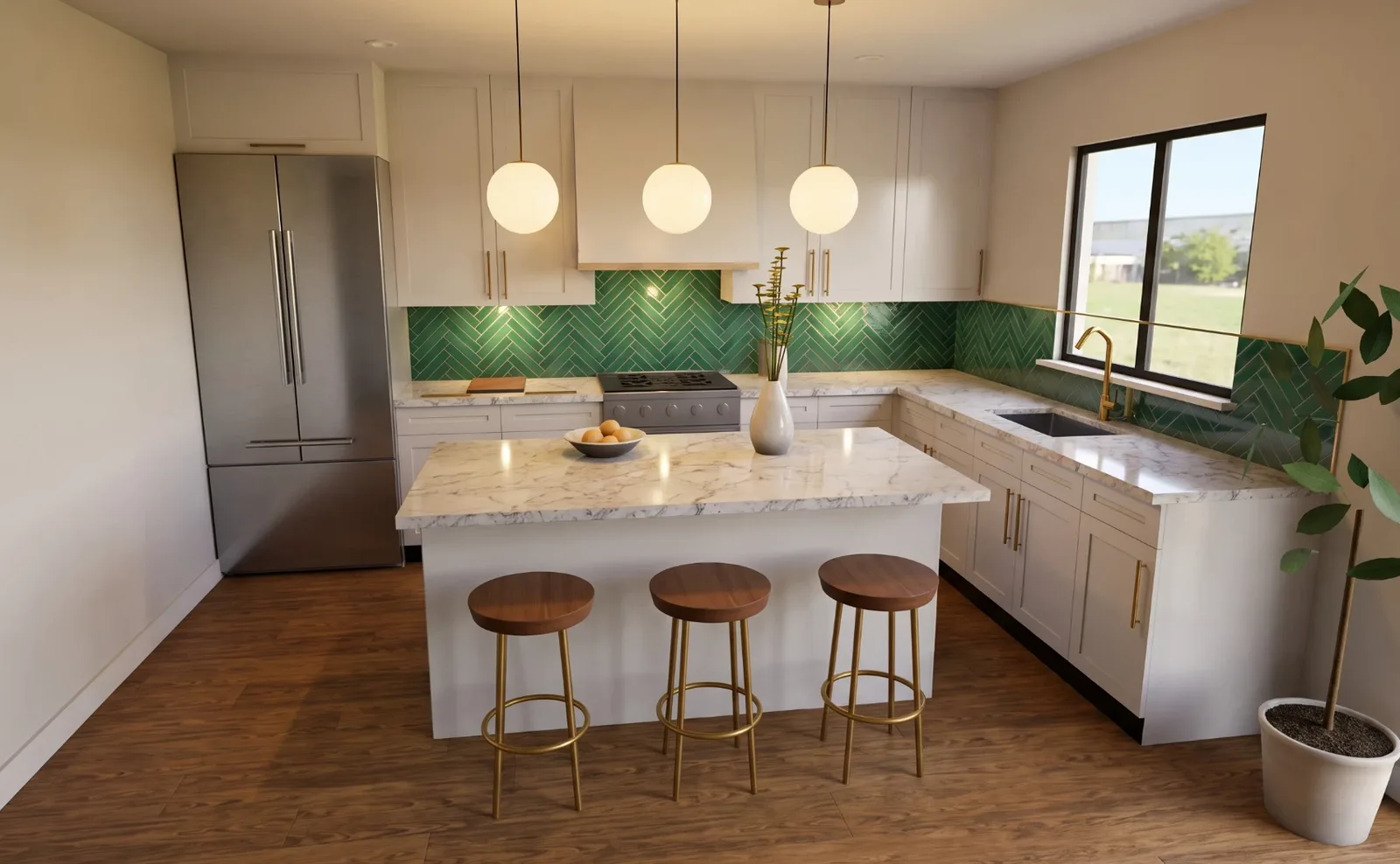
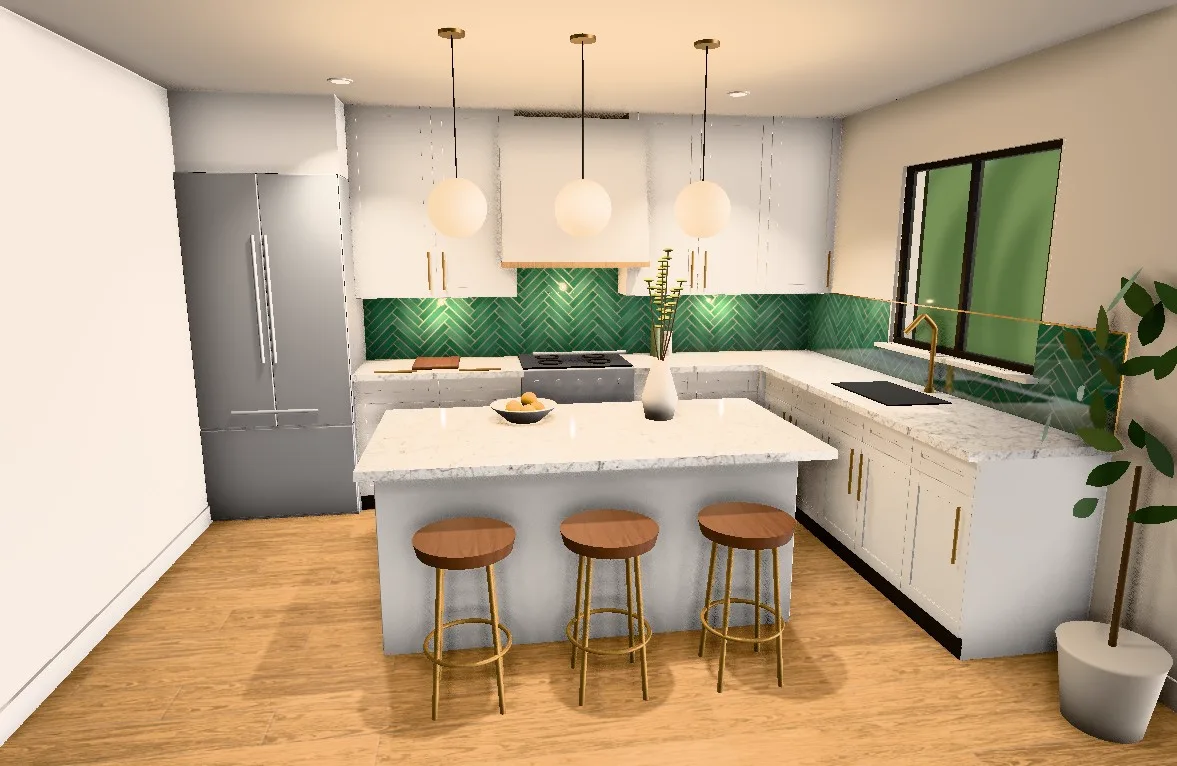
A zellige backsplash is the most common use, and it suits the tile well. A backsplash is a small, dry, vertical area, so the soft body isn't under foot traffic and doesn't sit in water. The wall is at eye level and usually lit from above, which shows off the glaze. Because the area is small, a premium handmade tile is often affordable here.
A few things to plan. Behind the range, grease and splatter collect in the pits and in the joints, so a sealed surface and a stain-resistant grout help. Glossy zellige next to a busy countertop can compete with it; a calm counter usually lets the tile lead. Where the tile ends at the side of a counter or a window, the edge needs finishing. Zellige edges are already irregular, so many installers use a slim metal profile or simply let the glazed edge of a full tile finish the run. Our guide to tile edge trim compares the options.
The steps of the job are the same as for any backsplash: power off, outlets extended, a level start line and sealant at the countertop joint. They are covered in how to install a backsplash. For other styles to compare, see our kitchen backsplash ideas.
Zellige in a shower
Zellige can be used on shower walls, and it often is. Tile and grout are never the waterproofing in a shower, whatever the tile. The water is stopped by a membrane behind it, installed as one complete system. Our guide to waterproofing a shower covers how that is done.
The difference with zellige is the tile itself. Its body is porous, its edges are bare clay, and the glaze may have pinholes and fine cracks. In a shower, that means the tile and joints take on more water, can darken when wet and may hold soap scum and mineral deposits in the texture. Many suppliers recommend sealing zellige used in wet areas and resealing it over time. Some advise against using it where water hits directly or sits, such as shower floors, benches and niche sills. Follow the supplier's guidance for the specific product, and ask before you order.
A practical approach many people take is to use zellige on a feature wall or the back wall, out of the heaviest spray, and choose a porcelain for the floor. A zellige-look porcelain on the shower walls avoids the issue altogether. Our guide to choosing shower tile compares materials for wet areas. Most glazed zellige is sold as wall tile, and wall-only tile should never go on a floor.
How zellige tile is installed
Handmade tile installation follows the same basics as any wall tile, but nearly every step takes longer.
A flat wall still matters. The tile isn't flat, but the wall should be. A wavy wall plus wavy tile becomes a messy wall. Drywall is a suitable base for a dry backsplash; a shower needs its waterproofing system first.
Mortar choice. A polymer-modified thin-set suited to wall tile is the usual choice. A white mortar is often preferred, because grey can show at chipped edges and through thin, light glazes. Follow the tile supplier where it names a mortar. Our guide on which thin-set to use explains the types.
More mortar and back-buttering. The backs and thicknesses vary, so a thin layer from a small notched trowel won't support every tile. Installers typically use a slightly larger notch than for flat wall tile and back-butter each piece, so a thinner tile can be pushed out to meet its neighbours. Each tile is bedded individually, not pressed in as a sheet.
Setting to an average plane. With tiles of different thicknesses, the goal isn't a perfectly flat surface. It is a wall that reads as even from a normal viewing distance, with no single tile sticking far out. The installer sets each tile by eye and hand, adjusting the mortar behind it. Levelling clips, used on flat porcelain to hold edges flush, don't suit tiles that are meant to be uneven.
Lippage is expected. Edge-to-edge height differences that would be a defect on rectified porcelain are normal with zellige. That is worth agreeing with your installer before the job, so everyone has the same expectation. Our guide to tile lippage explains how it is judged on standard tile.
Mixing as you go. Tiles are pulled from several boxes at once and blended on the wall, so colour shifts are spread evenly instead of forming patches.
Zellige grout joints: tight or slightly wider
There are two schools of thought, and both are valid. Traditional zellige is often set very tight, with the pieces almost touching and the joint following each tile's irregular edge. Many zellige suppliers recommend a tight joint close to the 1/16" minimum that industry guidance sets for grout joints. The result is a continuous, shimmering surface where the grout barely shows.
Other installers and homeowners prefer a slightly wider joint, often around 1/8". It gives the variation in size somewhere to go, keeps the rows straighter, and makes the wall look more like tile than a single surface. With highly irregular tile, a tight joint can also make the rows wander more. Our guide to tile spacers and grout joint width lists typical joints for handmade and zellige-look tile and explains why the maker's recommendation comes first.
Spacers are used loosely, if at all. Because the edges are irregular, a spacer at one corner doesn't make the joint even along the side. Many installers set zellige mostly by eye, checking the rows with a level every few courses.
Sealing and zellige grout
Because the clay body and bare edges are absorbent, grout pigment can soak into them and stain the tile. For that reason, many zellige suppliers recommend sealing the tile, or at least its edges, before grouting, then sealing again once the grout has cured. Some light-coloured and crackled glazes are especially prone to staining. The supplier's instructions decide which sealer to use and when, so follow those.
The joint width usually decides the grout. The usual crossover between unsanded and sanded cement grout is about 1/8": unsanded for tight joints, sanded or a high-performance grout for wider ones. Many installers lean toward unsanded or a fine high-performance grout with zellige, because the tight joints are common and sand can scratch some soft glazes during cleanup. Our guide to grout types explains the choices.
Grouting zellige takes care. The pits, chips and pinholes catch grout, so the installer works small sections, packs the joints and cleans the face carefully before the grout firms up. Some chips are left filled with grout, which is part of the look; others are cleaned out. Agree on that in advance too. Grout colour has a big effect: a grout matched to the tile softens the joints, while a contrasting grout outlines every irregular edge. Choose from a cured grout sample next to the actual tile. Inside corners and the joint at the countertop get flexible sealant, not grout, as with any tile.
Ordering zellige: sorting, waste and lead times
Order more extra tile than you would for a standard wall tile in the same layout. Chipped pieces you don't want on the wall, pieces that are too thin or too warped, and colour outliers all get set aside, and handmade tile also breaks more easily in cutting. Ask the supplier how much extra they suggest for your layout, and keep a box of leftovers for repairs, because a later batch won't match exactly.
Open all the boxes before the job starts and lay out a sample of tiles from each. Some installers sort the best-looking pieces for the most visible areas, such as the centre of the range wall, and use the rest around the edges and under cabinets. Check that the colours across boxes are close enough for you; handmade batches can vary noticeably.
Imported handmade tile can have long or uncertain lead times. Confirm the delivery date before booking the installation, especially in a kitchen renovation where the backsplash is one of the last steps and a late delivery holds up the finish. Our guide to the kitchen renovation order shows where the backsplash fits.
Caring for zellige and what it costs to install
Day to day, wipe zellige with a soft cloth and a pH-neutral cleaner. Avoid harsh acids and abrasive pads, which can dull the glaze and attack the grout and any sealer. Behind a range, wipe grease off regularly so it doesn't build up in the pits. Reseal as often as the sealer maker suggests, more often in a shower. Over time, zellige develops a slight patina, which many owners like.
Installation takes more labour than standard wall tile. Sorting, back-buttering each piece, setting by hand, slower cuts, careful grouting and sealing all add time, even on a small backsplash. The tile itself also usually costs more than machine-made alternatives. When you compare quotes, check that each one includes sealing, the grout type and the edge finishes. Our guide to backsplash installation cost in Ottawa explains what drives the price.
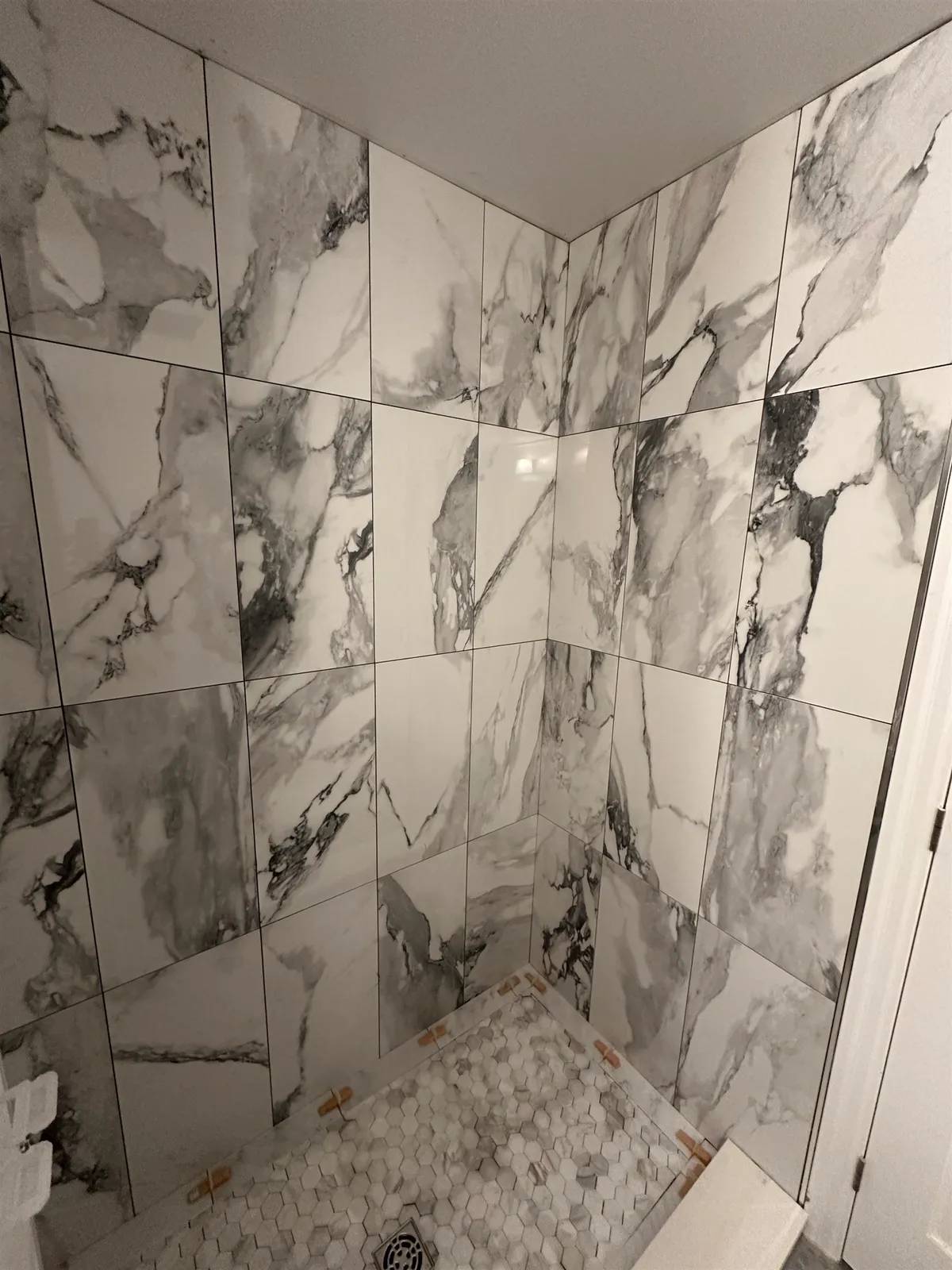
Agora installs handmade and handmade-look glazed tile on backsplashes, feature walls and tub surrounds across Ottawa. The tub surround pictured above is a glazed tile with handmade-style colour variation, a good example of how much character a shifting glaze brings to a wall.
Frequently asked questions
What is zellige tile?
Zellige is a handmade glazed terracotta tile from Morocco. Each piece is shaped, cut and glazed by hand, so it has a wavy face, irregular edges and colour variation that make a wall shimmer.
Is zellige tile good for a kitchen backsplash?
Yes, a backsplash is one of the best uses for it. The area is small and dry, and the light shows off the glaze. Seal it where the supplier recommends and use a stain-resistant grout behind the range.
Can you use zellige in a shower?
It can be used on shower walls with proper waterproofing behind it, but it is more porous than porcelain, especially at the edges. Follow the supplier's advice on sealing and placement, and choose a porcelain for the floor.
Do you seal zellige before grouting?
Many suppliers recommend it, because the clay edges can absorb grout pigment and stain. Follow the instructions for your tile and sealer.
What grout is best for zellige?
It depends on the joint width. Tight joints usually take unsanded or a fine high-performance grout; wider joints of about 1/8" and up can take sanded grout. A grout matched to the tile colour gives the softest look.
Is uneven zellige tile a defect?
No. Uneven faces, chips, colour shifts and some lippage between tiles are normal for genuine handmade zellige. If you want a flat, uniform wall, choose a zellige-look porcelain or ceramic instead.
Is zellige-look porcelain a good alternative?
For most homes, yes. It copies the glossy, varied glaze in consistent sizes, needs no sealing, installs like standard tile and suits wet areas. It shimmers a little less than the real thing.