
Short answer
Porcelain is a denser, harder type of ceramic tile that absorbs almost no water (0.5% or less). It is the better choice for floors, showers, high-traffic areas and anything outdoors. Ceramic (non-porcelain) tile is softer, lighter and easier to cut, and is great for walls and backsplashes. Both look similar once glazed; the difference is what they're made of.
What makes porcelain different
All porcelain is ceramic, but not all ceramic is porcelain. Porcelain is made from finer, denser clay and fired hotter, which gives a tile that's harder and much less absorbent. In North America, a tile can only be sold as porcelain if it absorbs 0.5% of its weight in water or less.
| Porcelain | Ceramic (non-porcelain) | |
|---|---|---|
| Water absorption | 0.5% or less | Higher (often 3% or more) |
| Hardness and wear | Very hard; good for heavy traffic | Softer; best for walls and light-traffic floors |
| Outdoors / freeze–thaw | Yes, if rated for exterior use | Generally no |
| Chips | Colour-body and through-body options hide chips | Glazed; a chip shows the clay colour |
| Cutting and drilling | Harder; needs good blades and bits | Easy |
| Weight | Heavier | Lighter (good for walls) |
| Sizes | Up to very large slabs | Mostly small to medium |
| Cost | Usually higher | Usually lower |
Which to use where
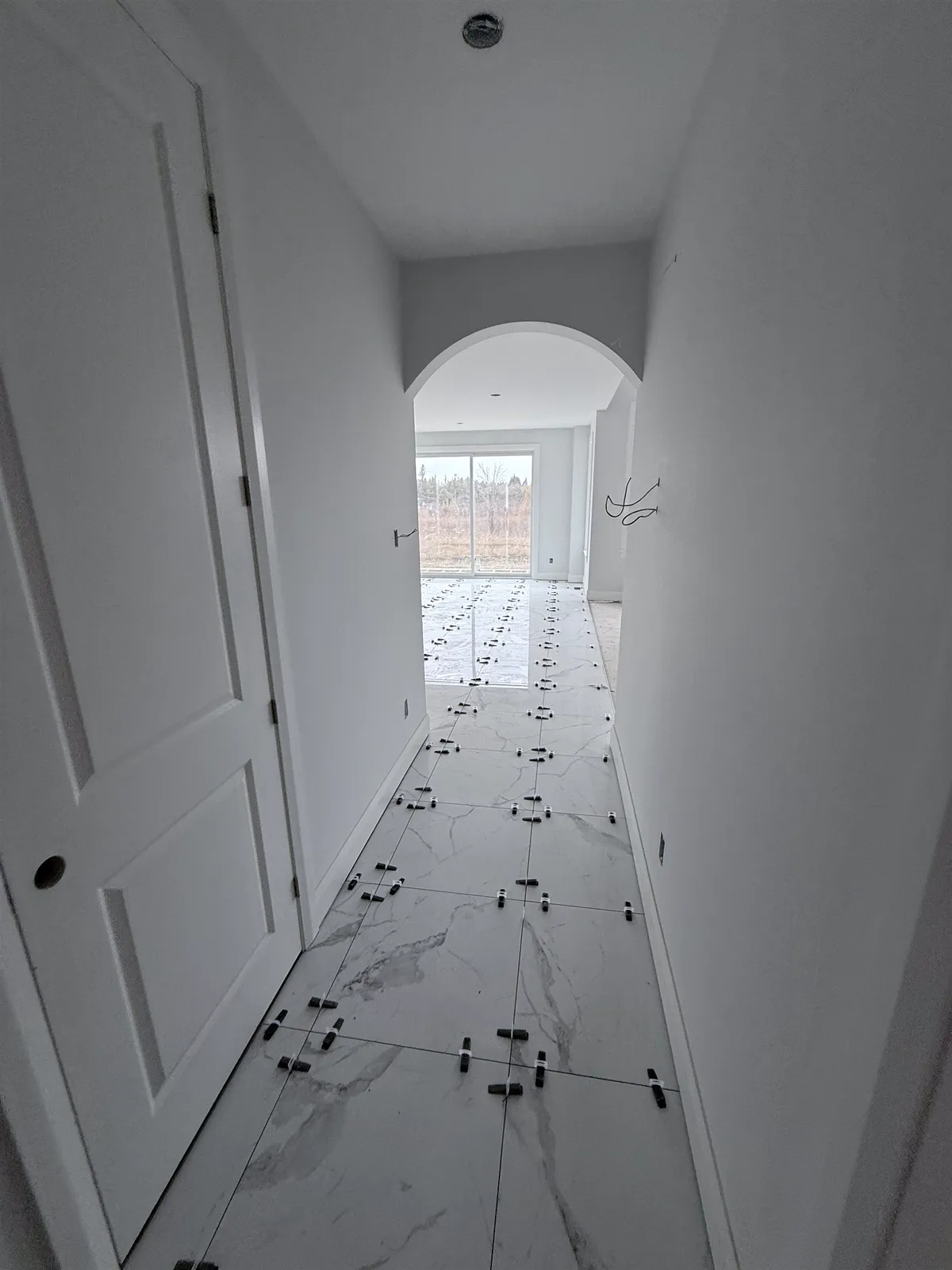
- Bathroom floors: porcelain, with a slip-resistant finish.
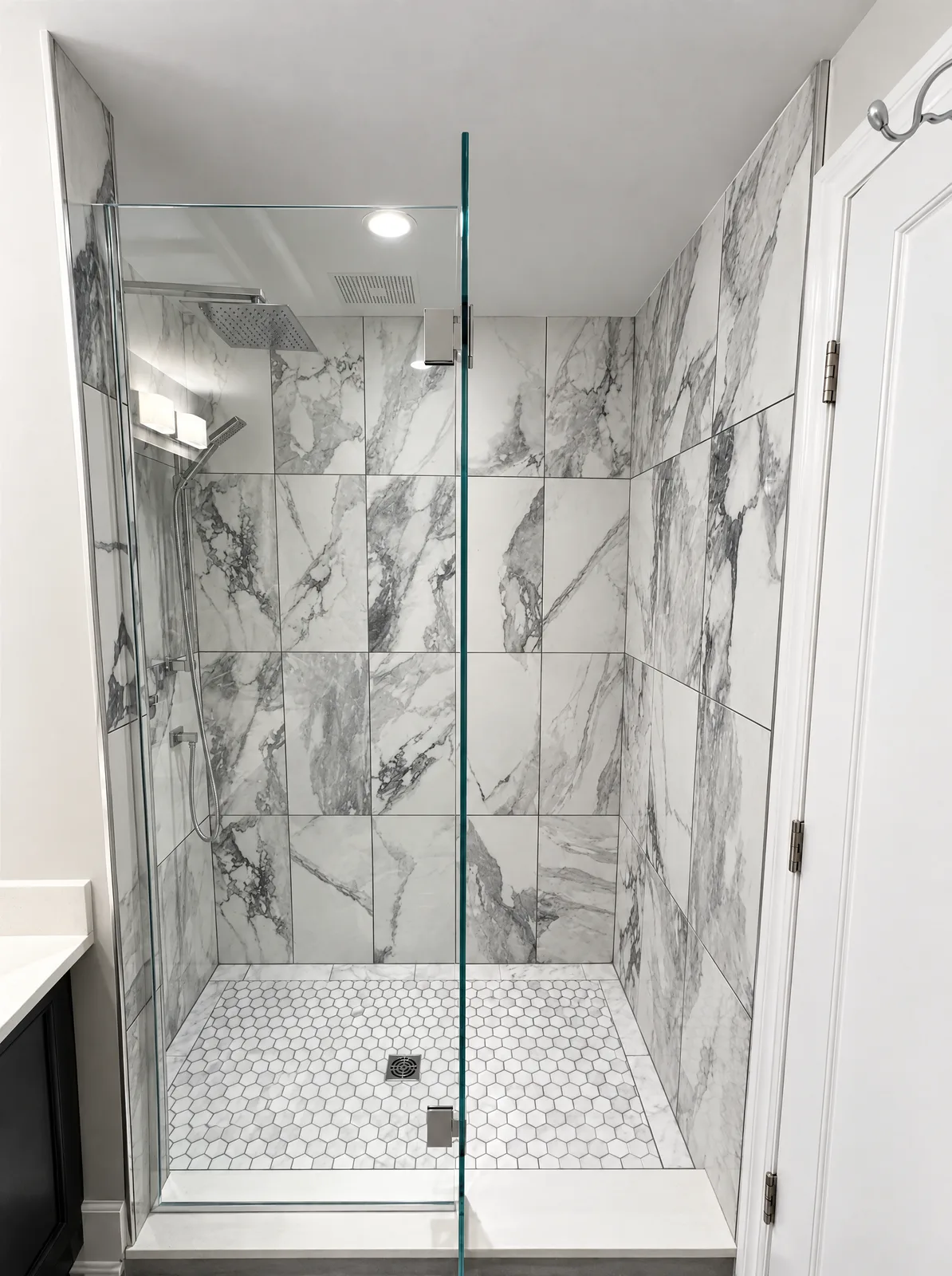
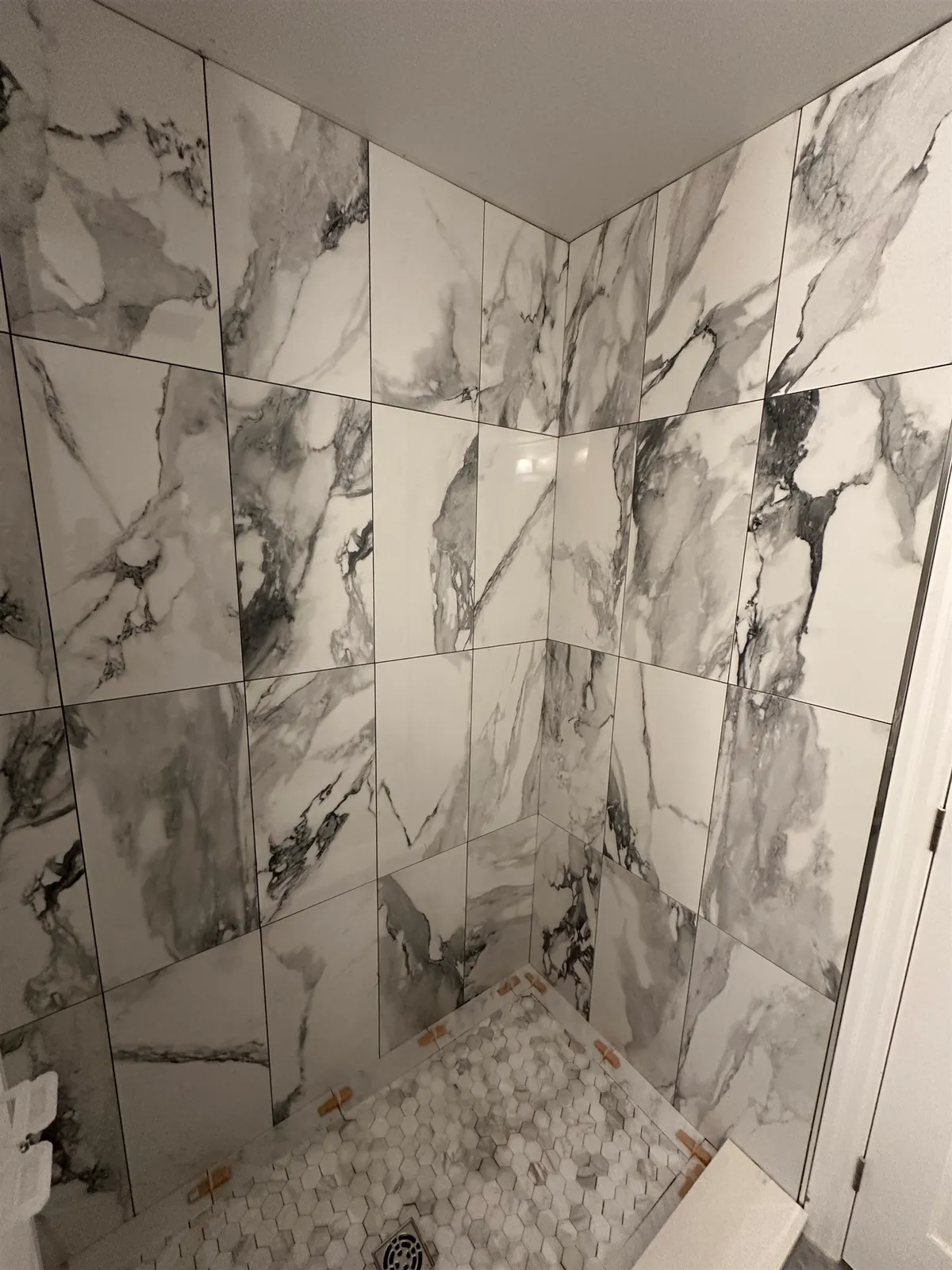
- Shower walls: either. Ceramic wall tile is fine, because the waterproofing is behind the tile (see how showers are waterproofed).
- Shower floors: porcelain or a mosaic rated for floors and wet areas.
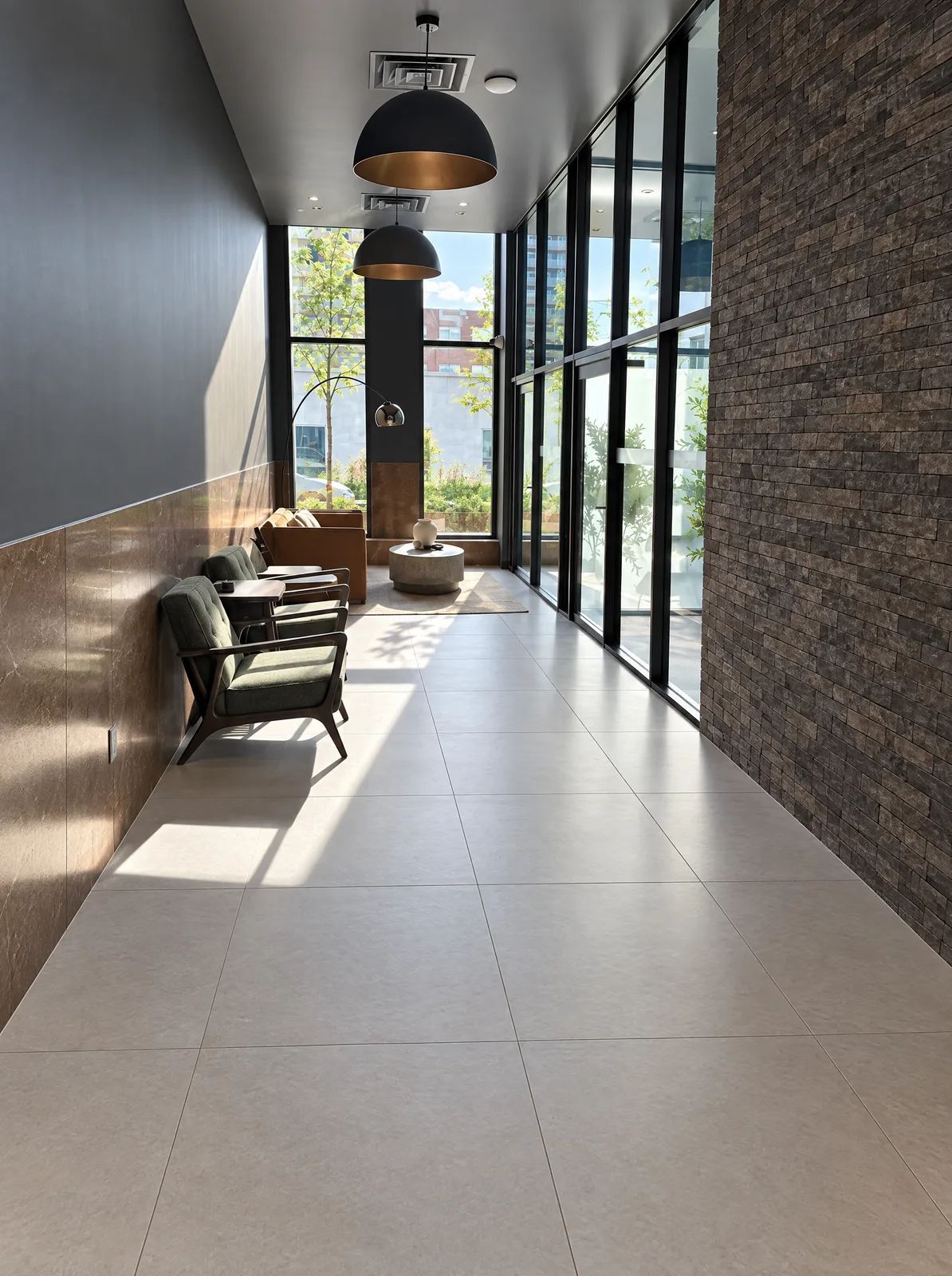
- Kitchen and entry floors: porcelain. Ottawa winters bring salt, sand and slush to the entry.
- Backsplashes: ceramic is often ideal: light, easy to cut and available in many glazes.
- Outdoors, balconies, unheated porches: only porcelain rated for exterior and freeze–thaw use.
Glazed, colour-body and through-body porcelain
- Glazed porcelain has a printed glaze on top (most wood-look and marble-look tile).
- Colour-body porcelain's body is tinted to match the surface, so chips are less noticeable.
- Through-body (unglazed) porcelain is the same all the way through, which is best for commercial floors.
Ratings worth checking
- Slip resistance (DCOF): for level interior floors that will be walked on when wet, look for a DCOF of 0.42 or higher.
- PEI rating (glazed tile wear): PEI 3 and up for most residential floors, 4–5 for heavy traffic.
- Frost resistance for any tile used outside.
Does porcelain need a different installation?
Porcelain's low absorption means it needs a good polymer-modified or large-tile mortar, or the mortar your membrane maker specifies (see modified vs unmodified thin-set). It is also harder to cut cleanly, which is part of why porcelain installation can cost more. Large porcelain tile needs a very flat substrate; see our large-format tile guide.