
Short answer
Porcelain tile is the most durable, water-proof and long-lasting choice, and the natural pick for bathrooms, showers and entries. It is harder and colder underfoot unless heated. Luxury vinyl is warmer, softer, quieter and quicker to install, and it is a practical choice for kitchens and busy family homes. Both handle water on the surface.
Kitchens and bathrooms are where water, dropped dishes and heavy traffic meet. Two floors dominate these rooms today: porcelain tile and luxury vinyl plank or tile (LVP/LVT). Both can look like wood or stone. Here is how they really compare.
Side by side
| Porcelain tile | Luxury vinyl | |
|---|---|---|
| Water | Impervious; grout needs care | Waterproof surface; water can get under seams in a flood |
| Scratches & wear | Extremely hard-wearing | Good; depends on wear layer |
| Dropped dishes | Dishes break; a tile can chip | Forgiving; dishes may survive |
| Comfort | Hard; cold without in-floor heat | Softer and warmer |
| Sound | Can be loud | Quieter |
| Lifespan | Decades | Long, but shorter than tile |
| Repairs | Single tiles can be replaced by a pro | Planks can be replaced; easier if floating |
| In-floor heating | Ideal | Only with products rated for it |
| Installation | More preparation and time | Faster; needs a flat subfloor |
Bathrooms: tile usually wins
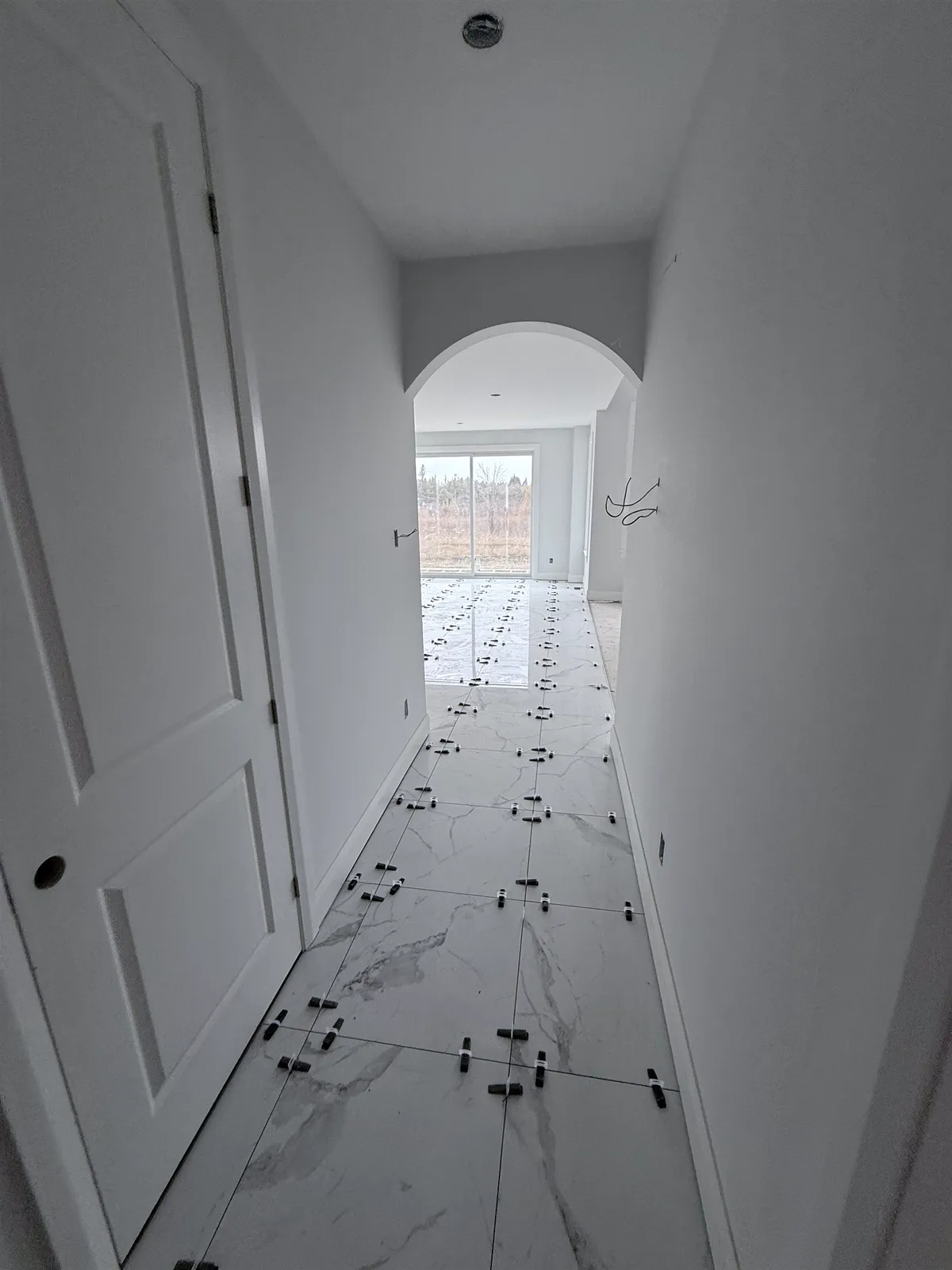
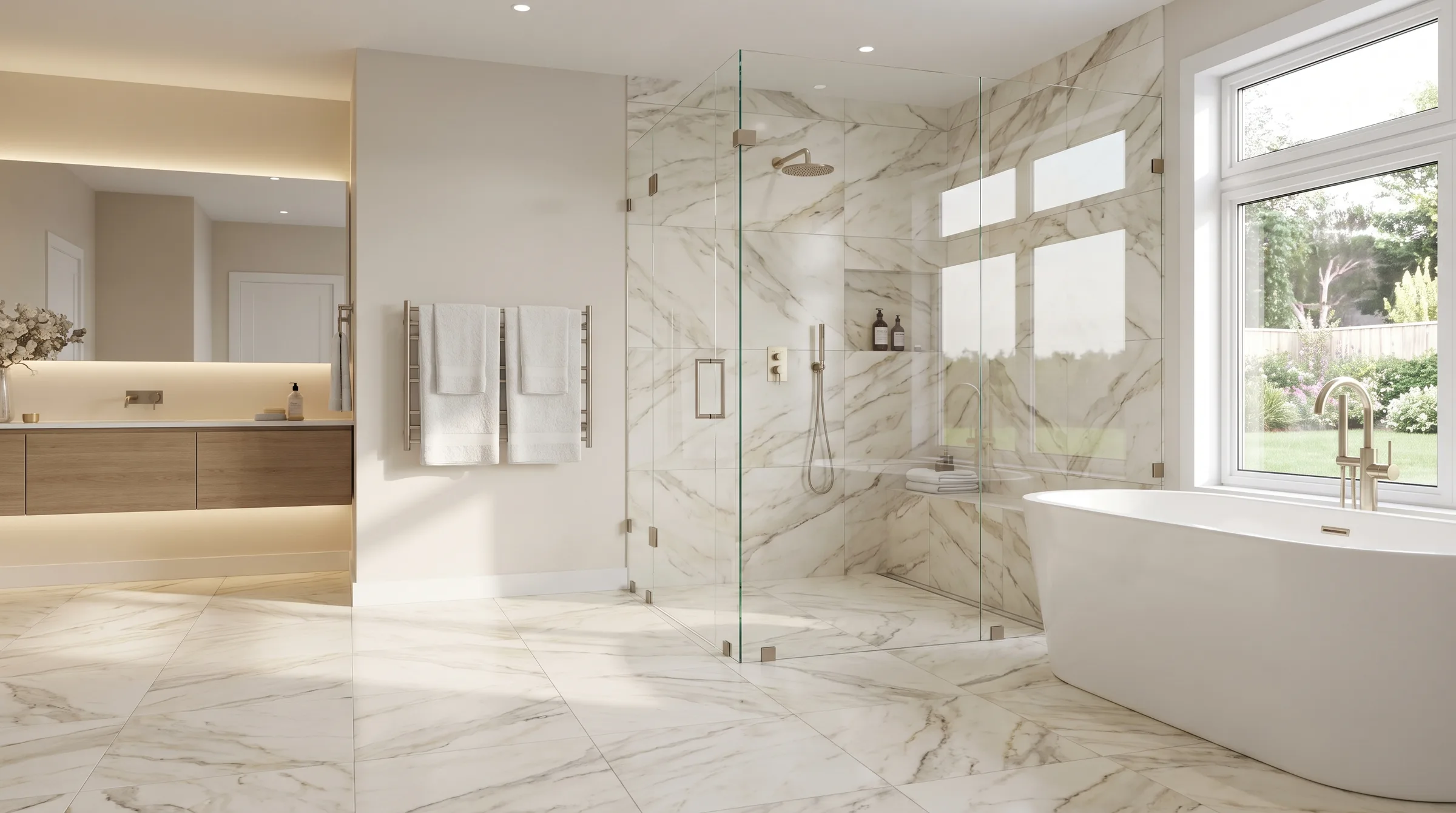
In a bathroom, and especially in and around a shower, porcelain tile is hard to beat. It is fully water-resistant, works with the waterproofing systems used in showers, and can run from the bathroom floor straight into a curbless shower. In-floor heating under tile removes the cold-floor complaint and is one of the most appreciated bathroom upgrades. See how to choose shower tile and why an uncoupling membrane protects tile floors.
Luxury vinyl is a reasonable choice for a powder room or a rental bathroom where budget and speed matter, as long as the product is rated for bathrooms and the perimeter is sealed where the manufacturer calls for it.
Kitchens: it depends how you use the room
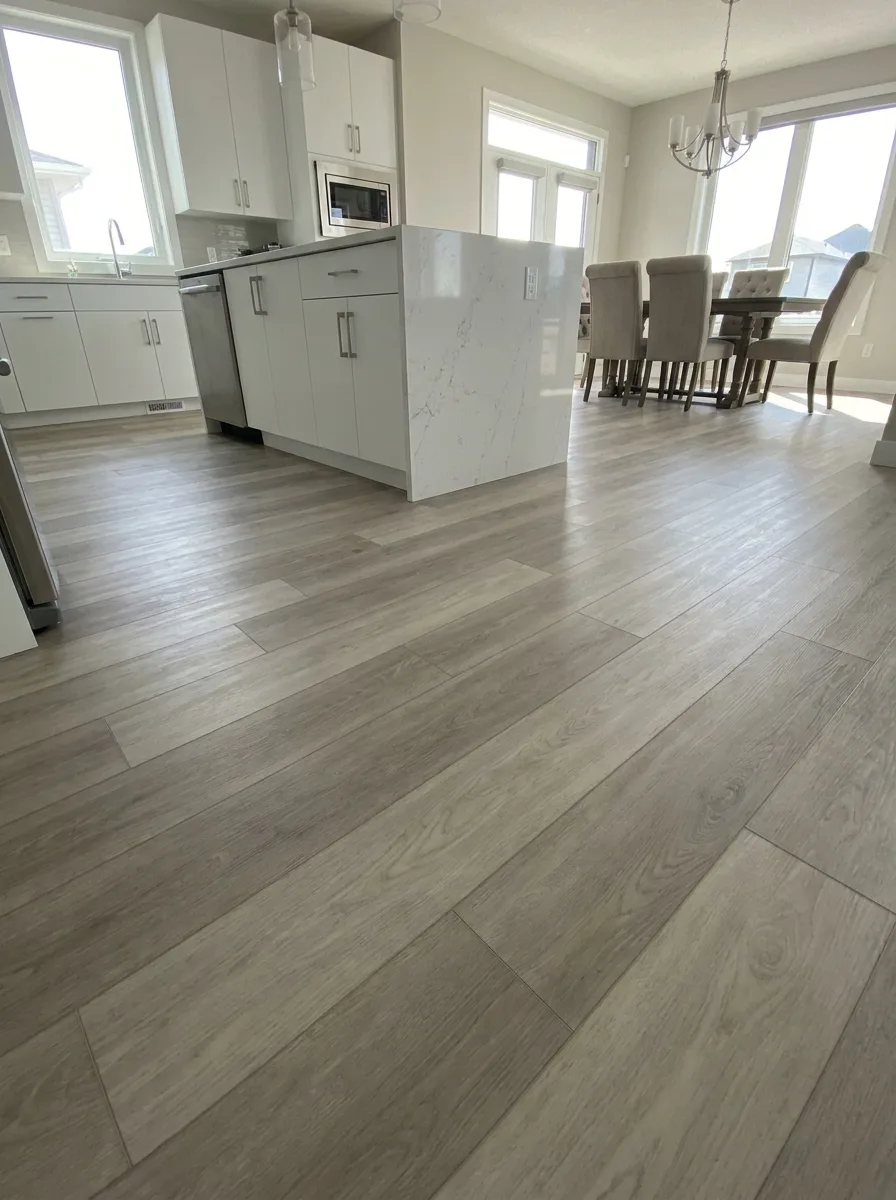
Choose tile if you want the most durable surface, love the look of stone or large-format porcelain, or plan to add in-floor heating. Choose luxury vinyl if you stand in the kitchen for hours and want something softer and warmer, if you have young kids and dropped dishes are a daily event, or if you want the kitchen floor to flow into the rest of an open-concept main floor in one continuous wood look.
Entries and mudrooms
Salt, grit, snow and wet boots make tile the strongest choice for Ottawa entries and mudrooms. Slate and slate-look porcelain are especially good at hiding dirt. Rigid-core LVP is a solid alternative if you want the entry to match wood-look floors beyond it.
Resale and looks
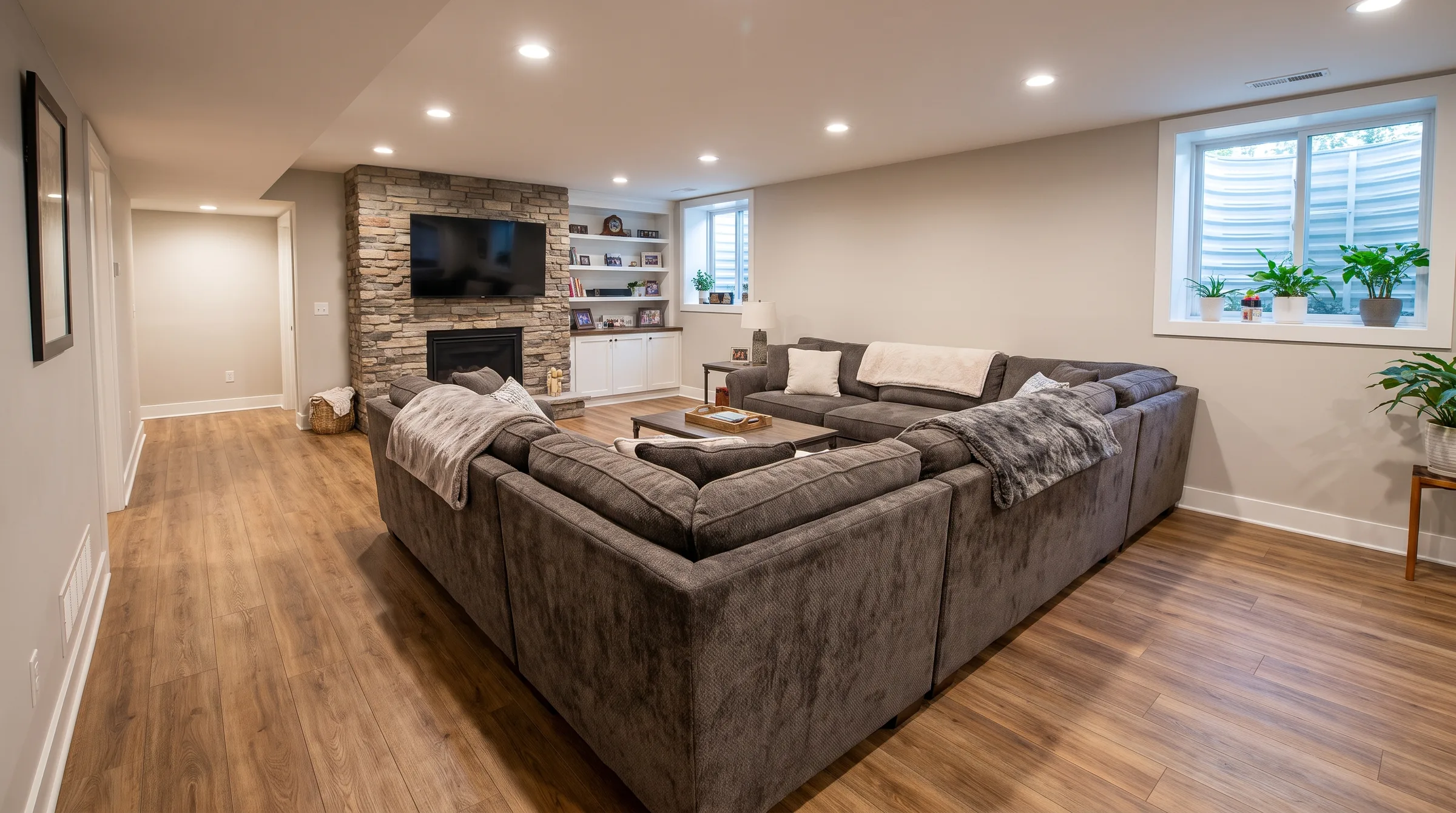
Well-installed porcelain in kitchens and bathrooms is widely seen as a premium finish. Good-quality luxury vinyl is now accepted in most homes too, especially in kitchens, family rooms and basements. Whichever you choose, consistent flooring through connected spaces usually looks better than several different floors meeting in doorways.
What affects the cost
Tile installation generally involves more steps (preparing the subfloor, membranes, setting, grouting), so labour is usually a larger part of the cost than with vinyl. For both, the price depends on the product, the area, removal of old flooring, subfloor repairs and levelling, and the number of transitions. A site visit is the only way to get a firm number.