
Short answer
Modified thin-set has polymers added for stronger bond and some flexibility. It is the default for most porcelain tile on cement board, concrete and walls. Unmodified thin-set cures with water alone, and some membrane makers have specified it for tile set over their waterproof membranes. For tiles larger than about 15 inches, use a large-and-heavy-tile (LHT) mortar. Above all, use the mortar your membrane or board maker lists, or the warranty may not apply.
What thin-set is
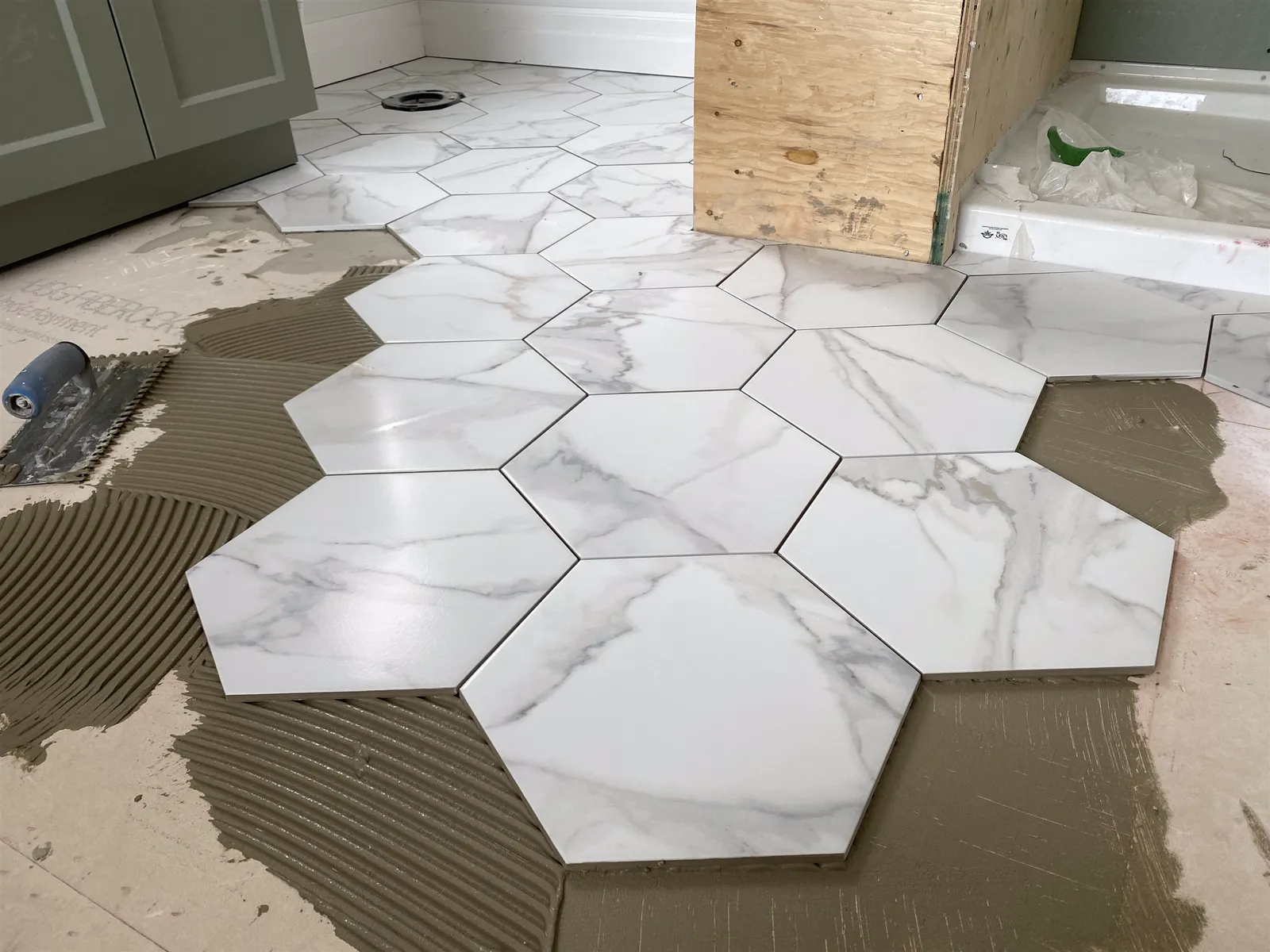
Thin-set is a cement-based mortar that bonds tile to the surface beneath it. It is spread with a notched trowel and the tile is pressed into the ridges. Get the mortar or the coverage wrong, and tiles sound hollow, crack or come loose. That is one of the most common failures we're called to fix.
Modified vs unmodified
- Unmodified (dry-set): Portland cement, sand and water-retaining additives. It cures by reacting with water (hydration) and doesn't depend on drying out.
- Modified: adds polymers (latex) that improve bond strength, flexibility and water resistance. The polymers need to dry to reach full strength.
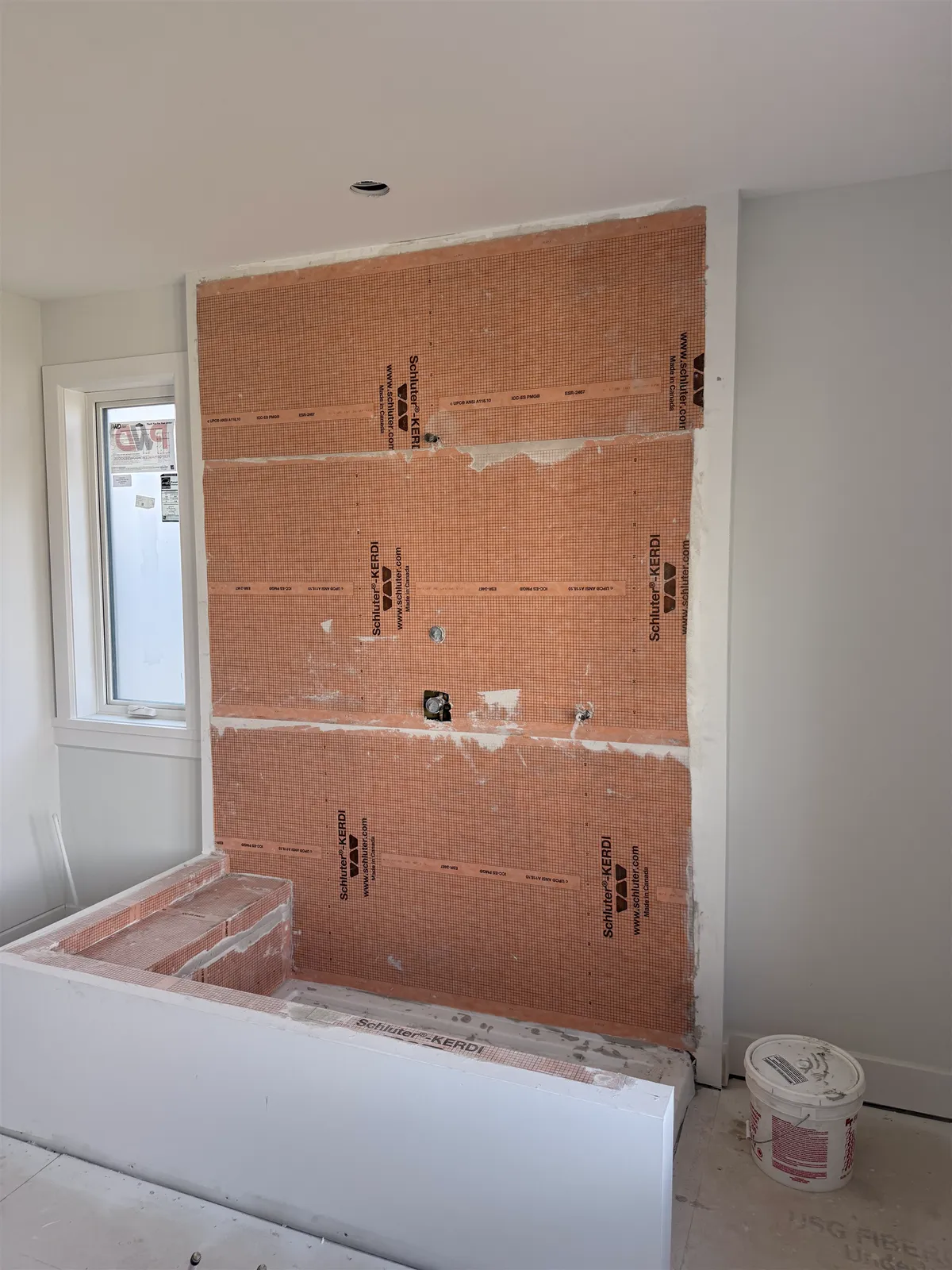
That drying is why the choice matters over waterproof membranes. Between a dense porcelain tile and a waterproof sheet, there's nowhere for moisture to escape, so a standard modified mortar can take a very long time to cure fully. This is why membrane makers specify particular mortars, and why some now make their own modified mortars designed for this situation (Schluter's ALL-SET, for example).
Reading the bag: ANSI and ISO ratings
| Rating | What it means |
|---|---|
| ANSI A118.1 | Unmodified (dry-set) mortar |
| ANSI A118.4 | Modified mortar |
| ANSI A118.11 | Suitable for bonding to plywood (exterior-glue plywood) |
| ANSI A118.15 | "Improved" modified mortar, with higher performance |
| LHT (large and heavy tile) | Holds up thick beds under large or heavy tile without slumping |
| ISO C2, E, T, S1/S2 | C2 = improved cement mortar; E = extended open time; T = non-slip on walls; S1/S2 = deformable (flexible) |
Best thin-set for the job
| Situation | Usually |
|---|---|
| Porcelain floor on concrete or cement board | Modified (A118.4 / A118.15); LHT for large tile |
| Shower walls | A non-sag modified mortar; LHT for large-format wall tile |
| Over Schluter KERDI or DITRA | The mortars Schluter lists for its warranty (its own SET, ALL-SET or FAST-SET, or the unmodified type it specifies) |
| Over liquid membranes | The mortars that membrane's maker approves |
| Bonding a membrane to plywood | A mortar rated A118.11, or as the membrane maker specifies |
| Glass and translucent tile | White mortar formulated for glass |
| Outdoors (freeze–thaw) | High-performance flexible mortar (C2, S1 or S2) rated for exterior use |
| Fast turnaround | Rapid-setting mortar (shorter working time) |
Mixing and using it right
- Measure the water exactly. Extra water weakens the mortar.
- Let it slake (rest) and remix if the bag says so.
- Spread only what you can tile within its open time. A skin on the surface means it won't bond.
- Use the right trowel size, back-butter large tile, and lift a tile now and then to check coverage.
How long before grouting?
Standard thin-set usually needs about 24 hours before grouting, longer in cold or damp conditions. Rapid-setting mortars can be grouted in hours. See how long before you can use new tile.