
Short answer
Sweep or vacuum, then damp-mop with warm water and a pH-neutral tile cleaner. Avoid vinegar, bleach and strong acids on cement grout, reseal cement grout as the manufacturer recommends, squeegee showers after use, and rinse winter salt off entry tile before it dries into a film.
Porcelain and ceramic tile are about the easiest floors there are to look after. The tile itself is hard and stain-resistant; it's the grout lines, and in Ottawa the winter salt, that need a little attention.
Everyday cleaning
- Dry first. Sweep, dust-mop or vacuum (hard-floor setting) so grit doesn't get dragged around by the mop.
- Damp-mop with warm water and a pH-neutral cleaner made for tile. A microfibre mop leaves less residue than a string mop.
- Rinse if you used soap. Soap and oil-based cleaners leave a film that attracts dirt and makes grout look darker.
- Wipe spills like wine, coffee and oil quickly so they don't soak into the grout.
What not to use
- Vinegar and acidic cleaners on a regular basis: they slowly etch cement grout. (On natural stone they do much more damage; see natural stone care.)
- Bleach on coloured grout, which can lighten it unevenly.
- Steel wool and harsh scouring pads, which scratch glazes and leave metal marks.
- Wax and "shine" products, which build up and make tile slippery.
Grout care
- Cement grout is porous. Seal it once it has cured and reseal as the sealer manufacturer recommends, more often in showers and kitchens.
- Epoxy grout doesn't need sealing: just keep it clean.
- For dirty grout lines, use a soft nylon brush with a grout-safe cleaner, then rinse.
- If grout is cracking, crumbling or changing colour, see why grout cracks and why grout changes colour.
Showers
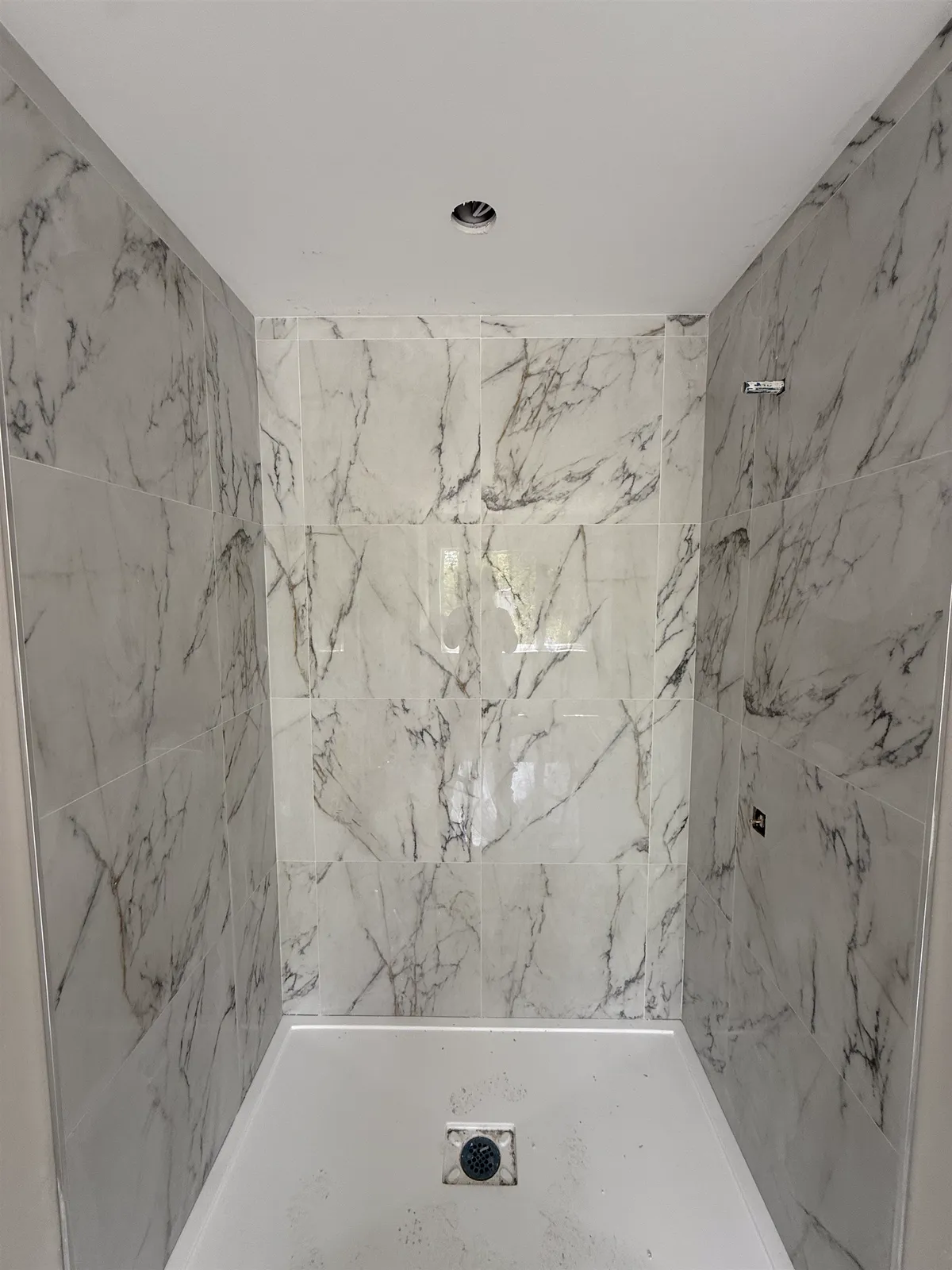
- Squeegee the walls and run the fan for 20 to 30 minutes after each shower. It's the single best way to prevent soap scum, pink film and mildew.
- Clean weekly with a bathroom cleaner that's safe for your grout.
- Watch the silicone in corners and along the tub or base. When it turns black or pulls away, have it replaced. That joint keeps water out of the wall.
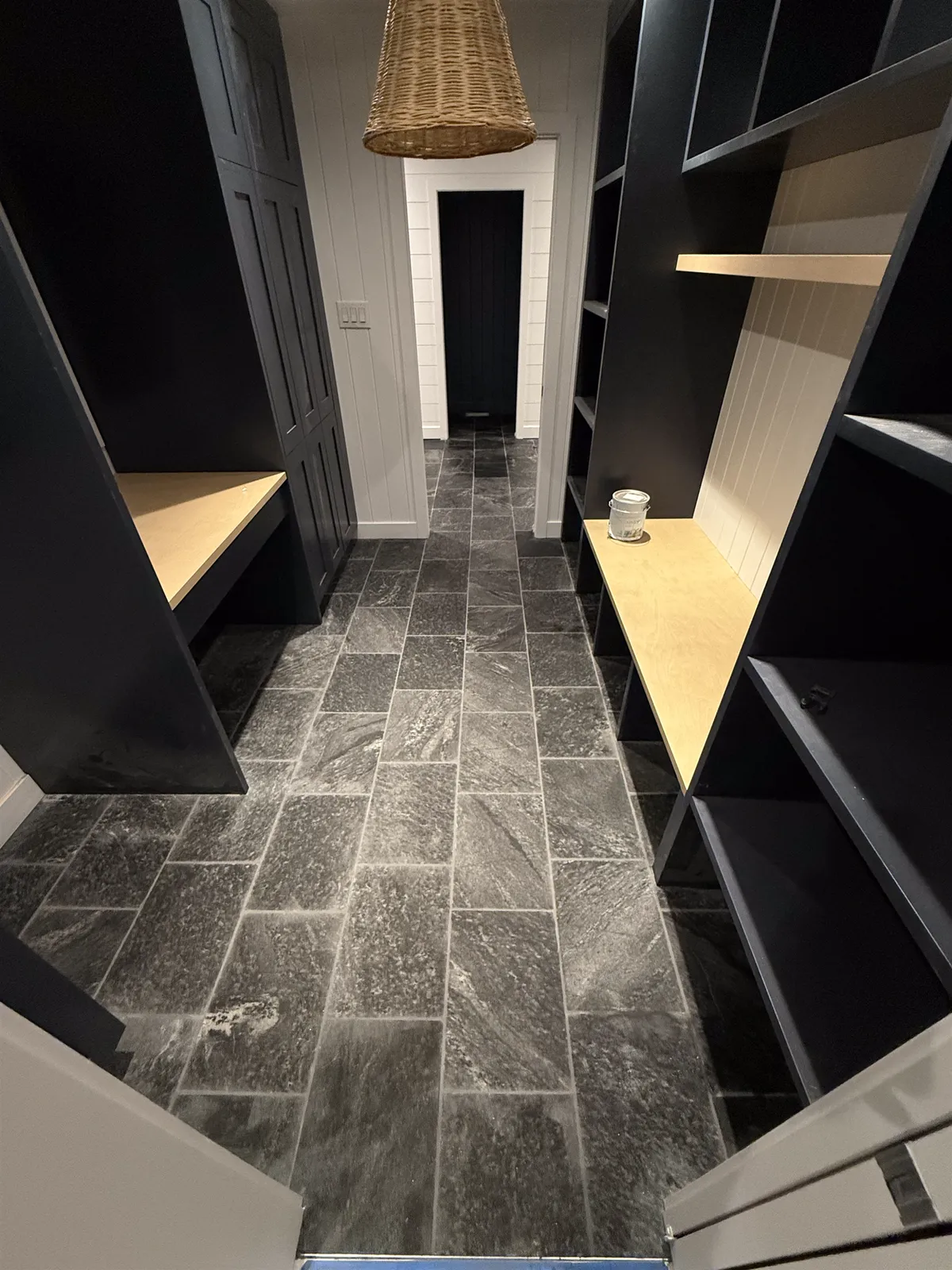
Winter salt in entries
Road salt and calcium chloride leave a white film on tile and dull grout.
- Use a good mat outside and a washable mat inside the door, and a boot tray.
- Mop salt residue with warm water and a pH-neutral cleaner; for heavy build-up, use a cleaner made for salt residue that's safe for your tile and grout, then rinse.
- Don't let salty slush sit and dry on the floor for days.
The first days after installation
Give new tile and grout time to cure before heavy use and sealing. See how long before you can use new tile.
More care guides: see all our floor care guides.