

Short answer
Use sanded grout for joints ⅛ inch and wider, and unsanded grout for narrower joints and for easily scratched surfaces like polished marble and glass. Epoxy grout costs more and is harder to install, but it resists stains and does not need sealing, which makes it worth considering in showers and kitchens. Inside corners and changes of plane get a flexible sealant, not grout.
Grout is only a small part of a tile job, but it is what you look at and clean every day. The right grout keeps its colour, stays intact and does not become the part of the bathroom you dread cleaning.
What grout does
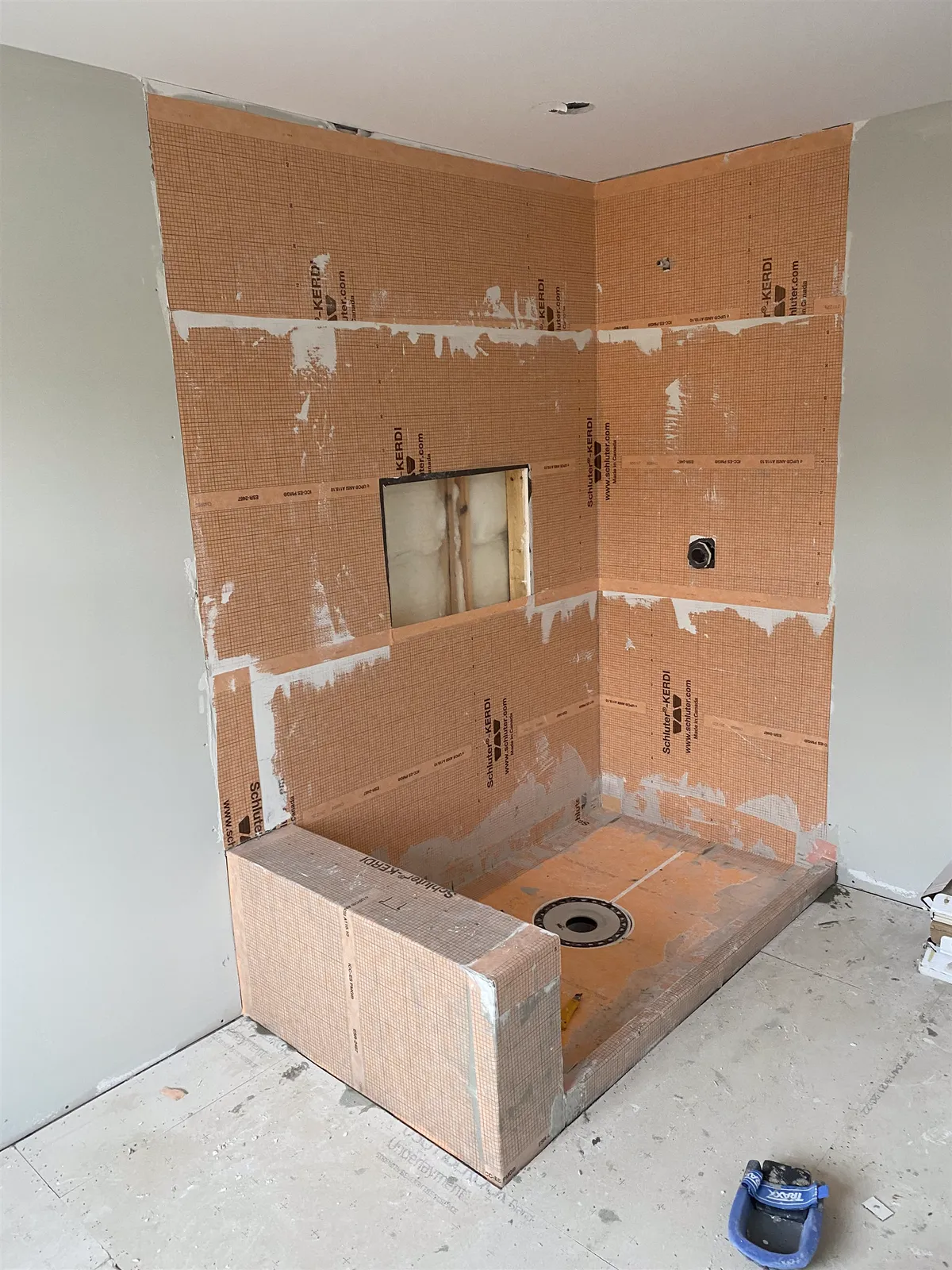
Grout fills the joints between tiles, locks the edges together, keeps dirt out of the gaps and finishes the look. It is not waterproofing: water that gets past cement grout has to be stopped by the membrane behind the tile (see how showers are waterproofed).
The main types
Sanded cement grout
Cement grout with fine sand added for strength. The sand stops wider joints from shrinking and cracking. It is the standard choice for joints of about ⅛ inch and wider, including most floor tile. It is porous, so it is usually sealed.
Unsanded cement grout
Smoother, without sand, for narrow joints under ⅛ inch, which are common on wall tile and rectified tile set tight. It is also the safer choice on polished stone, glass and glossy tile, which sand can scratch while grouting. In wide joints it tends to shrink and crack.
High-performance cement grouts
Many manufacturers now make improved cement-based grouts with polymers added. They offer more consistent colour, better stain resistance and less shrinkage than basic grout, and some do not need sealing. They are a good middle ground for most homes.
Epoxy grout
Made from resin and hardener instead of cement. Epoxy is dense and non-porous, so it resists stains, mould and chemicals and never needs sealing. Its colour stays consistent. The trade-offs: it costs more, cures quickly, and takes skill to install cleanly, because any haze left on the tile is hard to remove once it sets. It is popular in showers, kitchen backsplashes, and commercial kitchens and washrooms.
Urethane and pre-mixed grouts
Ready-to-use grouts that come in a tub. They are flexible and stain-resistant, and useful for small jobs and repairs. Follow the manufacturer's joint-width limits and curing times closely.
Quick guide
| Situation | Good choice |
|---|---|
| Floor tile, joints ⅛″ or wider | Sanded or high-performance cement grout |
| Wall tile, tight joints | Unsanded or high-performance cement grout |
| Polished marble, glass tile | Unsanded, or epoxy suited to glass |
| Shower walls and floors | High-performance cement or epoxy |
| Kitchen backsplash | Epoxy or high-performance cement (stain resistance) |
| Commercial kitchens, washrooms, pools | Epoxy or the grout the specification calls for |
Why corners get caulk, not grout
Where two planes meet, such as an inside shower corner, the floor-to-wall joint, or where tile meets a tub, the surfaces move slightly differently. Rigid grout there eventually cracks. These joints, along with movement joints in large tiled areas, should be filled with a flexible sealant (usually silicone) colour-matched to the grout. If your grout keeps cracking in the same corner, that is usually why.
Choosing a grout colour
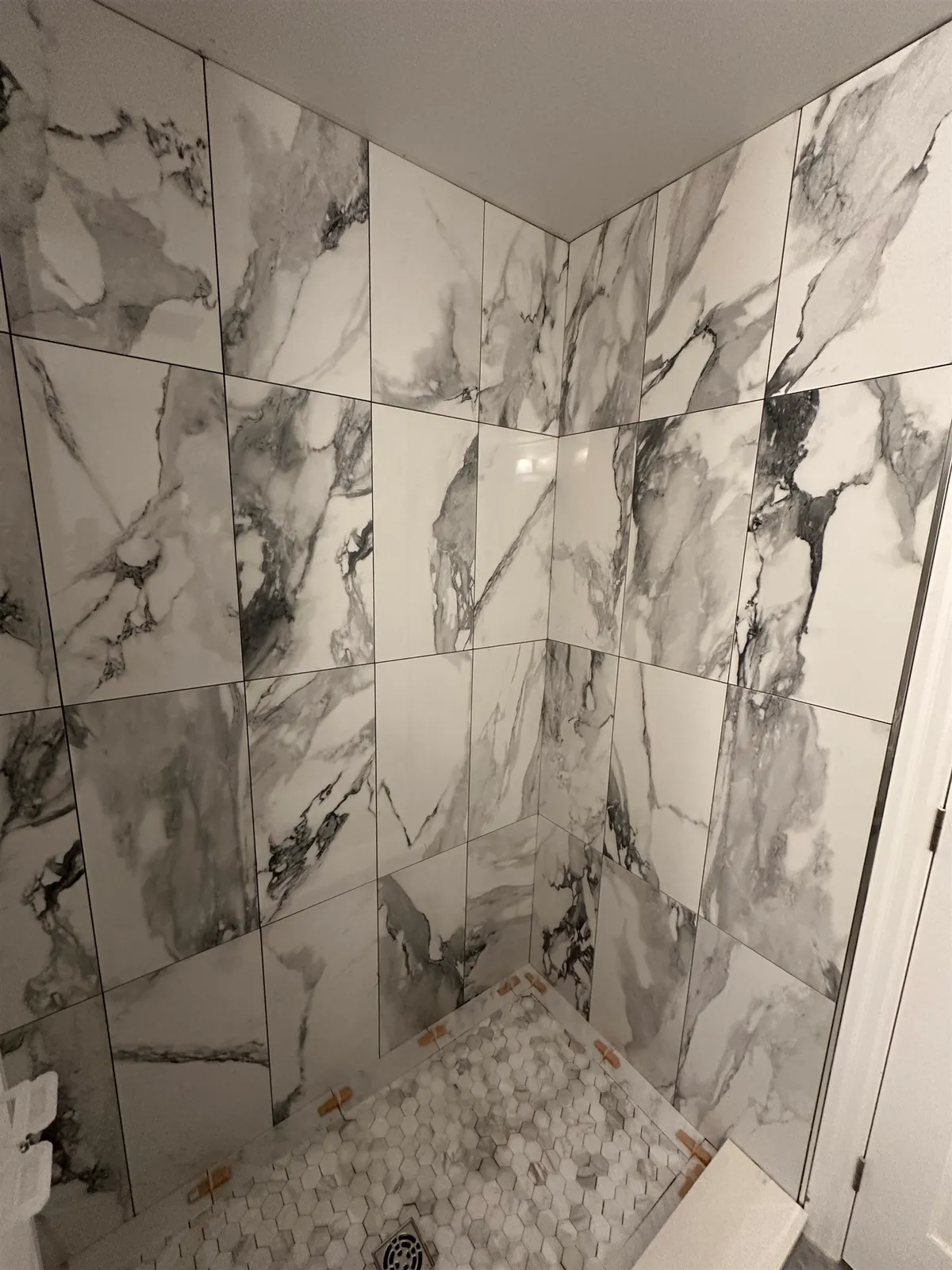
- Matching grout makes the tile read as one surface; good for large-format tile and busy patterns.
- Contrasting grout outlines each tile; great for subway and hexagon patterns, but it shows every layout imperfection.
- Mid-tone greys and warm neutrals hide dirt better than bright white on floors.
- Grout usually dries lighter than it looks wet. Choose from cured samples next to your actual tile.
Keeping grout clean
Squeegee shower walls after use, clean with a pH-neutral cleaner rather than harsh acids or bleach, and reseal cement grout as the manufacturer recommends. If grout is crumbling or constantly dark in a shower, have the shower checked: it can be a sign of water getting behind the tile.