
Short answer
Lippage is when one tile's edge sits higher than the next. It's caused by an uneven floor or wall, poor mortar coverage, bowed tiles, or a layout that puts the high centre of one plank next to the low end of another. Levelling systems (clips and wedges or caps) hold edges flush while the mortar cures, but they don't make an uneven floor flat. Once tile is set, real lippage can usually only be fixed by resetting the tiles.
What causes lippage
- The substrate isn't flat. This is the most common cause on floors, and why flatness is checked before tile (see levelling a floor).
- Warped tile. Large and long tiles are rarely perfectly flat; many have a slight crown or dip in the middle.
- Offset layouts. A 50% brick offset puts the high middle of one plank next to the low end of its neighbour. For tile with a side longer than 18 inches, the usual guidance is an offset of no more than one third.
- Poor coverage. Tiles bedded unevenly settle unevenly (see trowel size and coverage).
- Lighting. Light raking across a floor or wall from a window or a wall sconce exaggerates even acceptable lippage.
How much lippage is acceptable?
Industry standards allow a small amount of lippage, about 1/32 inch for tile with narrow grout joints and 1/16 inch for joints ¼ inch and wider, plus whatever warpage the tile itself has. Handmade and rustic tile is expected to vary more. If you can catch a fingernail on most edges, or edges are clearly visible in normal light, that's beyond normal.
Tile levelling systems
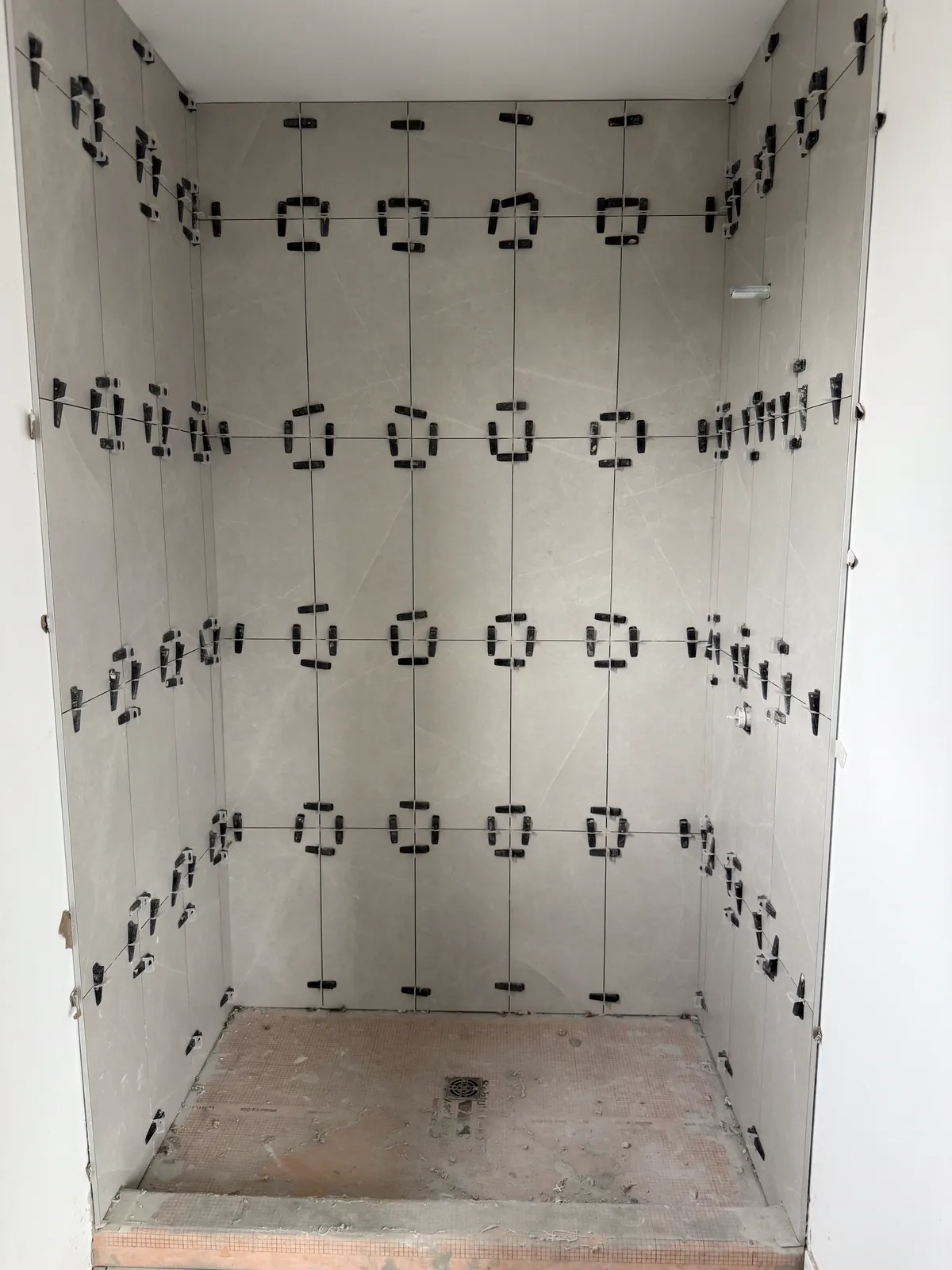
Levelling clips go under the edges of neighbouring tiles at the joints, and a wedge or cap pulls the tile faces into the same plane while the mortar sets. Afterwards, the tops snap off and the base stays hidden in the grout joint.
- They help with: large-format and plank tile, walls, and holding edges flush while mortar cures.
- They don't: flatten a wavy floor, make up for missing mortar, or straighten a badly bowed tile.
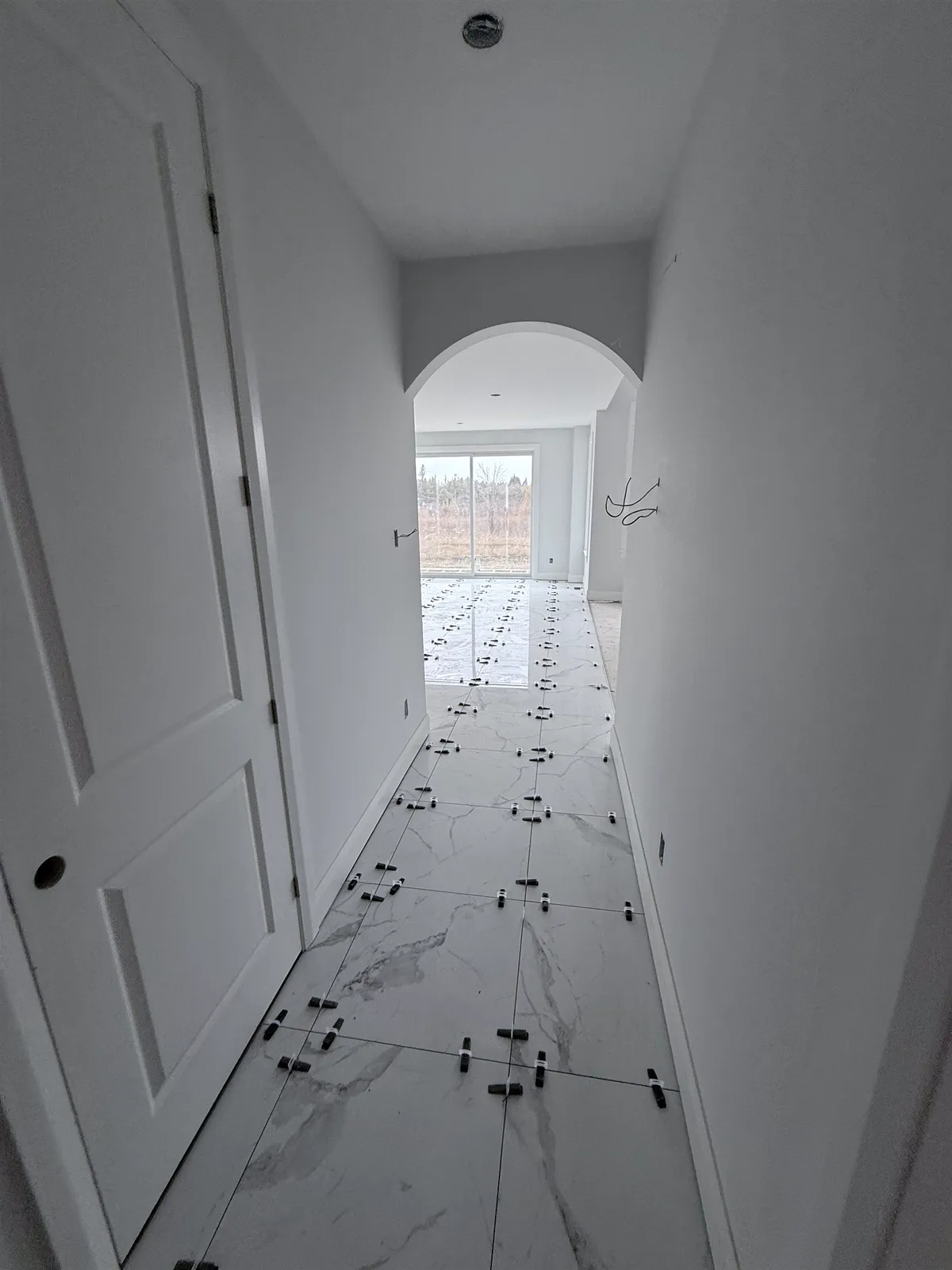
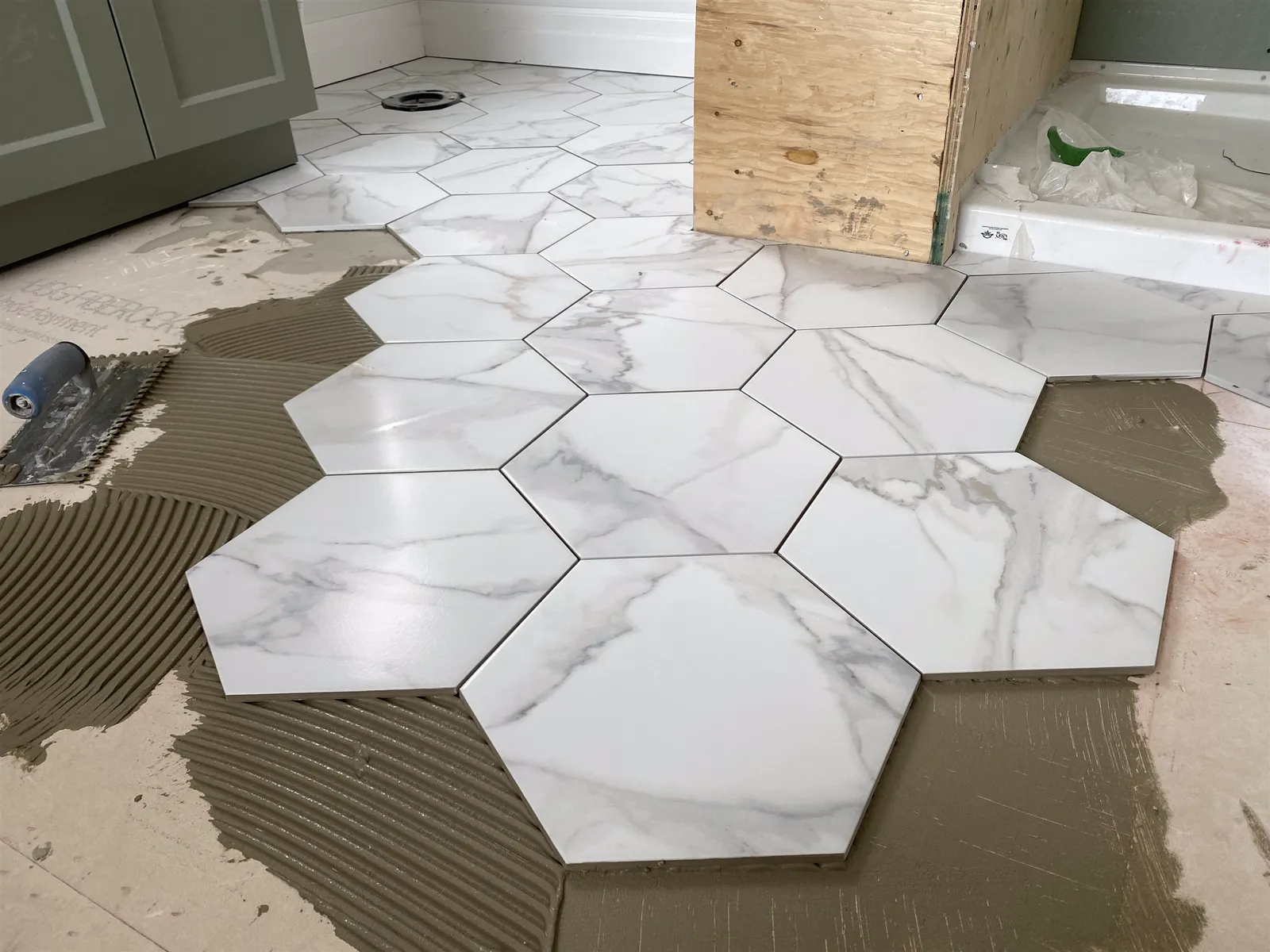
You'll see them in many of our project photos, including 404 Ashbee Court. They're one tool among several, alongside a flat substrate, the right trowel and back-buttering.
Grout line size and lippage
- The minimum joint for most tile is about 1/16 inch. Even rectified tile isn't zero-joint.
- Rectified tile is typically set with ⅛–1/16 inch joints. Pressed (cushion-edge) tile varies more in size and needs wider joints, often 3/16 inch.
- Thinner joints make lippage more noticeable, because there's less grout to soften the edge. Very tight joints with slightly warped tile are a common recipe for complaints.
Fixing lippage after installation
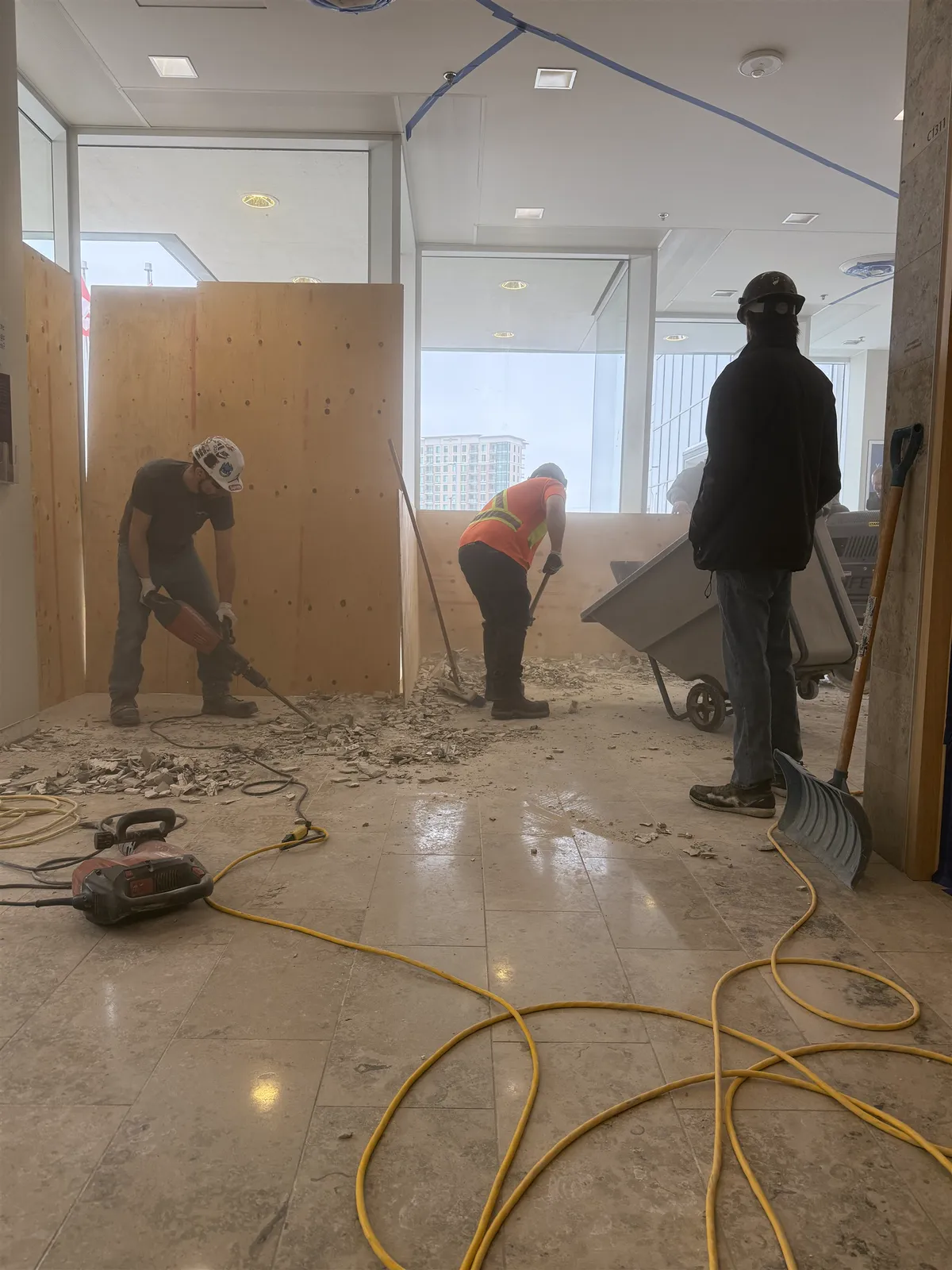
- Porcelain and ceramic: the only real fix is removing and resetting the affected tiles. You can't grind a glazed tile without exposing the body.
- Natural stone: can sometimes be ground and re-polished flat.
- Grout: can't fix it. Building up grout to "ramp" edges looks worse and cracks.