
Short answer
A good tile installer is judged by the work you won't see once the job is done: subfloor prep, waterproofing, layout, flatness and mortar coverage. Before you hire, ask for proof of WSIB coverage and liability insurance, which waterproofing system they use, how they check and fix the subfloor, where the cuts will land, and what the written quote includes and excludes. Be wary of quotes with no written scope, cash with no invoice, or a price that skips waterproofing or prep.
Tile is permanent. A floor or shower that is done well lasts for decades, and one that isn't can crack, leak or come loose within a year or two. Most of what decides the outcome happens before the first tile is set, so finished photos alone don't tell you much. This guide explains how to choose a tile installer: what separates a good tile job, the 15 questions to ask a tile contractor before you hire, the red flags, and how to compare quotes line by line.
What separates a good tile installer
Anyone can set a tile. What you are paying a tile installer for is everything around it.
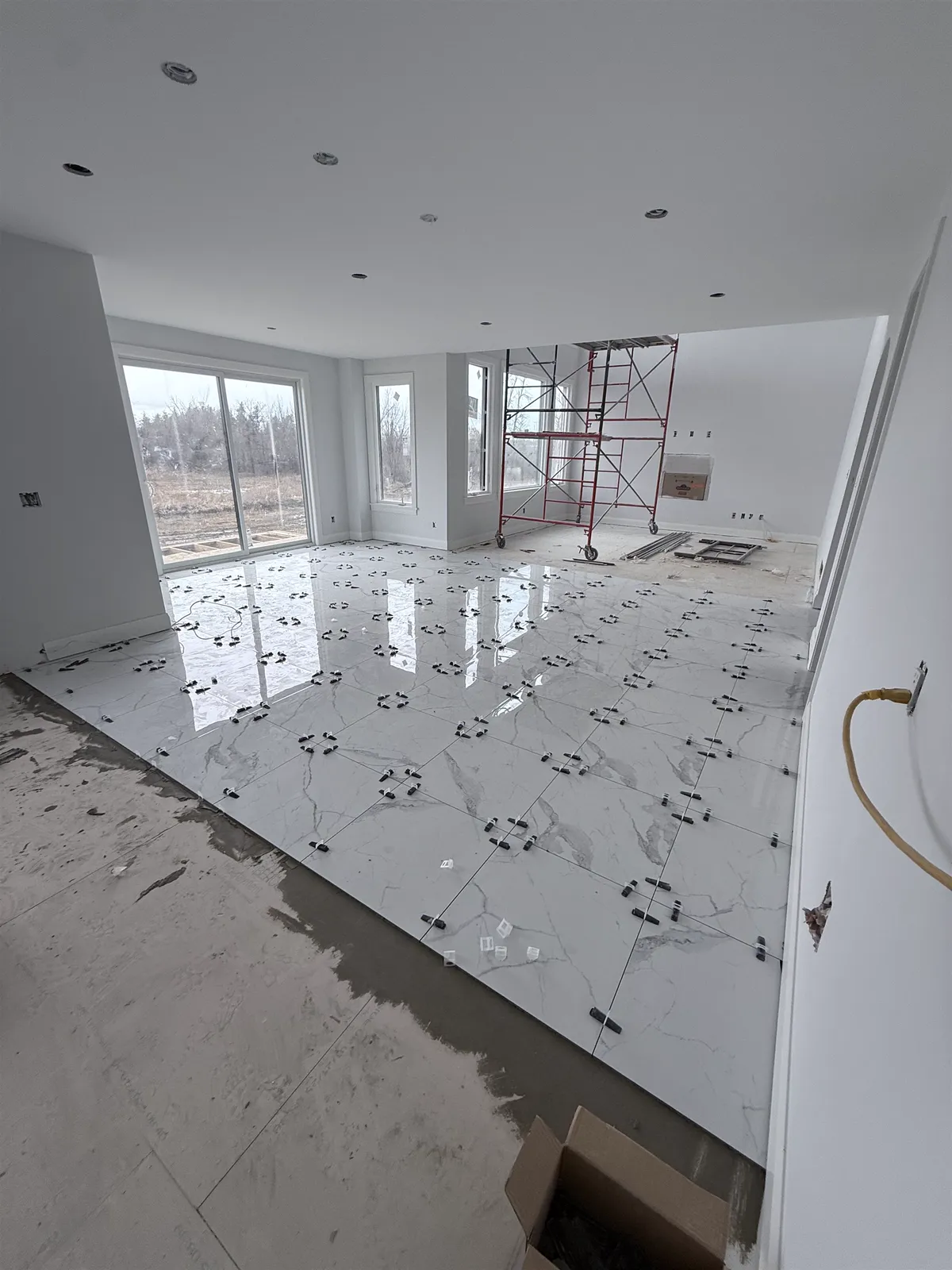
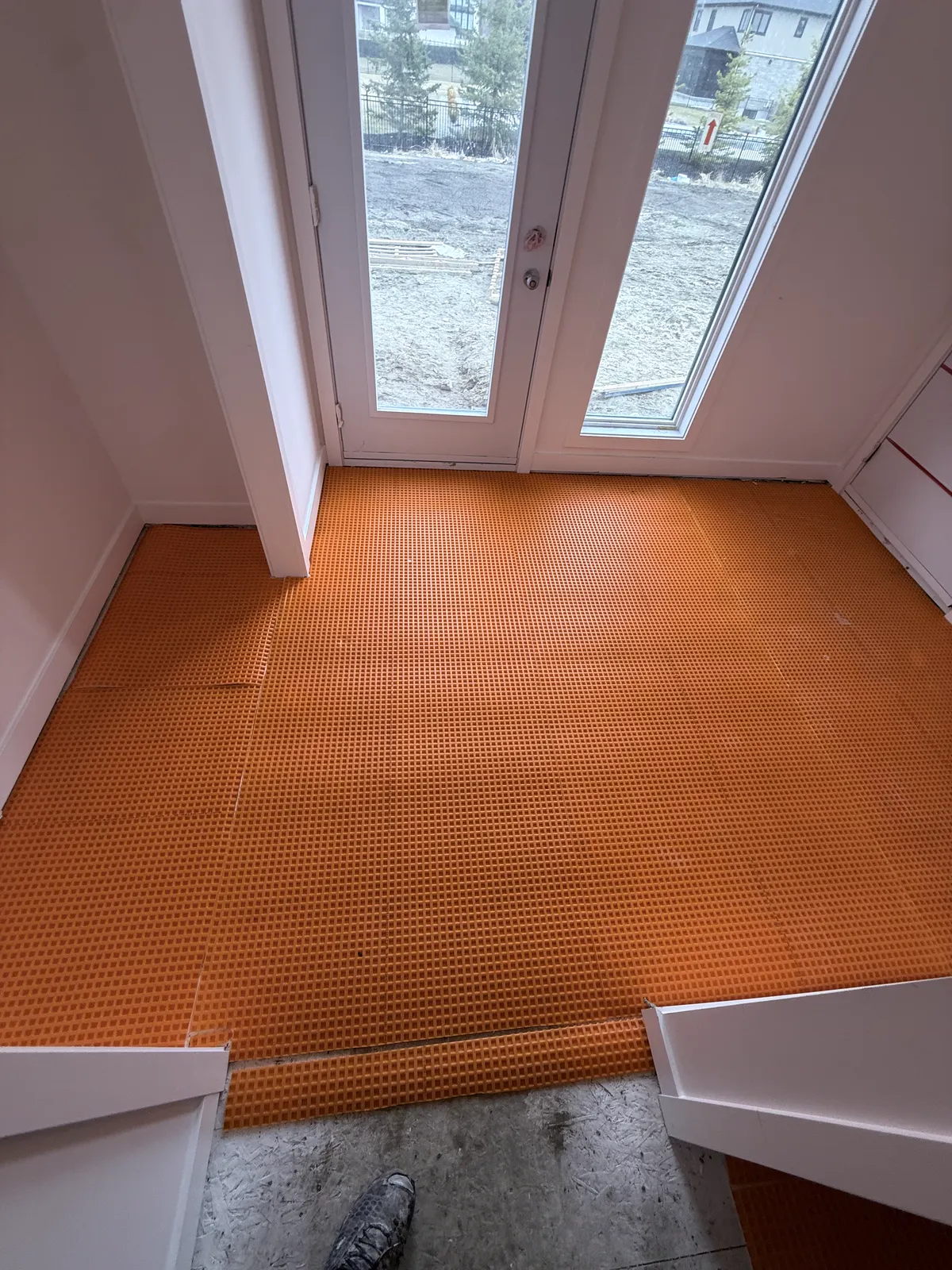
Preparation. Tile needs a stiff, flat, clean surface. A good installer checks the floor or wall before quoting and includes the work to fix it. Most cracked floors trace back to skipped prep.
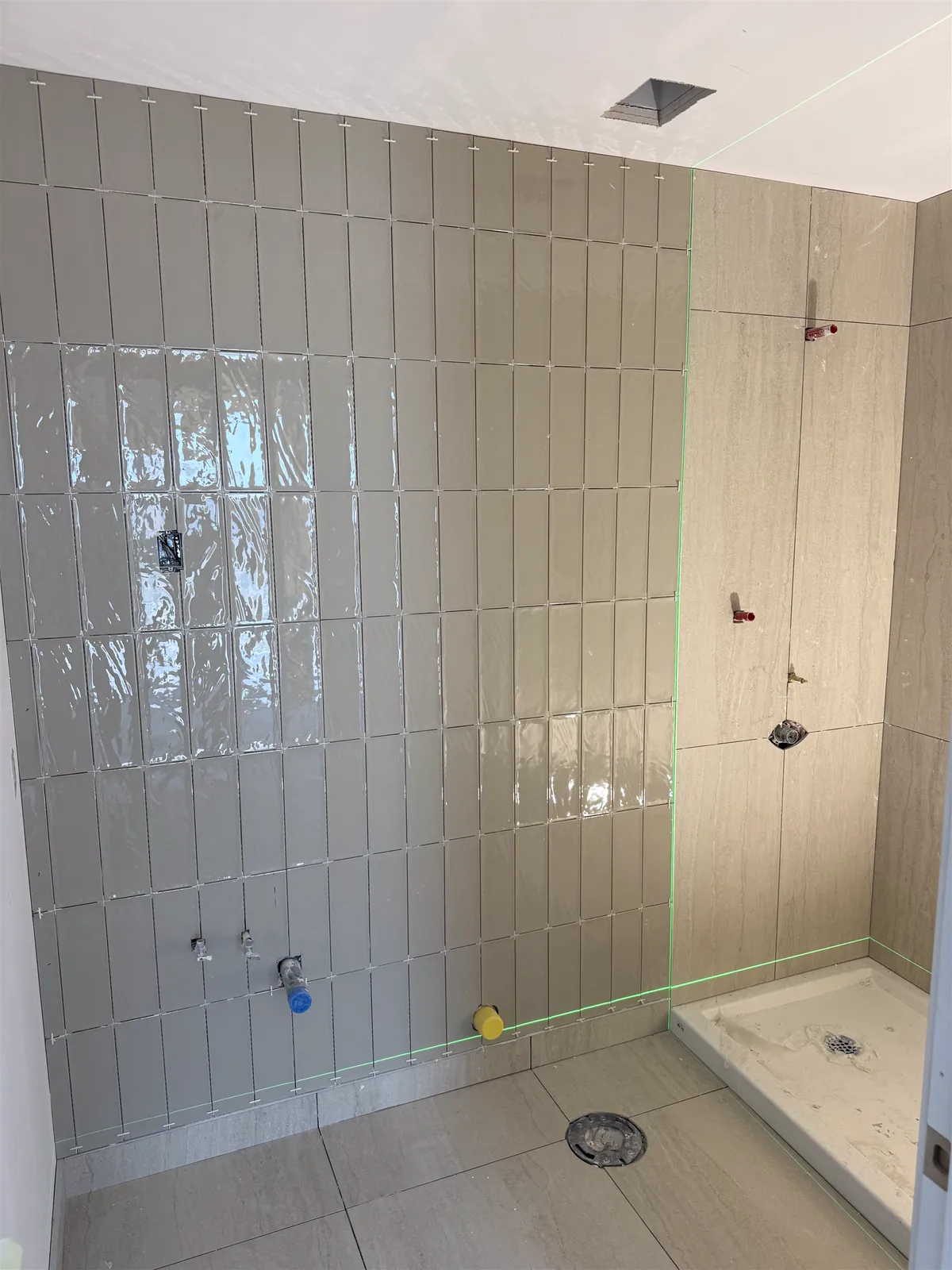
Waterproofing. In showers and tub surrounds, the membrane behind the tile is what keeps water out, not the tile or grout. It has to be one complete system, installed to its maker's instructions and tested before tile.
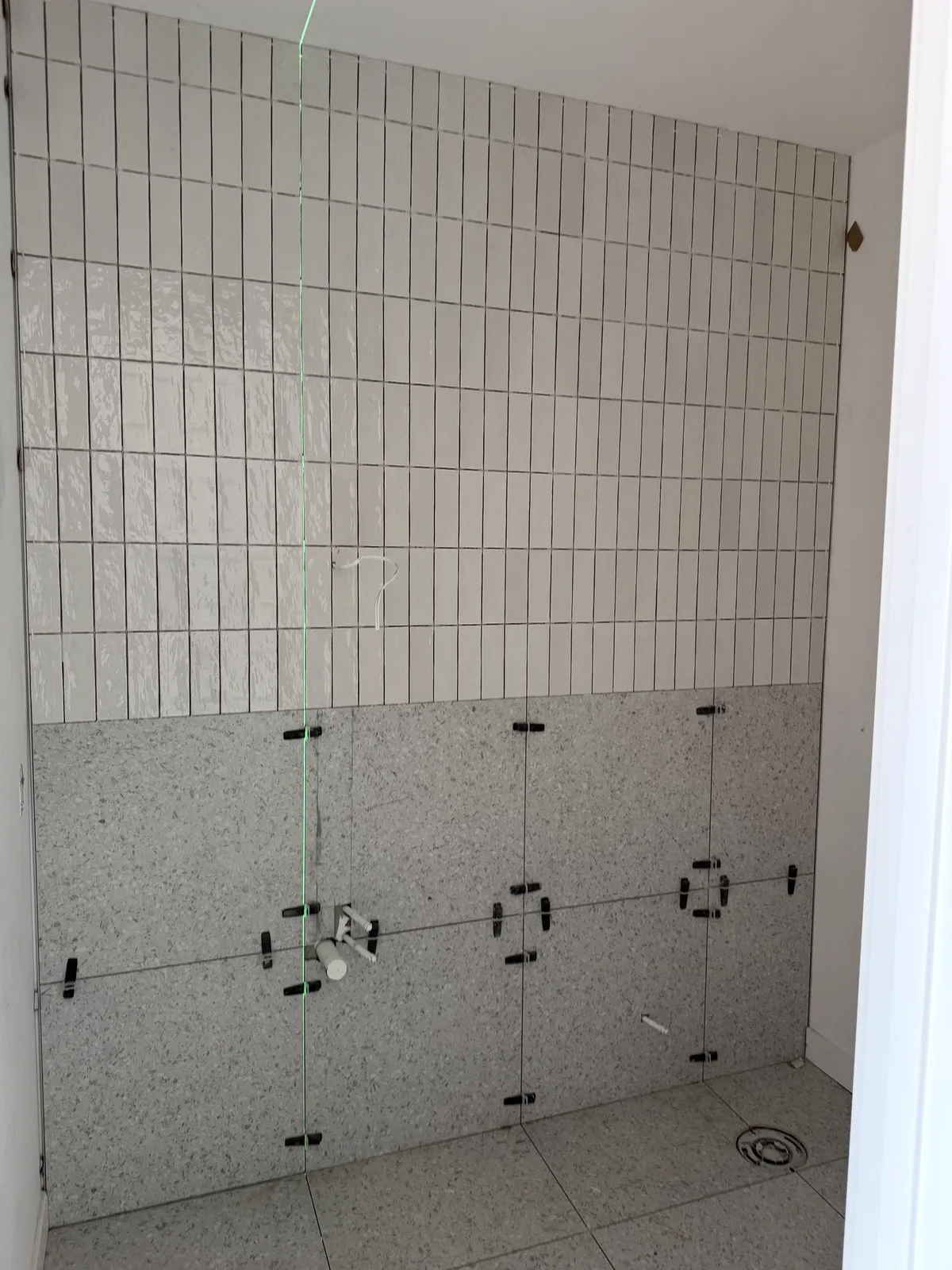
Layout. Good layout is planned, not found. The tile is centred on the room or the main sightline, cuts are balanced at both walls, and slivers are kept away from doorways and the edge of a shower.
Flatness and coverage. Tile edges should sit flush with their neighbours, and the mortar should fully support each tile. Hollow spots crack under load, and in a shower they hold water.
Clean edges. Exposed edges get proper trim or finished tile, corners get sealant instead of grout, and cuts around outlets, valves and drains are tight and neat.
Questions about insurance and safety
1. Are you covered by WSIB, and do you carry liability insurance?
This is the first question for any tile contractor. In Ontario, the Workplace Safety and Insurance Board (WSIB) covers workers injured on the job. WSIB issues clearance certificates that show a business is registered and its account is in good standing, and you can ask a contractor for one. Coverage rules depend on the type of business and work, so if a contractor says they don't need WSIB, ask why, and ask how the people working in your home are covered.
Ask for a certificate of commercial general liability insurance too. It covers damage to your home or property caused by the work, such as a leak from a broken pipe. Check that the certificate is current and in the name of the business you are hiring. A contractor who hesitates to show either document is telling you something.
Questions about prep, subfloor and waterproofing
2. Which waterproofing system will you use, and will you follow its maker's instructions?
For any shower or tub surround, this is the most important question. A clear answer names a system, such as Schluter-KERDI or a liquid membrane from a major maker, and explains how it covers the walls, the floor, the niche and the curb. Using one maker's components together, with the mortars it approves, is also what keeps that maker's system warranty valid, where one is offered. Ask whether they flood test the shower before tiling. See how to waterproof a shower for the steps you should hear about.
3. Who does the demolition and prep?
Removing old tile, hauling it away, and repairing what's underneath can be a big share of the work. Find out whether it's included, who does it, and what happens if they find rot, water damage or a soft subfloor once the old floor is up. A careful quote says how hidden damage will be handled before it's found.
4. How will you check the subfloor, and what goes under the tile?
Ask how they check flatness and stiffness. A good answer mentions a long straightedge or laser, and the joists and subfloor layers on a wood floor. Ask what they'll do about dips and humps, whether that's patching, grinding or a self-levelling compound, and whether a membrane goes under the tile. On wood subfloors, an uncoupling membrane such as Schluter-DITRA is common. Our guide to what subfloor tile needs covers the standards behind the answers.
Questions about layout and workmanship
5. How will you plan the layout, and where will the cuts land?
A good installer can tell you where the layout starts, how the tile lines up with the doorway, the tub or the vanity, and where the small cuts will end up. For patterns such as herringbone or offset planks, ask how they'll keep the pattern straight and balanced. Our guide to tile patterns and layouts shows what to look for.
6. How do you make sure the mortar fully supports the tile?
Industry standards call for at least 80% mortar coverage under tile in dry areas, and 95% in showers, outdoors and under natural stone, with large tile fully supported at the edges and corners. The way to know is to lift a freshly set tile now and then and look at the back. Ask whether they do that, and whether they back-butter large tile. See what size trowel for tile for how coverage is achieved.
7. How will you keep the tile flat and level?
Uneven tile edges, called lippage, are the most common complaint with large tile. Ask how they control it: a flat substrate first, the right offset for long tiles, and levelling clips where they help. Clips don't fix a floor that isn't flat; see tile lippage and levelling systems.
8. How will the edges be finished?
Every exposed tile edge needs a plan: a metal or PVC trim profile, a finished bullnose piece, or a mitred corner. Ask what they'll use at outside corners, the edge of a backsplash, a niche and doorways, and what it will look like. Our guide to tile edge trim shows the options.
9. Which grout will you use, and does it need sealing?
Ask which type of grout is included, whether it's standard cement, high-performance or epoxy, and whether it needs sealing afterwards and who does it. Ask how wide the joints will be. The answer affects cleaning for years. See grout types explained.
10. Where will the movement joints and silicone go?
Inside corners, the joint where walls meet the floor or tub, and the perimeter of a floor need a flexible sealant, not grout. Large floors also need movement joints in the field. An installer who says "it's all grouted" is setting up cracked corners. See tile movement joints.
Questions about schedule, price and paperwork
11. How long will it take, and what does a working day look like?
Tile has waiting built in: mortar cures before grouting, waterproofing may need to cure or be flood tested, and grout cures before a shower is used. Ask for a realistic timeline, including those waits, and what hours the crew works. Ask who will be on site each day and who you can call with a question.
12. Is the quote in writing, and what does it include and exclude?
A written tile installation quote should list the rooms and square footage, the tile and who supplies it, prep and levelling, membranes and waterproofing, trims and transitions, grout type, sealing, removal and disposal, and cleanup. Just as important is what it leaves out, such as plumbing, electrical, drywall or painting. A clear list of exclusions protects you as much as the price does.
13. What deposit and payment schedule do you ask for?
Payment terms vary between contractors. As a general rule, a reasonable deposit is tied to something concrete, such as ordering materials or booking the job, and the rest is tied to stages of work or completion. Be cautious about paying most of the price before the work starts. Get every payment in writing with an invoice, and keep receipts.
14. What workmanship warranty do you give?
Ask what the workmanship warranty covers, how long it lasts, and what you'd need to do to make a claim. Get it in writing. Product warranties are separate: tile, membranes and setting materials carry their own, and many depend on the installer following the maker's instructions.
Questions about past work and references
15. Can I see photos of jobs in progress, and talk to past clients?
Finished photos show the tile. Photos taken during the job show the work that matters: membranes on the walls, levelled floors, mortar coverage, the drain connection. Ask to see them. A contractor who documents prep is usually a contractor who does it.
Then check references and reviews. Read the reviews themselves, not just the star rating, and look for comments about clean work, communication and how problems were handled. If you can, ask a past client how the tile looks a few years later. You can see examples of our own work, finished and in progress, in our project gallery.
Red flags when hiring a tile installer
Some warning signs come up again and again in tile jobs that go wrong.
- No written quote, or a one-line price with no scope.
- Cash only, with no invoice. It leaves you with no record of what was agreed and no warranty to point to.
- Plain drywall or green board in a shower, with no membrane. See can you tile over drywall.
- "The grout will cover it." Grout doesn't fix lippage, crooked lines or uneven cuts.
- No proof of insurance or WSIB, or reluctance to show it.
- A price far below the others that turns out to skip waterproofing, levelling or membranes.
- Pressure to decide on the spot, or a large payment before any work.
None of these prove an installer is bad on their own, but each one is worth a follow-up question. A good contractor will answer them without getting defensive.
Comparing tile installation quotes line by line
Two quotes for the same bathroom can differ widely, and the difference is usually in what's included. Put the quotes side by side and compare them line by line, not just the total.
Start with the area. Make sure every quote covers the same square footage, including closets and the space under appliances you want tiled. Then compare what goes under the tile: levelling, membranes and waterproofing. This is where the lowest quote most often saves money, and where the problems start later.
Next, compare the materials: who supplies the tile, which mortar and grout, which trims and transitions. Then the extras: removal and disposal, heated floor installation, niches, benches and sealing. Finally, check the schedule, the payment terms and the warranty.
If one quote leaves something out, ask that contractor to price it, so you're comparing like with like. Our guides to tile installation cost in Ottawa and flooring cost in Ottawa explain what drives each line. For floors other than tile, see how to choose a flooring company in Ottawa.
What to prepare before the estimate
A tile installer can give a more accurate price with a little information up front.
Photos of the room, the current floor or walls, and anything unusual, such as cracks, a soft spot or water stains. Rough measurements of each area to be tiled. Your tile choice, or at least the size and material you're considering, because large-format tile, mosaics and natural stone change the labour. Your timeline, including any dates that matter, such as a move-in or guests. And for condos, the building's rules on working hours, noise and flooring approval.
It also helps to know what other trades are involved. In a full bathroom remodel, a plumber, an electrician and other trades do their parts, and the tile installer works around them. Our guide to preparing for flooring installation covers the rest.
How Agora works
For reference, here is how we answer the first few questions. Agora Flooring has installed tile in Ottawa for more than 26 years. We are covered by WSIB and carry $2 million in commercial general liability insurance, and we've had zero lost-time injuries in those 26 years. Estimates are free, in person, by phone, by email or online, and every price comes as a written quote. Our site supervisor, Fergan Sik, has more than 20 years of experience. Whoever you hire, ask every one of the questions above.
Frequently asked questions
How do I find a good tile installer near me?
Ask for photos of jobs in progress, proof of WSIB and liability insurance, and a written quote that lists prep and waterproofing. Read recent reviews and, where you can, talk to past clients.
What should a tile installation quote include?
The rooms and square footage, who supplies the tile, prep and levelling, membranes and waterproofing, trims, grout type, sealing, removal and disposal, and a list of what's excluded. See tile installation cost in Ottawa.
Is a tile contractor different from a general contractor?
Yes. A tile contractor installs tile and the layers under it. A general contractor manages a whole project and hires trades such as plumbers and electricians. For a full remodel, you may hire both, or hire the trades directly.
How can I check a contractor's WSIB coverage?
Ask the contractor for a WSIB clearance certificate. It shows whether the business is registered and in good standing, and it can be checked with WSIB.
Should I choose the cheapest tile quote?
Only if it includes the same work as the others. Low quotes often leave out prep, membranes or waterproofing, which are the parts that decide whether tile lasts.
Should I buy the tile myself or have the installer supply it?
Either can work. If you buy it, ask the installer how much extra to order for cuts and repairs, and confirm the mortar, grout and trims are on someone's list.