Short answer
Yes, you can tile over drywall on dry walls such as kitchen backsplashes and bathroom walls outside the shower, as long as the drywall is sound, flat, clean and firmly fastened. In a shower or tub surround, plain drywall (green board included) must never be the only thing behind the tile. Wet areas need a waterproofing system. Some systems, such as Schluter-KERDI, allow regular drywall under their membrane, and many installers use cement or foam backer board in showers instead.
Most walls in a house are drywall, so it's natural to ask whether tile can go straight onto it. The honest answer to "can you tile on drywall" depends on one thing: whether the wall gets wet. This guide covers where tile over drywall works, how the wall is prepared, why moisture-resistant drywall isn't waterproof, and what showers need instead. For a side-by-side comparison of the boards that go behind shower tile, see KERDI-BOARD vs cement board vs drywall; we won't repeat it here.
The short version: dry walls yes, wet walls no
Drywall (gypsum board) is a layer of gypsum between two sheets of paper. It is flat, cheap and holds tile well as long as it stays dry. Industry standards include methods for setting tile directly on gypsum board in dry interior areas, and tile mortars are labelled for use on it.
Water is the problem. Gypsum softens when it gets wet, and the paper face can feed mould. Tile and cement grout are not waterproof, so in a shower, water reaches whatever is behind the tile every day. Plain drywall behind shower tile will eventually soften, swell and let the tile come loose.
Between the two there's a grey zone: bathroom walls that get splashed, the wall beside a tub but outside the spray, a laundry room. Occasional splashes are generally fine on sound drywall. Anywhere water runs down the wall regularly is a wet area and should be built like a shower.
Where tile over drywall works
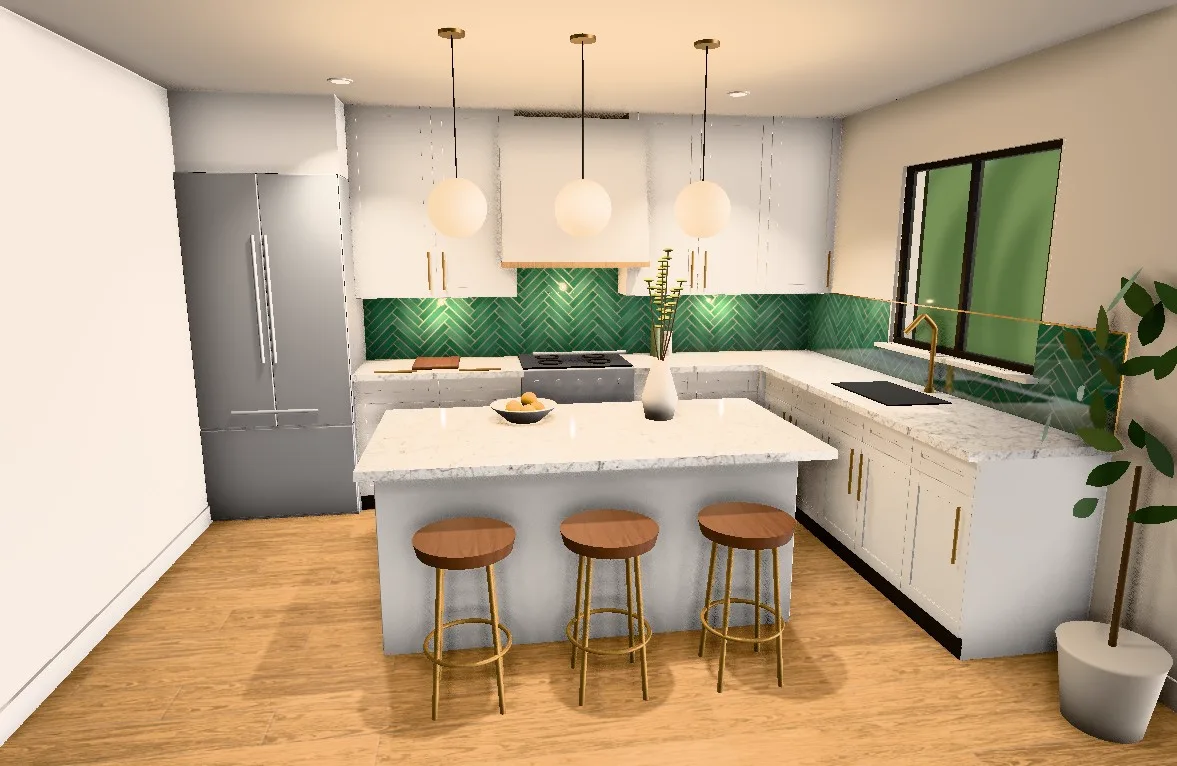
Kitchen backsplashes are the most common example. The wall gets occasional splashes, not running water, and the tile is usually light. Most backsplashes are tiled straight onto the existing drywall. Our backsplash installation guide walks through the steps, and you can see finished work on our kitchen backsplash page.
Bathroom walls outside the shower, such as a wainscot behind the toilet or a feature wall behind the vanity, are dry areas too. A vanity backsplash gets splashed but is fine on sound drywall, with sealant where the tile meets the counter.
Feature walls in living rooms, entries and bedrooms are dry. The real limits there are the weight of the tile and the flatness of the wall, both covered below.
Fireplace surrounds are a special case. Fireplaces have their own heat and clearance rules. The fireplace maker's manual lists which materials can be used within set distances of the opening, and many call for non-combustible materials close to the firebox. Drywall has a paper face, so it may not be allowed in that zone, and cement board is often used there instead. Follow the fireplace manual and the building code, and check that the tile and mortar suit the heat.
How to prepare drywall for tile
Tile is only as solid as the surface it's stuck to. On drywall, the mortar really bonds to the paper face, so that face has to be sound.
Sound and firm. Press on the wall. Drywall that flexes, crumbles or shows water damage gets cut out and replaced. Screws should hold the board tight to the studs, with no loose or popped fasteners.
Flat. Hold a long straightedge against the wall in several directions. Humps at taped seams and bowed studs show up as uneven tile, and larger tile shows them more. There's more on flatness below.
Clean. Wash off grease and dust, especially behind a stove. Mortar won't bond to grease or dust.
Paint. New, unpainted drywall is ready once it's clean, though some mortar makers ask for a primer first. Most walls are painted, and here the mortar maker's instructions decide. Loose, peeling or glossy paint should be removed or sanded to a dull finish so the mortar can grip. Beyond that, follow the guidance on the mortar bag for painted surfaces; some products list primers or limits. Never tile over wallpaper.
Patched and skim-coated areas. Joint compound is softer than drywall paper. Small patches are fine once they are fully dry, sanded flat and well bonded. Thick skim coats and large patched areas are weaker, and after old tile or wallpaper comes off, the paper face is often torn. Where the wall has been patched heavily or the paper is damaged, replacing that section of drywall is usually simpler than trusting it.
Heavy tile and large-format tile on drywall
Drywall can only carry so much weight, and the limit comes from the paper face holding on to the gypsum. Thick porcelain, natural stone and large-format wall tile all add weight per square foot. Board makers, mortar makers and tile makers publish what their products allow, and those are the numbers to follow. We won't quote one here, because it depends on the products.
For heavy or large tile, careful installers do three things. They check the weight against the board and mortar makers' guidance. They use a non-sag mortar made for large and heavy tile, with full coverage and back-buttering (see which thin-set to use). And when the tile is very heavy or the wall is in doubt, they replace the drywall with a backer board rated for it. Our large-format tile guide explains why flatness matters so much with big tile.
Mastic, the ready-mixed adhesive sold in a pail, is sometimes used for small, light tile on dry backsplashes. It isn't suited to heavy or large tile, and it dries slowly behind dense tile.
Green board in a shower: why it isn't waterproof
"Green board" is moisture-resistant drywall. Its treated paper and core resist humidity and occasional splashes better than regular drywall, which makes it a good choice for bathroom walls and ceilings outside the shower.
It is not waterproof. Water that soaks through the grout reaches the paper face and the gypsum behind it, and green board softens and grows mould the same way regular drywall does, only more slowly. Mould-resistant boards with other coloured faces are the same story: better in humid rooms, but not a waterproofing layer. For years, some showers were built with tile glued straight onto green board. When those showers are torn out, soft, stained board behind the tile is a common sight.
So the answer to "is green board OK in a shower" is no, not on its own. If it's already on the walls and the waterproofing maker allows gypsum board under its membrane, the membrane is what makes the shower work, not the green paper.
Wet areas: tub surrounds and showers
In a shower or tub surround, the wall behind the tile needs a continuous waterproofing layer. The board is just the base. There are three common ways to build it.
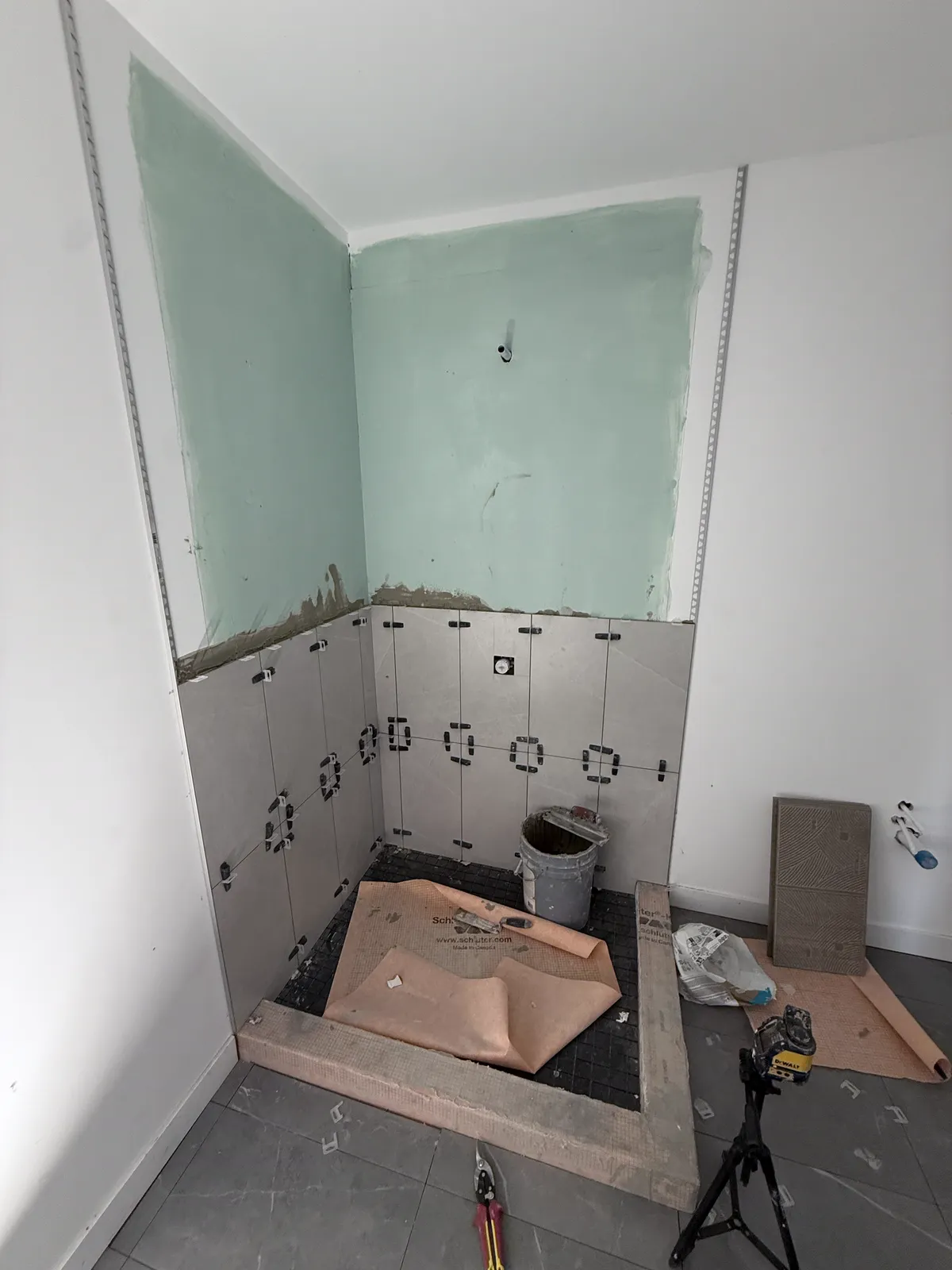
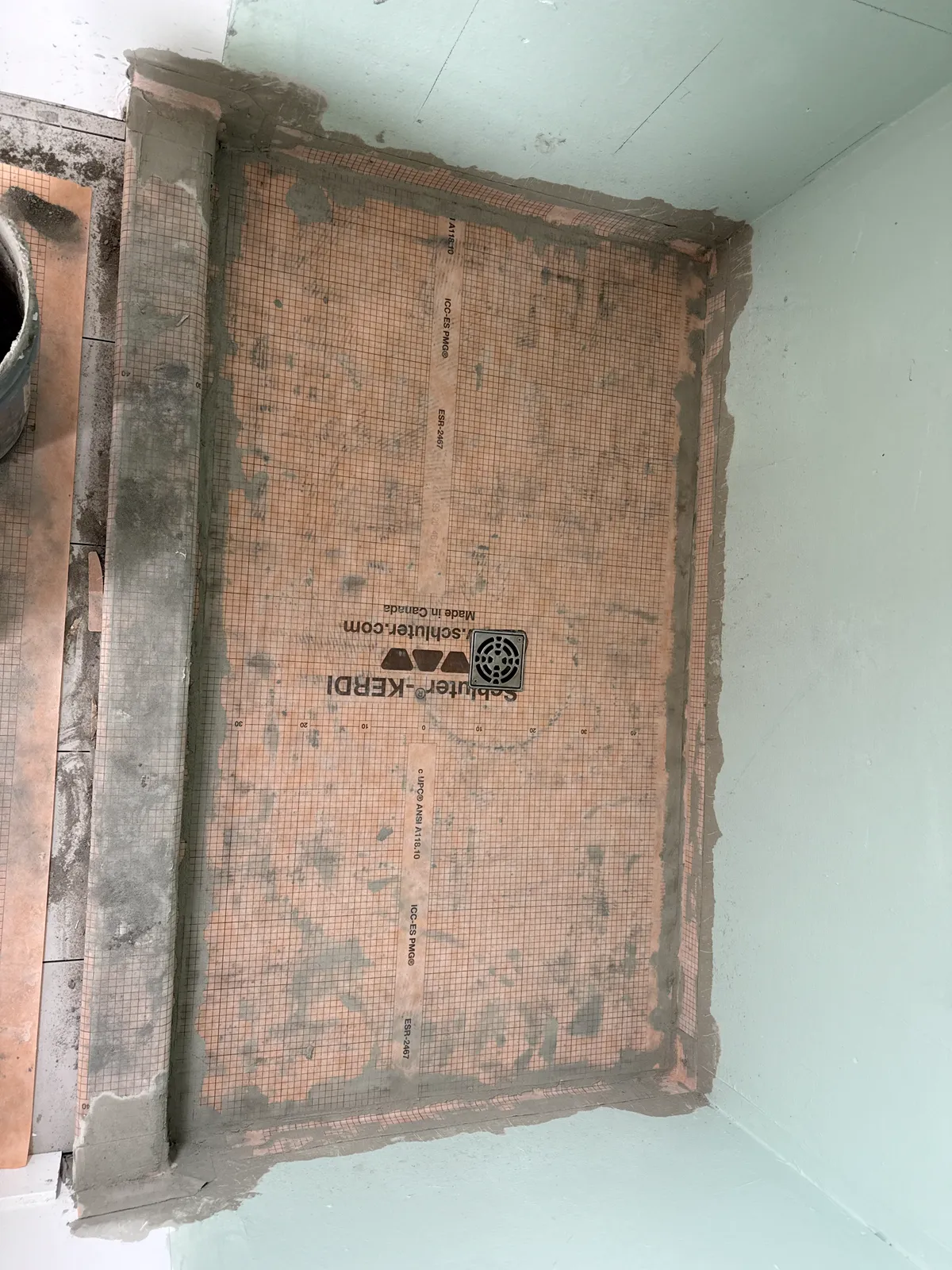
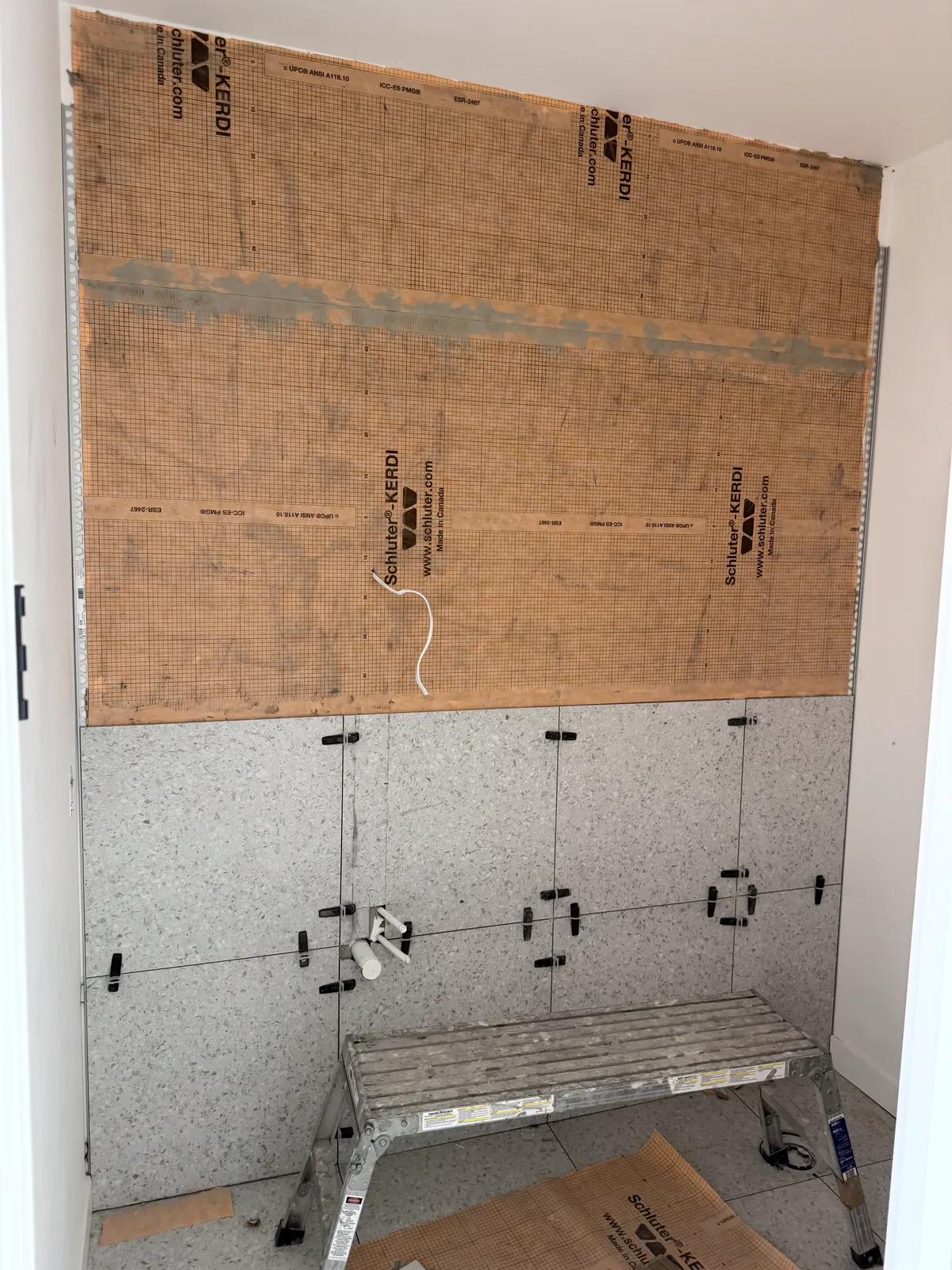
A bonded sheet membrane over the board. Schluter-KERDI, for example, can be installed over regular gypsum board as well as cement board, because the membrane does the waterproofing. Every seam, corner and pipe is sealed with the maker's band, corners and collars. The photo at the top of this page shows KERDI on shower walls at 404 Ashbee Court.
A liquid-applied membrane over the board. It is rolled or brushed on in coats to the thickness on the label. Each liquid maker lists which boards it can go over in a shower, so check before assuming drywall is allowed.
A waterproof foam board system, such as KERDI-BOARD or wedi, with its seams sealed using the maker's band or sealant and its own fasteners.
Whichever system you use, it has to cover the whole wet area, lap onto the tub flange or shower floor as the maker shows, and seal around the valve and shower arm. See how to waterproof a shower, how shower waterproofing works and liquid vs sheet membranes.
Many installers still prefer cement or foam backer board in showers, even where the membrane maker allows drywall. If the membrane is ever punctured or water gets in at the valve, cement board and foam don't turn soft the way gypsum does. Foam boards also give very flat walls. It's a judgement call, made with the waterproofing maker's instructions in hand.
Tile backer board types at a glance
Where drywall isn't the right base, a tile backer board is. Cement board is made of cement reinforced with fibreglass mesh. It is strong and isn't damaged by water, but water passes through it, so it needs a membrane in a shower. Fibre-cement board is similar, made with cement and cellulose fibres instead of mesh. Foam boards such as KERDI-BOARD and wedi are light, very flat and waterproof once their seams are sealed.
Glass-mat gypsum boards made as tile backers have a fibreglass facing and a coated surface instead of paper, so they handle moisture far better than ordinary drywall. Follow the maker's rules on where they can be used and how joints are treated in wet areas.
All of them are fastened with the screws and at the spacing the maker gives, and taped with the tape it lists. For how cement board, foam board and drywall compare in a shower, see KERDI-BOARD vs cement board vs drywall.
Framing flatness matters more than the board
Every board follows the studs behind it. If a stud is bowed or twisted, the drywall or backer board on it will be too, and the tile will show it. Large tile and glossy tile show it most, because light rakes across the wall and picks out every hump.
Before a shower or feature wall is boarded, a careful installer checks the studs with a long straightedge or a laser. High studs can be planed down. Low ones are shimmed out, or a straight new stud is fastened alongside a crooked one (called sistering). Fixing the framing while the wall is open is far easier than fighting it later with thick mortar. Mortar is a bonding layer, not a way to straighten a wall.
Tiling over old tile or paint on walls
Painted drywall is covered above. Old tile on a wall is a different question. On a dry backsplash, new tile can sometimes go over old tile that is firmly bonded and flat, if you account for the extra weight and thickness at outlets and edges. In a shower, we don't recommend it, because the old tile hides the condition of the wall and the waterproofing. See can you tile over tile.
Removing old wall tile usually tears the drywall paper or pulls out chunks of gypsum. Damaged drywall gets replaced or properly repaired before new tile goes up, not tiled over as it is.
What goes wrong with tile over drywall in wet areas
The failures are slow and hidden, which is why they do so much damage. Water gets through the grout and into the drywall. The gypsum softens, the paper grows mould, and the mortar loses its grip. Grout starts cracking and stays dark long after a shower. Tiles sound hollow, then shift, then fall off. By the time it shows on the surface, the studs and the floor below can be wet too.
A musty smell, soft spots when you press on the tile, stains on the ceiling below, or loose tiles low on a shower wall are all warning signs. The fix is usually to strip the shower to the studs and rebuild it with proper waterproofing. Regrouting won't solve it; see when regrouting is and isn't enough.
Steam showers need their own system
Steam showers are a different category. Steam drives moisture into the wall as vapour, not just as running water, so they need a system with much higher vapour resistance than a regular shower, along with details such as a sloped ceiling so condensation runs off instead of dripping. Use a system its maker rates for steam rooms, such as Schluter's KERDI-DS, and follow it exactly. Don't use drywall as the base of a steam shower unless that system specifically allows it.
DIY or hire a pro?
A backsplash on sound drywall is one of the best DIY tile jobs. The wall is dry, the tile is light, and mistakes are easy to redo. A feature wall in light tile is similar.
Showers and tub surrounds are different. The work behind the tile decides whether the shower stays dry, and mistakes stay hidden until there's damage. If you're hiring, ask what will go behind the tile and which waterproofing system will be used. Our guides to tiling a shower and hiring a tile installer list what to check. For reference, Agora has waterproofed more than 350 showers with Schluter-KERDI.
Frequently asked questions
Can you tile directly on drywall in a bathroom?
Outside the shower and tub area, yes, as long as the drywall is sound, flat and clean. Inside the shower or tub surround, the drywall needs a waterproofing membrane over it, and only if that system allows drywall underneath.
Is green board OK for a shower?
Not on its own. Green board resists humidity but isn't waterproof. A shower needs a waterproofing membrane or a waterproof board system, whatever board is behind it.
Can you put tile on painted drywall?
Usually, if the paint is well bonded. Remove loose or peeling paint, dull glossy paint so the mortar can grip, and follow the mortar maker's instructions for painted surfaces.
Do I need backer board for a kitchen backsplash?
Usually not. A backsplash is a dry area, and sound, flat drywall is a good base. Very heavy stone or large tile may call for a backer board, depending on the makers' weight limits.
Can KERDI go over drywall?
Yes. Schluter allows KERDI over regular gypsum board, provided the board is sound, flat and properly fastened, and the membrane is installed as Schluter's instructions show. See what KERDI is.
How much weight can drywall hold for tile?
It depends on the board, the mortar and the tile, so check what each maker publishes. For heavy stone or large-format wall tile, a rated backer board is often the safer base.
Should a tub surround have cement board or drywall?
Treat a tub surround as a wet area. Either can work only with a waterproofing system the maker allows on that board, carried down over the tub flange. Many installers prefer cement or foam board there.