Short answer
In the LVP vs engineered hardwood choice, luxury vinyl plank wins on water, basements and low upkeep, and engineered hardwood wins on real wood looks, feel and the ability to be refinished. Choose LVP for kitchens, basements, mudrooms, rentals and busy homes with pets. Choose engineered hardwood for main living areas and bedrooms where you want real wood and plan to stay. Many homes use both.
Luxury vinyl plank and engineered hardwood often sit side by side in the showroom, and in good versions they can look surprisingly alike. The LVP vs engineered hardwood question isn't about which is better overall. It is about which one suits each room, the way you live and how long you plan to stay. This guide compares vinyl plank vs engineered hardwood honestly, point by point, so you can decide room by room.
How LVP and engineered hardwood are built
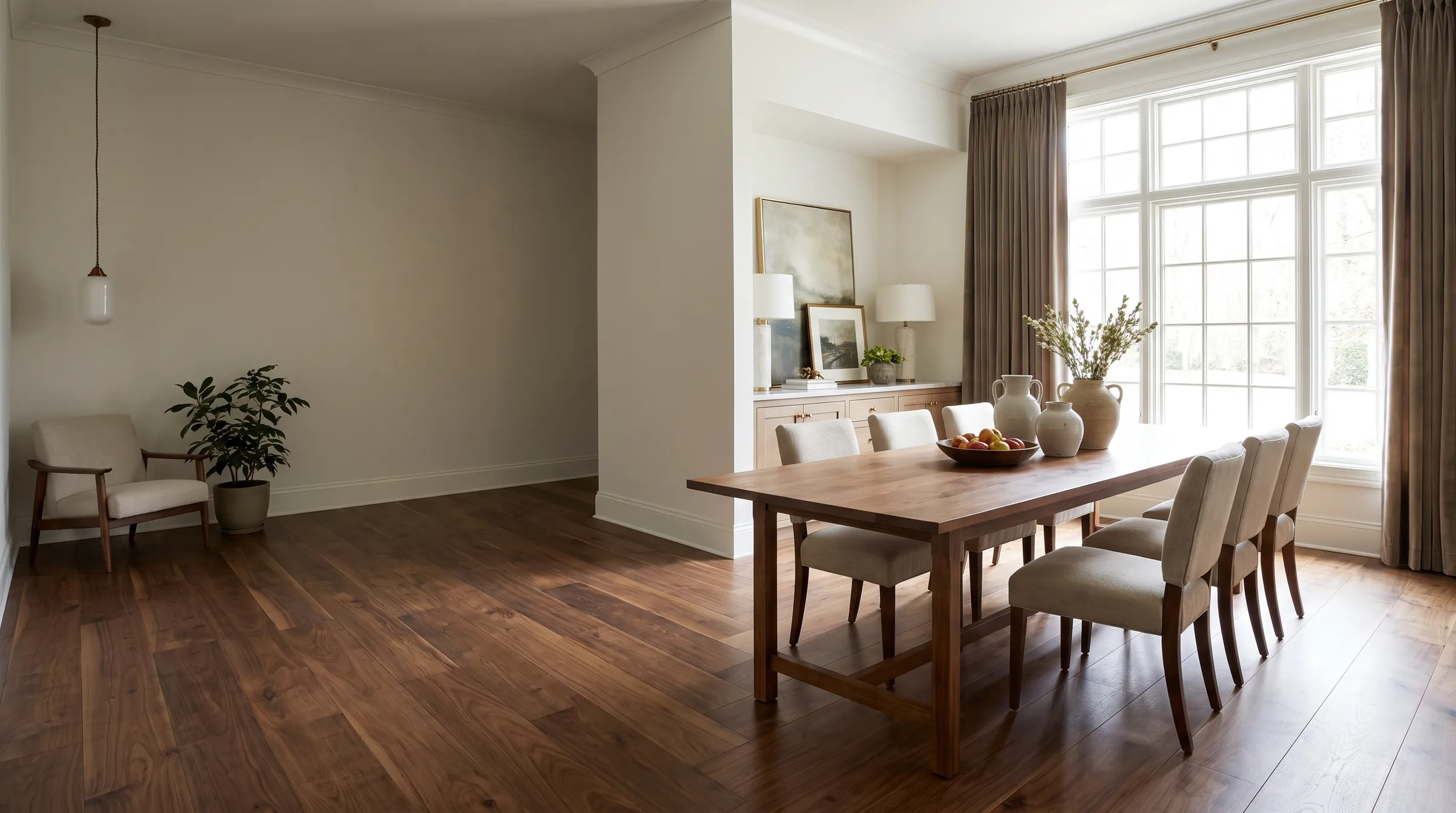
Engineered hardwood is real wood. A top layer of hardwood, the wear layer, is bonded to a core of plywood or another wood-based core laid in cross layers. The cross layers make it more stable than solid hardwood. What you walk on is real oak, maple, hickory or another species, with its own grain, colour and finish. Our guide to engineered vs solid hardwood explains how it compares with solid boards.
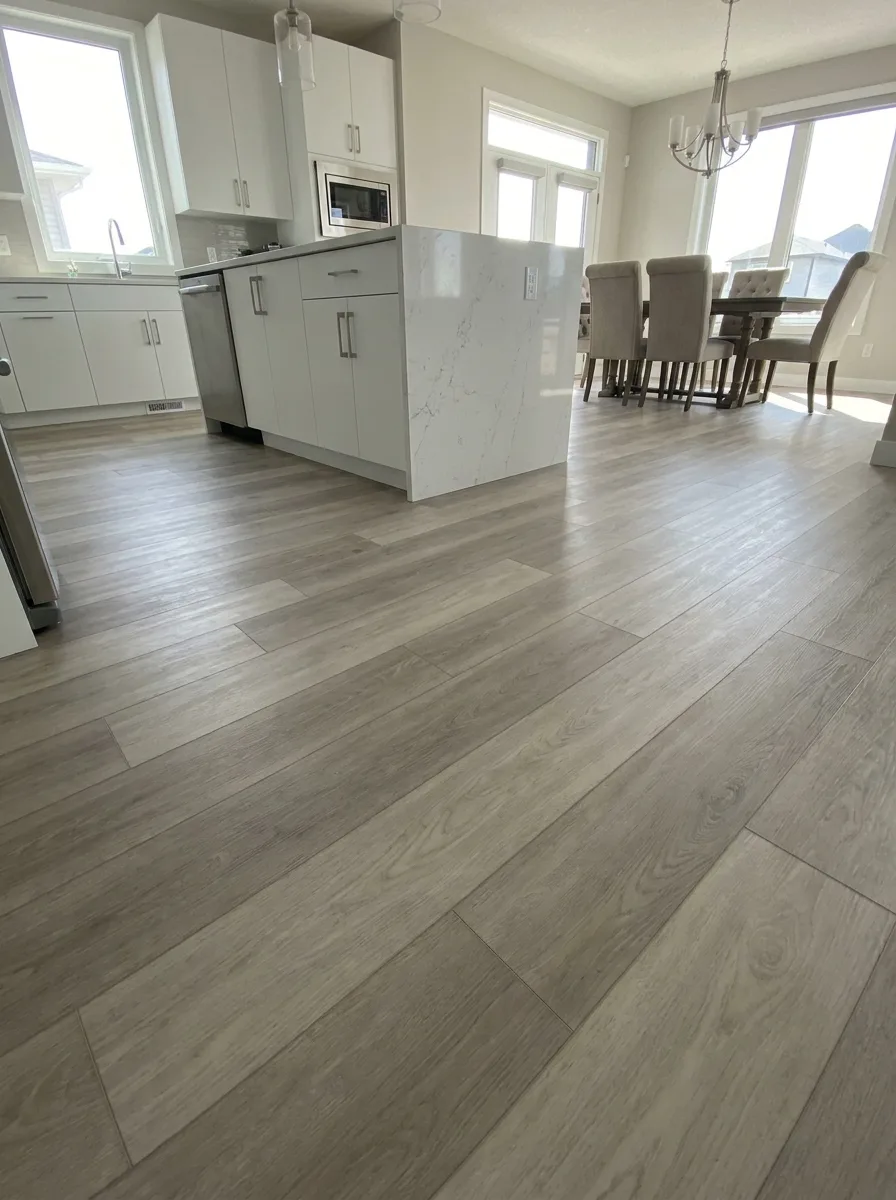
Luxury vinyl plank is a plastic-based floor. A clear wear layer protects a printed design layer that shows the wood look, over a vinyl core. Rigid-core SPC planks have a dense core of limestone powder and PVC. WPC planks have a foamed, softer core. Thin glue-down planks are also common. The wood you see is a photograph, embossed so the texture follows the grain.
That difference, real wood versus a printed image on vinyl, explains almost every point below.
LVP vs engineered hardwood: side by side
| Point | Luxury vinyl plank | Engineered hardwood |
|---|---|---|
| Surface | Printed wood image under a clear wear layer | Real wood with a factory or site finish |
| Water | Planks don't swell; water can still get under the floor | Swells, stains and cups with standing water |
| Scratches | Good resistance; deep damage means replacing a plank | Scratches show, but the finish can be recoated |
| Dents | Rigid core resists dents well | Depends on the species; softer woods dent |
| Refinishing | Not possible | Possible if the wear layer is thick enough |
| Feel and sound | Harder, can sound hollow or clicky | Warmer, more natural, solid when glued or nailed |
| Basements | A top choice over a dry slab | Only products rated for below grade |
| Heated floors | Often allowed, within the maker's limits | Often allowed, within the maker's limits |
| Installation | Click floating or glue-down | Nail-down, glue-down or floating |
| Upkeep | Low; damp mop | More care; humidity control and dry cleaning |
Water and moisture
This is the clearest difference. A vinyl plank's core and surface don't absorb water, so spills, wet boots and mopping won't make it swell or warp. That is why many products are sold as waterproof. The floor as a whole isn't sealed, though. Water can run through the seams and the gap at the walls and get trapped underneath. A real leak still means lifting planks so the subfloor can dry. Our guide on whether luxury vinyl plank is waterproof explains the difference.
Engineered hardwood handles everyday spills when they are wiped up quickly. Standing water is another matter. It soaks into the seams and the edges of the boards, which can swell, stain or cup. A dishwasher leak or an overflowing sink can ruin a section of floor. Engineered hardwood still works in kitchens with care, but it isn't a good choice for full bathrooms, laundry rooms or entries where snow melts every day.
Ottawa adds one more factor: humidity. Engineered wood moves far less than solid hardwood, but it still reacts to very dry winter air and humid summers. Makers usually set an indoor humidity range for the warranty. LVP doesn't care about humidity. It does move with temperature, so very hot sun through large windows can matter more for vinyl. See hardwood floors in an Ottawa winter for the wood side.
Scratches, dents and everyday wear
LVP's wear layer is measured in mils, thousandths of an inch. Around 12 mil is a common residential choice, and 20 mil or more is typical for busy homes and light commercial use. A good wear layer shrugs off everyday scratches from grit and pets. Rigid-core planks also resist dents from furniture well. Damage that does happen, such as a gouge from a dropped knife or a dragged appliance, can't be sanded out. The plank has to be replaced.
Engineered hardwood scratches more easily, because a wood finish is softer than a vinyl wear layer. How much it shows depends on the colour, sheen and texture. Matte finishes, mid-tone colours and wire-brushed or hand-scraped textures hide scratches far better than glossy dark floors. Dents depend on the species. Harder woods resist dents better, and softer woods mark from heels and dropped objects.
The difference is what happens over the years. LVP looks the same until its wear layer is worn or damaged, then it looks worn. Wood picks up small marks along the way, and many people see that as character. Wood can also be renewed, which brings us to refinishing.
Refinishing and repair
Engineered hardwood can often be refinished. When the finish wears, it can be lightly abraded and recoated. When the wood itself is worn or scratched, it can be sanded and refinished, as long as the wear layer is thick enough. Thin veneers may not be sandable at all, while thicker wear layers can be sanded more than once. If you plan to stay in the home a long time, ask for the wear layer thickness, not only the plank thickness. Sanding and refinishing is specialist work done by refinishing companies; Agora installs floors but doesn't sand or refinish them.
LVP can't be refinished. When planks are damaged, they are replaced. With glue-down vinyl, single planks are fairly easy to cut out and replace. With click LVP, a plank in the middle of the room usually means unclicking rows from the nearest wall, or cutting out the damaged plank and gluing in a new one. Either way, keep a box of spare planks from the same batch, because colours can change between production runs.
Feel, sound and warmth underfoot
Real wood feels different. It is warmer to the touch than vinyl and has a slight natural give. Glued or nailed engineered hardwood sounds solid and quiet underfoot. Floating engineered floors can sound more hollow, especially over a less than flat subfloor.
LVP depends on the type. Rigid-core SPC is hard and can sound clicky or hollow when it floats, particularly with hard shoes or pet claws. WPC is softer and quieter. Glue-down vinyl is the quietest vinyl. An attached pad or approved underlay helps, but never stack a second pad under planks that already have one.
In condos, the building's sound rules often decide the floor and underlay for both products. Check the rules before you choose; see condo flooring rules.
Real wood vs a printed layer: looks and resale
Good LVP is convincing from standing height. Better products have long planks, many different plank patterns and texture that follows the printed grain. Up close, and in bright light, the repeat and the evenness often give it away. Engineered hardwood has no repeat, because every board is a different piece of wood. It also takes on a patina as it ages.
Resale is harder to pin down, and nobody can honestly promise a number. Many buyers see real hardwood as a premium feature in main living areas. Good LVP is widely accepted, especially in basements, kitchens, rentals and busy family homes, and many buyers value its water resistance. What matters most is quality and consistency: a good floor that suits the house and runs through connected rooms looks better than a patchwork of materials.
Basements, concrete and heated floors
Basements favour LVP. Concrete slabs can be damp and cold, and vinyl doesn't absorb moisture. The slab still needs a moisture check, the vapour barrier or underlay the maker requires, and any water problem fixed first. Our guide to the best basement flooring covers the options.
Engineered hardwood can go on concrete and below grade, but only when the maker approves that product for it and the slab passes the moisture test. It is usually glued down or floated over an underlay with a vapour barrier. Our guide to engineered hardwood on concrete explains how.
Radiant heat works with both, within limits. Most makers allow their product over in-floor heating only with an approved heating type, a maximum surface temperature and a gradual start-up. Wood slows heat more than vinyl does. Check both the flooring maker and the heating system's maker before you combine them; see whether heated floors are worth it.
Dogs, kids and busy homes
For dogs, LVP is usually the easier floor. A good wear layer resists claw scratches, accidents wipe up without soaking in, and water bowls aren't a worry. Rigid-core planks can be slippery and loud under claws, so a textured surface helps.
Engineered hardwood can work with pets, especially a hard species with a matte, textured finish that hides marks. Expect some scratches, and clean up accidents quickly. Our guide to the best flooring for dogs compares all the common options.
For young children, both work. LVP is easier with spills and crafts. Wood is a little softer and warmer for crawling, and small marks can be refinished later.
Installation methods
Most LVP for homes is click-together and floats over the subfloor, with an expansion gap at the walls. Glue-down vinyl is the alternative for large areas, commercial spaces and places where heavy loads or sunlight make floating less suitable. Our guide to click vs glue-down vinyl plank compares them. Both need a flat subfloor, because thin vinyl shows every bump, and floating planks flex over dips.
Engineered hardwood can be nailed or stapled to a wood subfloor, glued to concrete or wood, or floated, depending on the product. It needs moisture readings within the maker's limits and, for many products, time in the home before installation. Nail-down and glue-down work take more skill and tools than click LVP. Our guides to installing hardwood flooring and installing vinyl plank flooring cover each method step by step.
A floating LVP floor in a simple room is a reasonable DIY project. Engineered hardwood is more expensive per board, so mistakes cost more, and nail-down or glue-down installation is best left to an experienced installer.
How long each floor lasts
A well-installed engineered hardwood floor with a thick wear layer can last as long as you are likely to want it, because the surface can be renewed. A thin veneer lasts until the finish and wood are worn through, then the floor is replaced.
LVP lasts as long as its wear layer holds up. A thicker wear layer lasts longer in busy rooms. When it is worn or badly damaged, the planks are replaced rather than renewed. In both cases, the installation underneath decides much of the life: a flat subfloor, the right underlay and a proper expansion gap.
What drives the cost
Both products range from budget to premium. With LVP, the price follows the wear layer, the core type, the plank size and the realism of the design. With engineered hardwood, it follows the species, the grade, the wear layer thickness, the plank width and the finish. Installation adds the method, subfloor levelling, removal of the old floor, stairs, transitions and trim.
For typical Ottawa ranges, see vinyl plank installation cost and hardwood floor installation cost. Agora installs both, and a free written quote can price each option for the same rooms side by side.
Which to choose, room by room
For kitchens, either works. LVP is the low-risk choice around the sink and dishwasher, while engineered hardwood suits an open plan where the kitchen flows into wood-floored living space. For basements, mudrooms, laundry rooms and bathrooms, choose LVP or tile. For living rooms, dining rooms and bedrooms, engineered hardwood gives real wood and long life, and LVP gives easy care. For rentals, LVP is usually the practical choice.
If you are torn between LVP and laminate instead, see LVP vs laminate. Our hardwood flooring page shows the wood floors we install.
Frequently asked questions
Is LVP better than engineered hardwood?
Not overall, but it is better in some rooms. LVP is better where water, basements, pets and low upkeep matter. Engineered hardwood is better where you want real wood, a warmer feel and a floor that can be refinished.
Does LVP or engineered hardwood add more value to a home?
Many buyers see real hardwood as a premium in main living areas, while good LVP is widely accepted in basements, kitchens and rentals. No one can honestly put a fixed number on either, and quality and consistency matter most.
Which is more scratch resistant, LVP or engineered hardwood?
LVP with a good wear layer usually resists everyday scratches better. Engineered hardwood scratches more easily, but the finish can often be recoated or sanded, which LVP can't.
Can engineered hardwood go in a basement?
Only products the maker rates for below grade, installed over a slab that passes a moisture test. For many basements, LVP is the safer choice.
Is engineered hardwood waterproof?
No. It handles spills that are wiped up quickly, but standing water can make the boards swell, stain or cup. Some products have water-resistant finishes, but they are still wood.
Does LVP look cheap compared with real wood?
Good LVP looks convincing from standing height, especially with long planks and many plank patterns. Up close, the print repeat and evenness can show, which real wood never has.