

Short answer
Before you buy flooring for a condo, get your building's flooring rules in writing. Most condominium corporations limit how much impact noise a new hard floor can pass to the unit below, usually by requiring an acoustic underlay with a minimum sound rating, and many require approval before work starts. Choose the underlay first, then a floor that is compatible with it.
Swapping carpet for hardwood or luxury vinyl is one of the most popular condo upgrades, and one of the most common causes of complaints between neighbours. Footsteps, dropped objects and chair legs on a hard floor travel straight into the suite below. That is why most condo buildings regulate hard flooring.
Start with your building's rules
Every condominium corporation sets its own requirements in its declaration, by-laws and rules. Ask your property manager for:
- Whether hard flooring is allowed, and in which rooms.
- The minimum sound rating the floor assembly or underlay must meet.
- Whether you need written approval before work starts, and what to submit (often the product data sheets for the underlay and floor).
- Permitted working hours, elevator booking, loading dock use and parking for the installers.
- Whether the contractor must provide proof of insurance.
Getting this settled first avoids the worst outcome: a finished floor the board asks you to remove.
STC and IIC, in plain terms
You will see two sound ratings. Higher numbers mean better sound control for both.
- STC (Sound Transmission Class) measures airborne sound: voices, TV, music passing through the floor.
- IIC (Impact Insulation Class) measures impact sound: footsteps, dropped items, furniture moving. This is the one hard floors affect most, and the one condo rules usually focus on.
Be careful comparing numbers. A rating measured in a lab on a specific concrete slab and ceiling is not the same as a field test in a real building, and ratings for an underlay alone are not the same as for a complete floor assembly. When your building gives a minimum, ask exactly which rating it refers to, and check the underlay's data sheet for a matching test.
Choosing the floor
Engineered hardwood
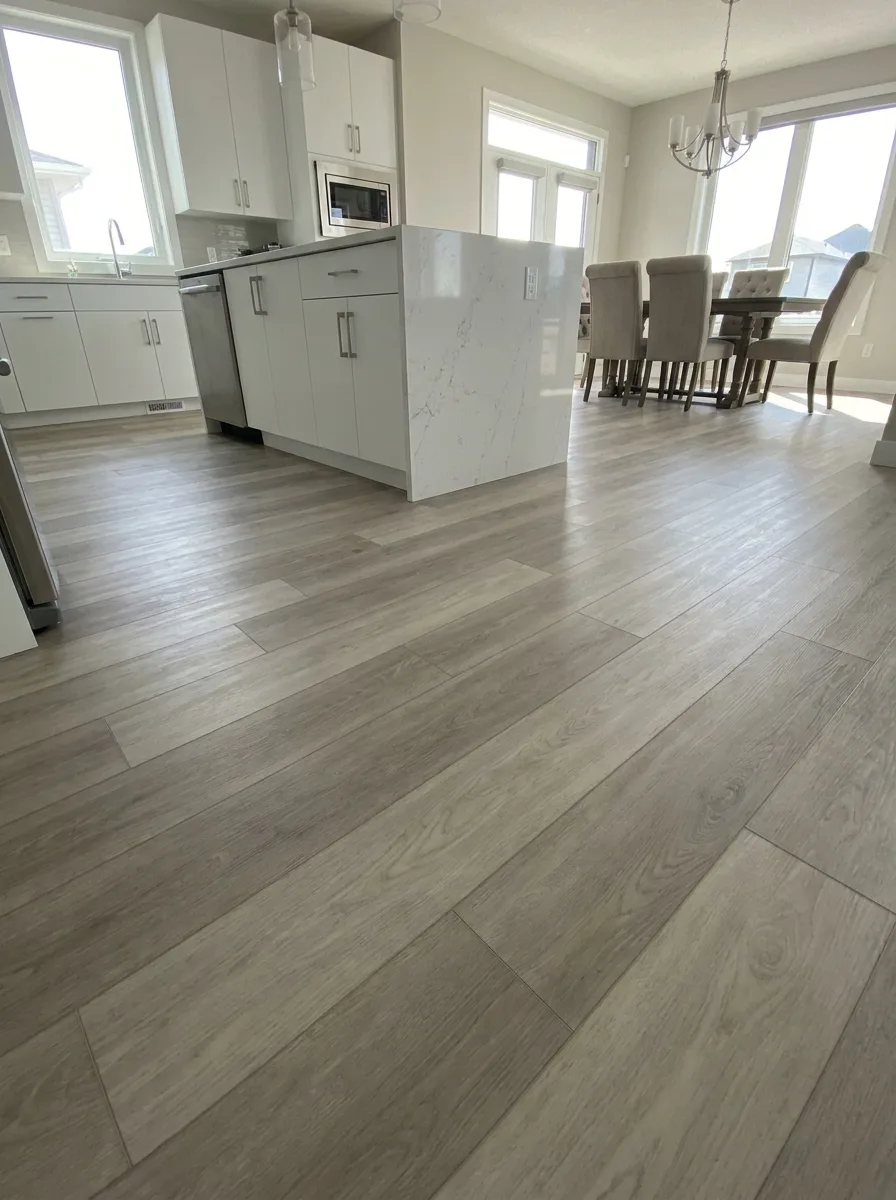
The usual choice for a real-wood floor in a condo. It is stable over concrete and can be floated or glued over an approved acoustic underlay. Solid hardwood is rarely practical in concrete buildings. See engineered vs solid hardwood.
Luxury vinyl plank
Quiet, water-tolerant and a good fit for condo kitchens and bathrooms. Some LVP products have an attached acoustic pad; check whether your building accepts it, or whether a separate underlay is required. Compare options in LVP vs laminate.
Tile
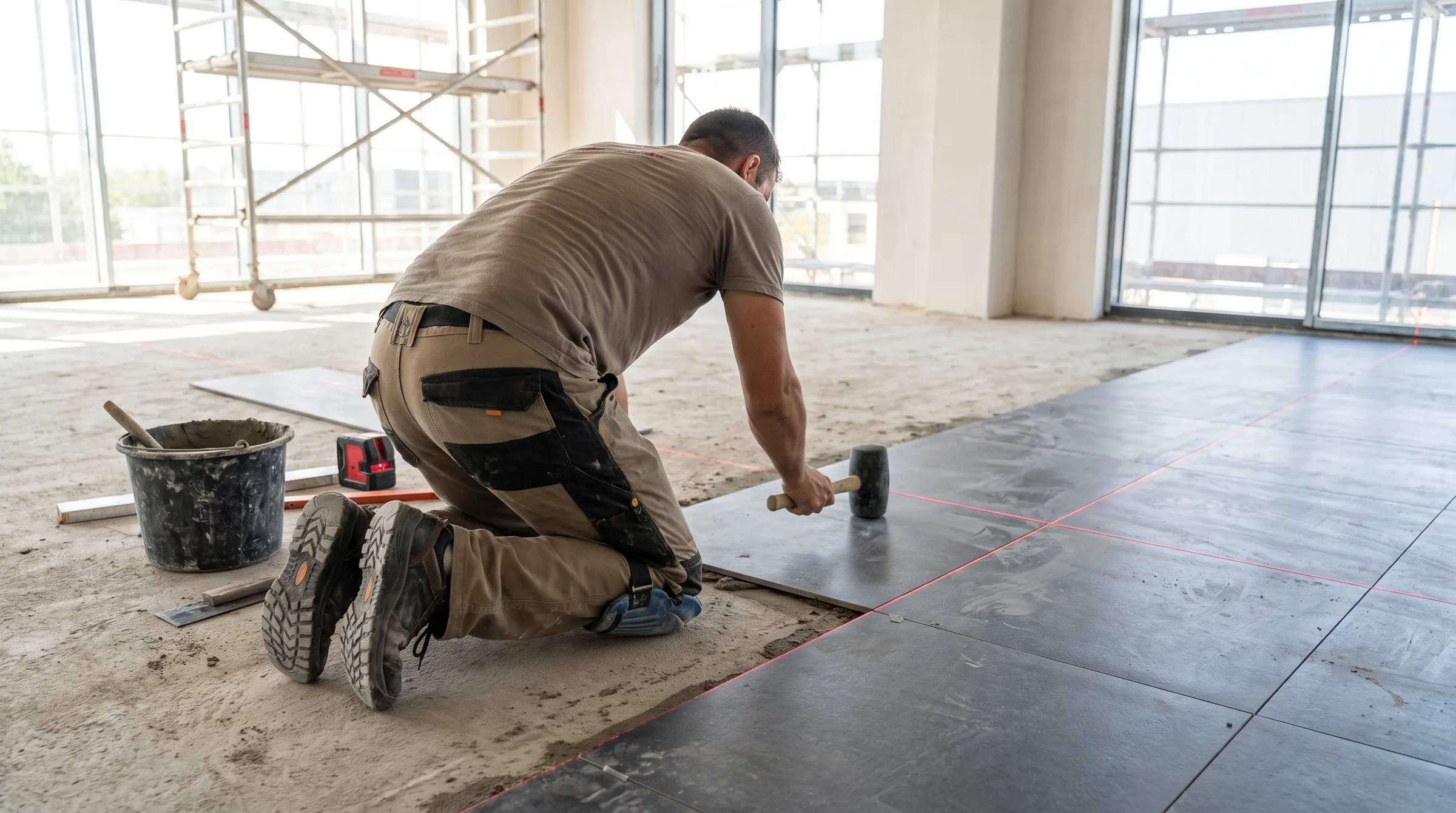
Tile in condo bathrooms and entries still needs sound control underneath. Several uncoupling and sound-control membranes are made for tile; your building may specify one.
Other things that trip people up
- Floor height: underlay plus flooring raises the floor. Doors may need trimming, and transitions to other rooms and the corridor need planning.
- Concrete flatness: condo slabs are often uneven; floating floors need them levelled.
- Perimeter isolation: the floor should not touch the walls rigidly; the expansion gap under the baseboard also helps stop sound travelling into the structure.
- Neighbours: removing old tile or glued flooring is noisy. Let neighbours know and stick to the building's hours.
A simple plan
- Get the building's flooring rules and approval process in writing.
- Choose an underlay that meets the required rating, then a floor compatible with it.
- Submit the data sheets and get approval.
- Book the elevator and confirm working hours with your installer.
- Keep the approval, data sheets and invoice for your records. You may need them when you sell.