Short answer
The best flooring for dogs is usually porcelain tile where scratches and accidents matter most, and luxury vinyl plank with a thick wear layer and a textured, matte surface for the rest of the house. Tile is almost scratch-proof but hard, cold and can be slippery, so add rugs or floor heat. Laminate resists scratches but not water in the joints. Hardwood scratches, though harder species and matte finishes hide it. Carpet holds stains, and loop pile snags claws.
Dogs are hard on floors in three ways: claws scratch the surface, accidents and water bowls put liquid on it, and grit from outside grinds it down. Older dogs add a fourth problem, which is grip. The best flooring for dogs handles all four, and no single floor does all of them perfectly. This guide compares pet friendly flooring options honestly, room by room, so you can choose what fits your dog and your house. Most of it applies to young kids as well.
What makes pet friendly flooring
Start with what your dog actually does. A small, calm dog in an apartment and two large dogs running in from a muddy yard are very different jobs for a floor. Four questions cover most homes.
Scratches. How hard is the surface, and how well does its colour and texture hide fine marks? A floor that resists scratches but shows every one on a dark gloss finish can look worse than a softer floor with a matte, textured surface.
Accidents and water. What happens when urine, vomit or a tipped water bowl sits for a few hours? Some floors shrug it off; others swell, stain or let it run into the seams and under the floor.
Grip. Can your dog get up, turn and run without sliding? Puppies, seniors and dogs with joint problems struggle on slick floors.
Comfort and noise. Many dogs sleep on the floor, and claws on a hard surface are loud. Hard floors may need rugs or a bed in the places your dog lies down.
Porcelain tile: the most scratch-proof floor
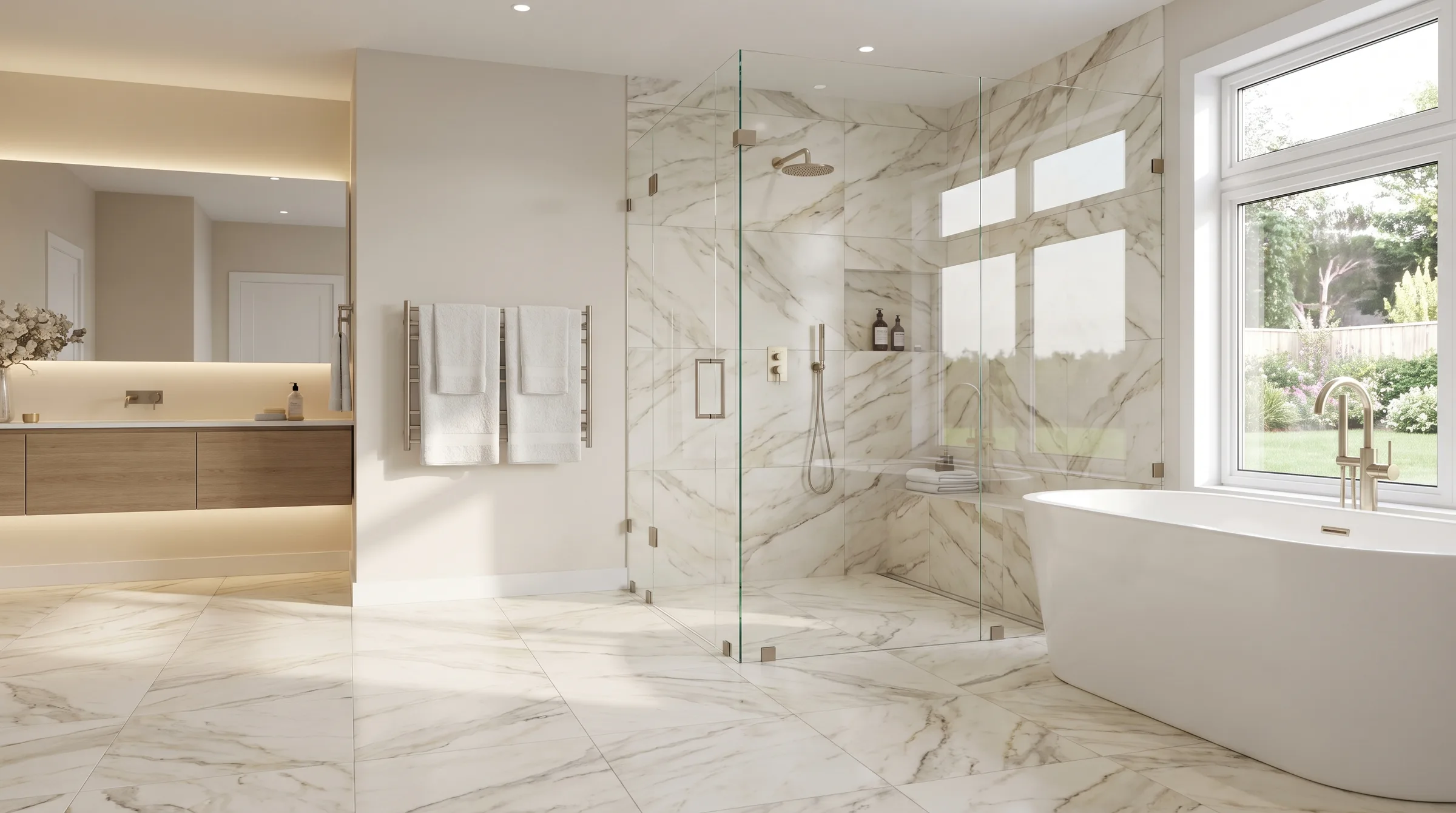
Porcelain tile is the toughest floor in a house with dogs. Claws can't scratch its glazed or through-body surface in normal use, and water, urine and muddy paws don't harm it. It is the natural choice for entries, mudrooms, laundry rooms and any room where the dog comes in wet. In an Ottawa winter, it also handles snow, slush and road salt from paws better than anything else.
Tile's weak points are comfort and grip. It is hard and cold underfoot, so a dog bed or rug where your dog lies helps. Electric floor heat under tile makes it the warmest floor in the house, and many dogs head straight for it; our guide to whether heated floors are worth it explains the options. Polished tile can be slippery, especially when wet. Choose a matte or lightly textured finish, and ask for the tile's slip-resistance rating. Industry standards commonly cite a minimum wet dynamic coefficient of friction (DCOF) of 0.42 for level interior floors that will be walked on when wet; that rating describes people's shoes, not paws, but a higher-grip tile helps everyone.
The grout is the part that needs thought. Cement grout is porous, so urine and water can soak in and leave stains and odours if accidents are frequent. Sealing cement grout slows that down, and epoxy grout doesn't absorb liquid at all. Our guide to epoxy grout vs cement grout compares them. Larger tiles also mean fewer grout lines to clean.
If you want a wood look with tile's toughness, wood-look tile is a popular choice for main floors in homes with big dogs. More on our tile installation page.
Luxury vinyl plank: water-resistant and forgiving
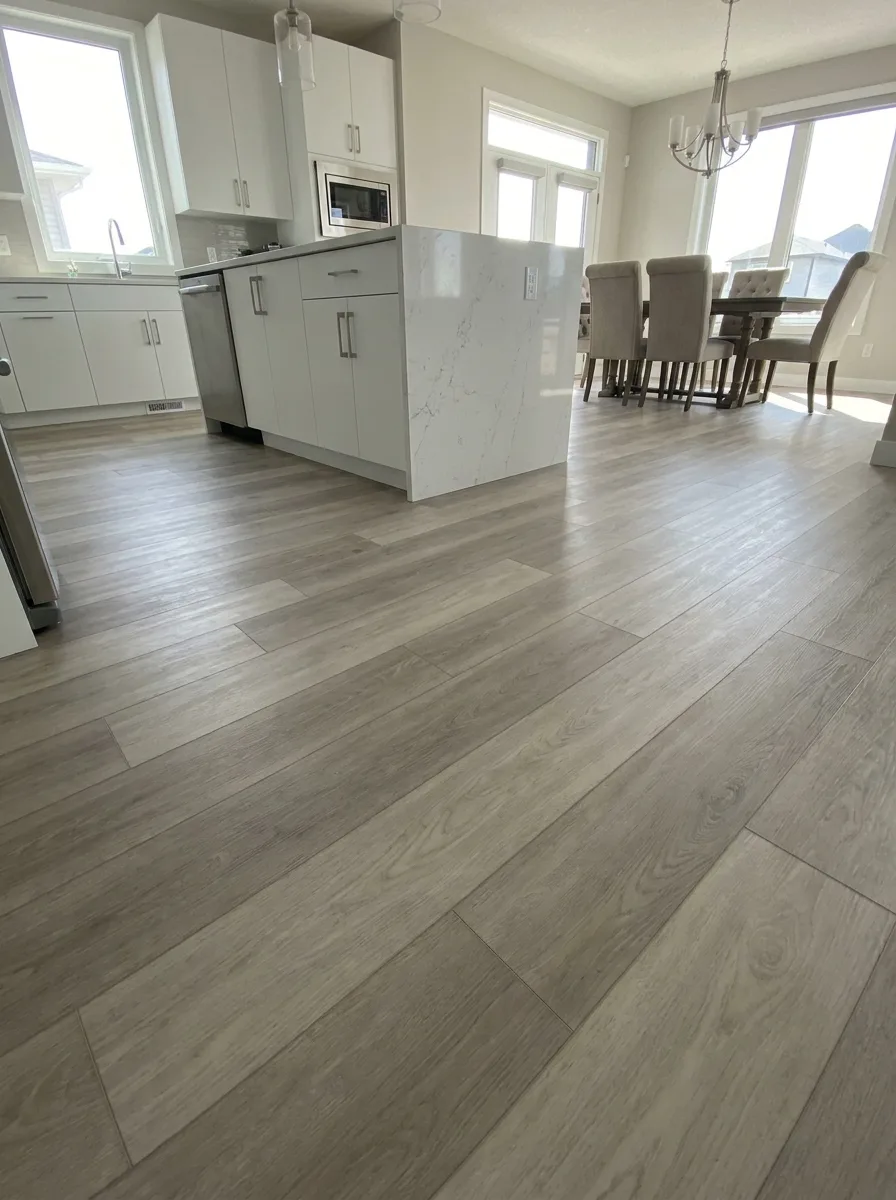
Luxury vinyl plank (LVP) is the most common choice for pet owners who want a wood look through the whole main floor. The planks don't absorb water, so a tipped water bowl or an accident won't swell them. LVP is softer and quieter than tile, and it gives a little more grip than polished tile or stone.
Scratch resistance depends mostly on the wear layer, the clear top layer measured in mils. Around 12 mil is a common residential choice, and 20 mil or more is typical for busy homes with pets. A deeper embossed texture and a matte finish hide fine scratches much better than a smooth, shiny plank. Lighter and mid-tone colours with plenty of grain show scratches less than very dark, plain ones. Our guide to choosing vinyl plank flooring explains how to read the specifications.
The weak point is the seams. Vinyl planks are waterproof, but a floating vinyl floor is not a sealed surface. Urine left for hours can run into the joints and around the edges and get under the floor, where it can't dry and can leave odour. Clean accidents up promptly, and in the places your dog spends the most time, a washable rug or mat helps.
Rigid-core (SPC) planks resist dents from heavy dogs and furniture better than softer cores. More on our vinyl plank installation page.
Laminate: scratch-resistant, but watch the water
Laminate's top layer is very hard, and it often resists scratches better than vinyl. That makes it a reasonable choice for dog owners in dry rooms such as living rooms, bedrooms and hallways. Laminate durability is rated with an AC rating; for homes with dogs, a product rated for heavy residential use or higher is the better pick. Our LVP vs laminate guide explains the ratings.
The problem is water. Laminate's core is made of wood fibre, and water or urine that sits in a joint can make the edges swell and peak, and that damage doesn't go back down. Water-resistant laminates with sealed edges handle spills much better, within the time the maker states; see waterproof laminate for what those claims cover. Laminate can also feel slippery for dogs, especially smooth, glossy products. A textured surface helps.
Laminate is a poor choice where accidents are frequent, such as with a puppy still being house-trained or an older dog with incontinence. Vinyl or tile is safer in those homes.
Hardwood: beautiful, but it shows claws
Hardwood and dogs can live together, but the floor will show wear. Claws leave fine scratches in the finish, and larger dogs can dent softer woods. Some owners accept that as character; others find it frustrating.
A few choices make a big difference. Harder species, such as hickory and maple, resist dents better than softer ones, and oak sits in between. Matte and low-sheen finishes hide scratches much better than gloss. Wire-brushed and hand-scraped textures, and boards with strong grain and colour variation, hide marks better still. Very dark, smooth floors show every scratch and every bit of dust.
Water and urine are the bigger risk. Accidents left on wood can stain the boards dark, especially oak, and water at the seams makes boards cup. A finish only protects the wood if the spill is wiped up. Solid hardwood can be sanded and refinished later, and some engineered hardwood can be refinished if its top layer of real wood is thick enough. Ottawa's dry winters and humid summers also make wood move, so keep indoor humidity in the range the maker gives. More on our hardwood flooring page.
Carpet and cork for homes with dogs
Carpet is soft, warm and quiet, and it gives dogs good grip. It is also the hardest floor to keep clean with pets. Accidents soak through the carpet into the pad, and odour can linger even after the surface looks clean. Some underpads are made with a moisture barrier that keeps spills from reaching the pad; ask what your carpet and pad combination includes.
The construction matters. Loop pile carpet, often sold as Berber, can snag claws, which pulls loops and can hurt the dog. Cut pile is the safer choice. Stain-resistant synthetic fibres such as nylon and polyester are easier to clean than wool. Carpet tile is worth considering in a basement or family room with a dog, because a damaged or stained tile can be lifted and replaced; see carpet tile vs broadloom. More on our carpet installation page.
Cork is warm, soft and quiet, which dogs like, but its finish scratches from claws and grit, heavy dogs can dent it, and accidents at the seams can damage click cork with a fibreboard core. It suits calm, small dogs better than large, active ones. See our guide to cork flooring.
Comparing the best flooring for dogs
| Floor | Scratches | Accidents and water | Grip | Comfort |
|---|---|---|---|---|
| Porcelain tile | Excellent | Excellent; grout needs care | Fair; matte or textured is better | Hard and cold without heat or rugs |
| Luxury vinyl plank | Good; depends on wear layer | Very good; seams are the risk | Good | Good |
| Laminate | Very good | Poor to fair; water-resistant products are better | Fair | Firm |
| Hardwood | Fair; harder species and matte finishes help | Poor; stains and cupping | Fair | Good |
| Carpet | Not a concern; loops snag | Poor; soaks into the pad | Excellent | Excellent |
| Cork | Fair; finish scratches, dents | Fair; seams are the risk | Good | Excellent |
Many homes mix floors: tile at the entry and in the laundry room, vinyl plank or laminate through the main floor, and carpet or rugs in the bedrooms. Plan the transitions at doorways so the floors meet cleanly. For tile and vinyl in wet rooms, our guide to tile vs vinyl in kitchens and bathrooms goes into more detail.
Grip for older dogs and stairs
Slippery floors are a real problem for senior dogs and dogs with hip or joint issues. A dog that can't get traction struggles to stand up, splays its legs on turns and may avoid rooms altogether. Texture helps more than the type of floor: a matte, embossed vinyl or textured tile grips better than a glossy, smooth surface of any kind.
Simple fixes go a long way. Non-slip runners along the dog's usual paths, a rug where it gets up from its bed, and trimmed nails and paw fur all improve grip. Stairs deserve the most attention, because a slip there is the most dangerous. Carpeted stairs, a carpet runner, or treads with good grip at the nosing help dogs and people alike. Our stair installation page covers the options.
Cleaning up after dogs
For accidents, clean up as soon as possible and use an enzyme cleaner made for pet stains, which breaks down the source of the odour. Check that it is safe for your floor first. Avoid flooding any floating floor with water, and skip steam mops on vinyl, laminate and wood unless the maker allows them. Each floor has its own care rules, and our guide to vinyl plank care covers the most common pet-home floor.
Grit is the hidden enemy of every hard floor. A good mat inside each door, a towel by the back door for muddy paws, and regular vacuuming do more for a floor's finish than any product. Put water and food bowls on a waterproof mat with a raised edge.
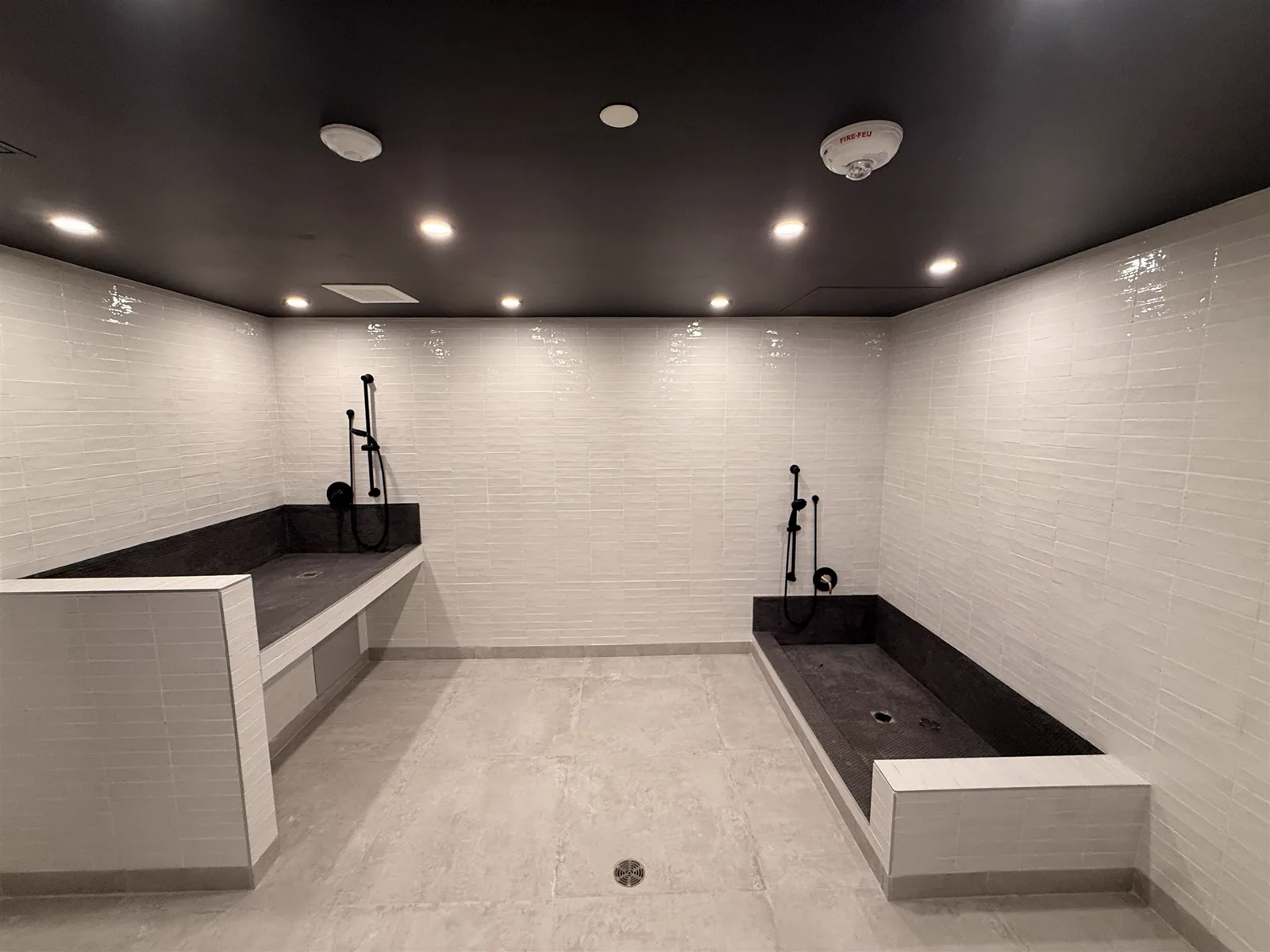
Some homes and buildings go further and add a dedicated dog wash area. At Hintonburg Rentals, Agora tiled a pet wash room with a raised wash station and a handheld shower. For a room that gets soaked every day, tile over proper waterproofing is the finish that lasts.
Frequently asked questions
What is the most scratch resistant flooring for dogs?
Porcelain tile. Claws can't scratch it in normal use. Among wood-look floors, laminate and vinyl plank with a thick wear layer and a textured, matte surface hold up best.
Is vinyl plank good for dogs?
Yes, it is one of the most popular pet friendly floors. The planks resist water and accidents, and a wear layer of around 20 mil or more with a textured finish hides scratches well. Clean accidents promptly so liquid doesn't reach the seams.
Is laminate or vinyl better for dogs?
Laminate often resists scratches better, but vinyl handles accidents and water much better. With puppies or older dogs, vinyl is usually the safer choice.
Can you have hardwood floors with dogs?
Yes, if you accept some wear. Harder species, matte finishes and textured boards hide scratches, and wiping up accidents quickly prevents stains.
Why does my dog slip on the floor?
Smooth, glossy floors and long nails or paw fur reduce grip. Runners and rugs on the dog's paths, trimmed nails and textured flooring all help, especially for older dogs.
What flooring is best for dog urine?
Porcelain tile with sealed or epoxy grout handles urine best. Vinyl plank is next, as long as accidents are cleaned up before they reach the seams. Carpet, laminate and hardwood are the least forgiving.