

Short answer
Click (floating) vinyl is the usual choice for homes. It's faster to install, more forgiving of small subfloor flaws, and often has a pad attached. Glue-down vinyl is thinner and is bonded to the floor. It's more stable in very large rooms, sunrooms with big temperature swings, and commercial spaces with rolling loads, and single planks are easy to replace. But it needs a very smooth, flat subfloor, which usually means more prep and a higher installation cost.
How each one works
- Click (floating): planks lock together edge to edge and "float" over the subfloor without being fastened, leaving an expansion gap around the edges. Most are rigid-core (SPC or WPC), which bridges small dips.
- Glue-down (dryback): thinner, flexible planks or tiles set into adhesive spread across the whole floor. The floor can't move as a unit, so it stays put.
Side by side
| Click (floating) | Glue-down | |
|---|---|---|
| Subfloor prep | Flat within tolerance; rigid core forgives small flaws | Flat and smooth; often a full skim coat |
| Install speed | Fast | Slower (adhesive, open times) |
| Large rooms and long runs | May need expansion breaks or transitions | Can run continuously |
| Sunrooms and big temperature swings | Risk of gaps or buckling | More stable |
| Rolling loads (chairs, carts) | Can stress joints | Better |
| Feel and sound | Can sound hollow without a good pad | Solid, quiet underfoot |
| Replacing one plank | Harder in the middle of a room | Easier (heat, lift, replace) |
| Over existing tile | Usually fine after filling grout lines | Needs a skim coat |
| Installation cost | Usually lower | Usually higher (prep and adhesive) |
Which to choose
- Most houses, basements and renovations: click rigid-core vinyl.
- Condos: either, as long as the system meets the building's sound rules. Many condos specify approved underlayments or adhesives (see condo flooring rules).
- Large open areas, sunrooms, or rooms with big windows: glue-down, or click with the expansion breaks the maker requires.
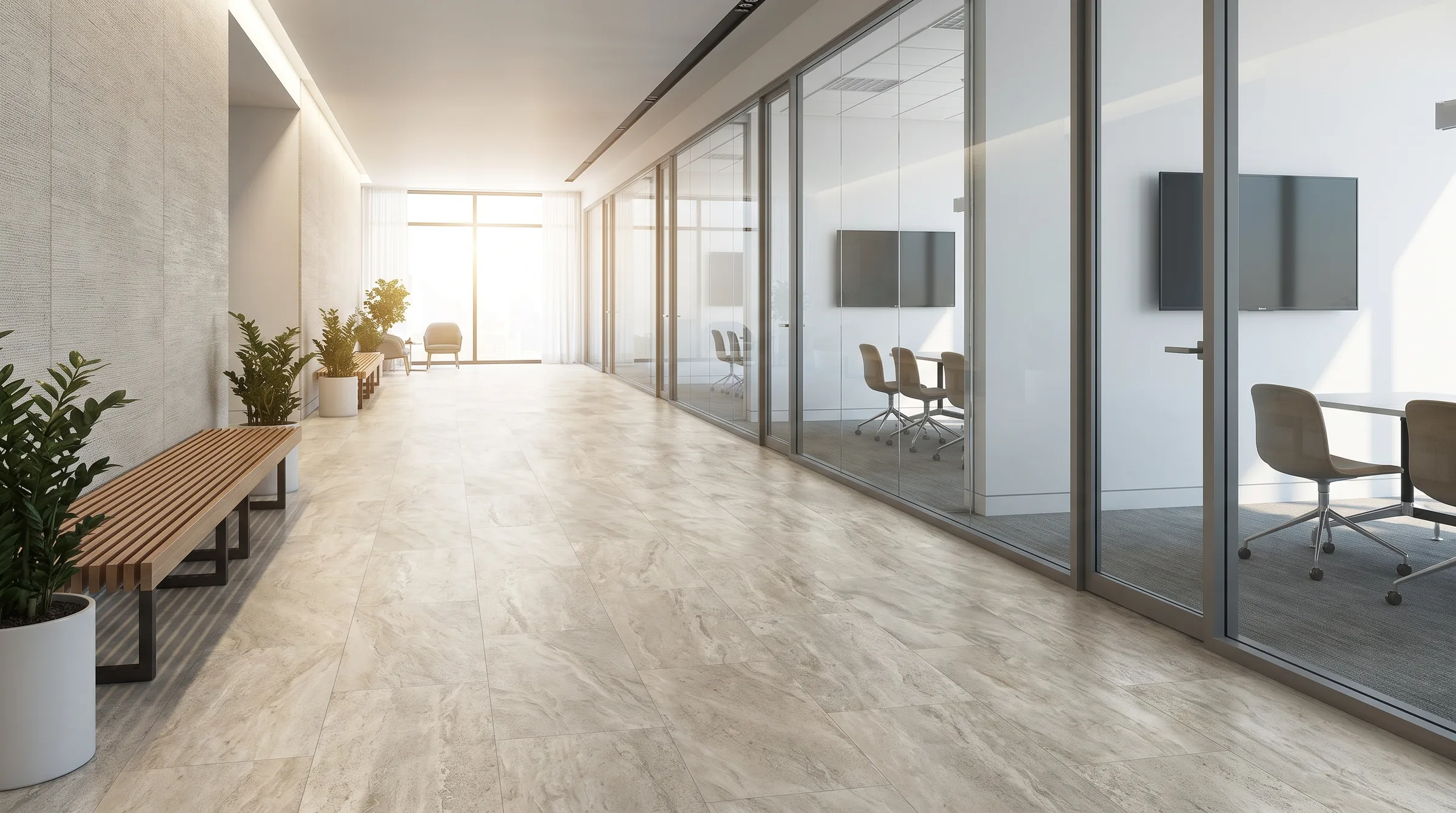
- Commercial: offices, retail, healthcare, schools: usually glue-down.
- Stairs: treads are glued and fastened, whichever system the rest of the floor uses.
The mistakes we see most
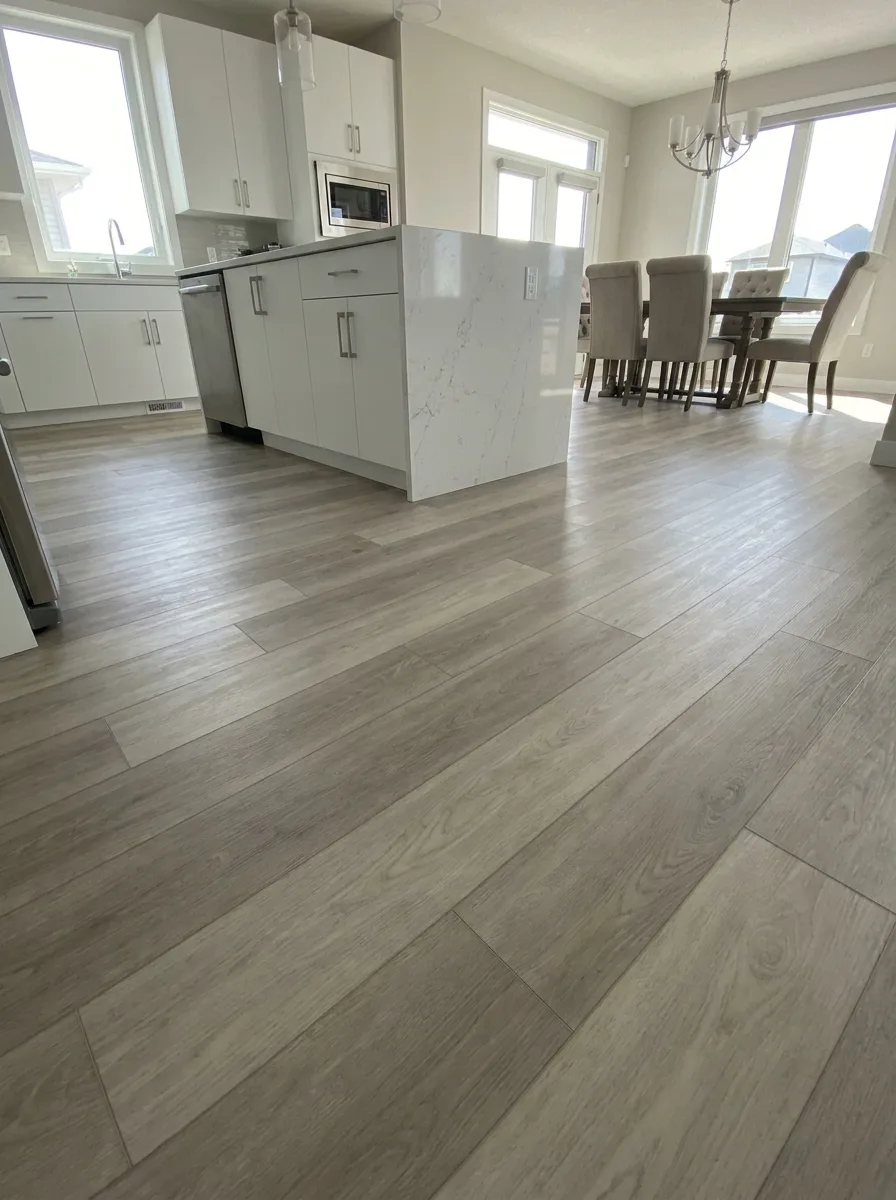
- Click floors pinned down by kitchen islands or heavy built-ins, which stops the floor moving and can cause buckling or gaps elsewhere.
- Missing expansion gaps at walls and door frames.
- Glue-down vinyl over an unprepared floor, so every trowel mark and seam shows through.
- An extra pad added under click vinyl that already has one attached. This usually voids the warranty and strains the joints (see underlayment).