Short answer
The best carpet underpad is the one your carpet maker allows, and that usually means firm and dense, not thick. Industry guidance for homes commonly caps the pad at about 7/16" under cut pile and calls for a thinner, firmer pad, often 3/8" or less, under berber and other loop carpets. Rebond is the most common pad, frothed foam and flat rubber are denser and last longer, and felt suits loop carpet. Replace the pad whenever you replace the carpet.
Carpet underpad, also called carpet padding or carpet cushion, is the layer between the carpet and the subfloor. Nobody sees it, so it is easy to treat as an afterthought. Many people pick the thickest pad in the store because it feels good under a shoe. That is the most common mistake. The pad decides how the carpet feels and how quiet the room is. Above all, it decides how long the carpet keeps its look.
This guide covers the main types of carpet underpad, why density matters more than thickness, and what to use on stairs, in basements and in condos. Vinyl plank and laminate use a different kind of product; for those, see our guide to underlayment for vinyl and laminate.
What carpet underpad actually does
Every step bends the carpet's backing and crushes its fibres. The pad absorbs much of that force. The backing flexes less, and the fibres recover between steps. A good pad spreads the load evenly.
A pad that is too soft lets the carpet sink and fold with each step. Over time the backing stretches, seams strain and ripples appear. A pad that is too thin or too hard gives the carpet little to rest on, and the fibres wear faster. The right pad sits between the two.
The pad has a few other jobs. It makes the floor quieter, both in the room and for anyone below. It adds a little warmth over a cold subfloor. It also smooths out small texture, such as a plywood seam or a patched spot. It does not hide real dips or humps. Those are fixed in the subfloor before the pad goes down.
Types of carpet underpad
Most carpet padding sold for homes falls into a handful of types. Each has a place, and none is right for every carpet.
Rebond (bonded urethane)
Rebond underpad is made from scraps of urethane foam, shredded and bonded together into a sheet. It is the speckled, multicoloured pad most people find when they pull up old carpet. It is the most common carpet pad in North American homes. It offers good support for the price and puts recycled foam to use.
Rebond is sold by density, in pounds per cubic foot. Grades around 6 lb to 8 lb are common in homes, and denser grades are firmer and hold up better in busy areas. At the same thickness, the denser rebond is almost always the better pad.
Frothed foam
Frothed foam is polyurethane mixed as a froth and cured into a uniform, very dense sheet. It looks plain rather than speckled. It costs more than rebond. In return, it resists flattening, which installers call bottoming out, and keeps its support longer. It suits busy rooms and good carpet that deserves a pad that lasts as long as it does.
Memory foam
A memory foam underpad uses the slow-recovery foam found in mattresses, often as a top layer bonded to a firmer base. It feels luxurious, especially in bedrooms. The trade-off is softness. Check that the carpet maker allows it, and keep very soft pads off stairs and out from under loop carpet. Too much give there shortens the carpet's life.
Rubber
Flat or slab rubber pads are dense, heavy and very durable. They give firm support, resist bottoming out and dampen sound well. That is why they are used in heavy-traffic areas and under some commercial carpet. They are usually among the most expensive pads. Older waffle rubber pads, with a dimpled pattern, are a different product. They tend to harden and crumble with age, and are often found falling apart under old carpet.
Fibre and felt
Fibre pads are pressed felt made from synthetic fibres, or from natural fibres such as jute in some older and specialty pads. They are thin, firm and stable. That makes them a good match for berber and other loop carpets, which need firm support so the backing doesn't flex. Natural fibre pads can absorb moisture and hold odours, so they don't belong in basements or anywhere water is a risk.
Pads with a moisture barrier
Many rebond and foam pads are sold with a thin film laminated to one side. The film keeps a spill or a pet accident from soaking through into the pad and the subfloor. That makes cleanup easier and helps with odours. It doesn't make carpet waterproof. Liquid still sits in the carpet and has to be cleaned out. Install the film the way the pad maker shows, usually facing up.
| Pad type | Feel | Strengths | Watch out for |
|---|---|---|---|
| Rebond | Medium; depends on density | Common, good value, recycled content | Low-density grades flatten early |
| Frothed foam | Firm and even | Long-lasting support in busy areas | Higher cost |
| Memory foam | Soft, slow recovery | Comfort in bedrooms | Too soft for some carpets and for stairs |
| Flat rubber | Firm and dense | Durable, quiet, heavy traffic | Cost and weight; old waffle rubber breaks down |
| Fibre or felt | Thin and firm | Berber and loop carpet | Natural fibres hold moisture |
| Moisture-barrier pad | Depends on the base pad | Keeps spills out of the pad | Not a fix for a damp slab |
Carpet padding thickness vs density
Thickness and density are two different measures, and most shoppers notice only the first. Thickness is how tall the pad is. Density is how much material is packed into it, usually given in pounds per cubic foot for foam and rebond. A thick, low-density pad feels plush in the store because your foot sinks in. On the floor, that same sinking flexes the carpet backing with every step.
For most homes, the target is a pad of moderate thickness and good density. Industry guidance for residential carpet commonly calls for a pad no thicker than about 7/16" (about 11 mm) under cut pile carpet. Under berber and other loop carpets, it calls for a thinner, firmer pad, often 3/8" (about 10 mm) or less. The carpet maker's own figures come first where they differ.
Thickness has a practical side too. A thicker pad raises the finished floor. That affects door clearance, the transitions to tile, vinyl or wood, and the height of the top and bottom stair. A simple rule covers most choices. When two pads are the same thickness, pick the denser one. When a pad is thicker than the carpet maker allows, don't use it, however good it feels.
Match the pad to the carpet maker's requirements
Most carpet makers publish cushion requirements for their products. These usually set a maximum thickness and a minimum density, and sometimes list the pad types allowed. Some carpet warranties, especially wear and texture warranties, can depend on using a pad that meets them. If a carpet wrinkles or wears early and the pad was wrong, a claim may be refused.
The requirements vary with how the carpet is made. Cut pile carpets, such as plush, saxony and frieze, tolerate a little more cushion. Berber and other loop carpets need a thinner, firmer pad. Too much give lets their backing flex and the loops open up. Our guide to carpet types explains each construction.
The order matters. Choose the carpet first, ask for its spec sheet or warranty booklet, and then choose a pad that fits it. Picking a pad first and a carpet second is how mismatches happen.
Carpet padding for stairs
Stairs take more wear than any other carpeted area. The front edge of each step, the nosing, takes most of it. A soft or thick pad on stairs lets the carpet roll and shift at the nose. It wears quickly there, and footing feels less secure. Stairs call for a firm, dense pad, often thinner than the pad in the bedrooms. Dense rebond, frothed foam and flat rubber are common choices.
On each step, the pad usually covers the tread and wraps over the nosing, and it is stapled in place. It stops short of the tack strips so the carpet can grip them. Some installers also pad the riser, depending on the style. The carpet is then fitted waterfall or wrapped style. Our guide to the best carpet for stairs covers fibres, styles and runners. If you are switching the stairs to a hard floor, stair nosing covers the options, and Agora's stair installation page shows the stair work we do.
Basement underpad on concrete
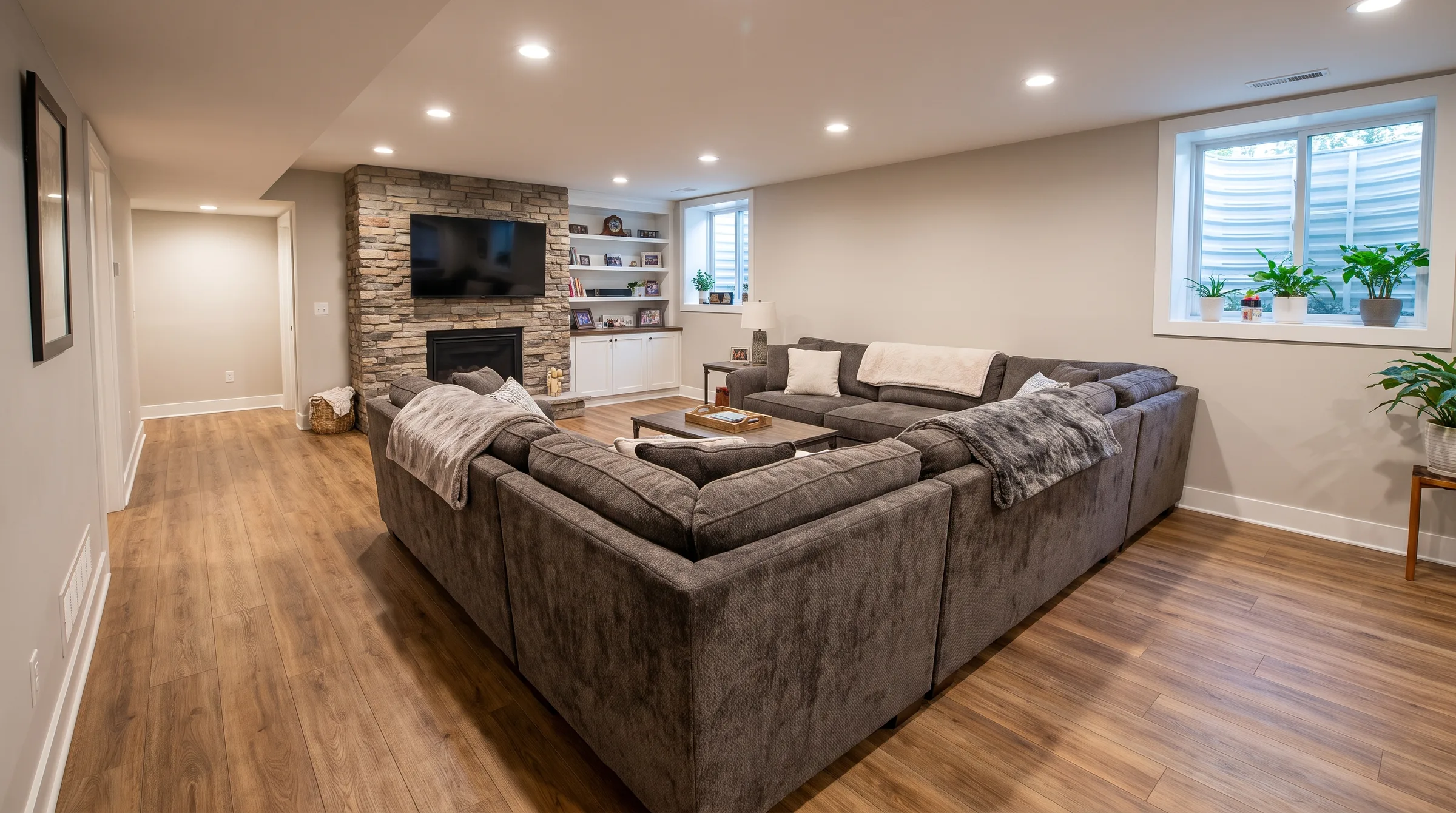
A concrete slab is cold and can release moisture, so a basement pad has to tolerate damp conditions. Synthetic pads such as rebond, frothed foam and rubber are the usual choices. Many basement pads add a moisture barrier film, and some an antimicrobial treatment. Natural fibre felt and jute pads are best kept out of basements, because they absorb water and can hold odours.
On concrete, the tack strip is fastened with concrete nails, and the pad is glued down instead of stapled. No pad fixes a damp slab, though. Test the slab for moisture before any carpet goes down, and fix water problems first. A film slows moisture on its way to the carpet. It does not stop water from collecting under the pad, where it can feed mould.
Our basement carpet guide covers the slab checks, subfloor panels and carpet tile. Carpet tile has its own backing and goes down without a separate pad. For the bigger picture, see best basement flooring.
Underpad and sound in condos
Carpet over a pad is one of the quietest floors for impact noise. Condo rules are usually written with hard floors in mind for that reason. Even so, some buildings specify an underpad for carpet or a minimum sound rating for the whole floor. Read the rules and ask the property manager before ordering.
A dense pad generally does more for impact sound than a soft, thick one, and rubber pads are often chosen where sound matters most. If the building asks for a rated floor, the board will want to see the pad maker's test data. Check that the test matches the rating the building names. Our guide to condo flooring rules explains IIC and STC ratings and the approval process.
How carpet underpad is installed
Laying the pad is quick, but small details decide how the carpet lies for years. The old carpet, pad and staples come out first, and loose or squeaky subfloor panels are screwed down. The tack strip goes around the room with a small gap at the wall, so the carpet edge can be tucked in.
The pad is laid inside the tack strip, never on top of it. It is stapled over wood subfloors and glued over concrete. Pad seams are butted tight, never overlapped, and taped so they don't shift or show as a ridge. Installers also try to keep pad seams from sitting right under carpet seams.
Then the carpet goes over the pad and is power-stretched onto the tack strip. A pad that is flat, fastened and the right density is what lets the stretch hold. Our guide to carpet installation cost in Ottawa lists what a standard installation usually includes.
Should you replace the underpad with new carpet?
Yes, nearly always. An old pad has been compressed for years and has lost much of its support, even if it looks fine. It may also hold dust, spills and pet odours that would come straight back up through new carpet. New carpet over an old pad may not meet the carpet maker's requirements either, which can affect the warranty. Reusing the pad saves little and puts the new carpet at risk.
The bare floor is also the best time to look underneath. Crumbling rubber, mould, stains on the subfloor and squeaks are all easier to deal with while nothing covers them. In older homes, carpet sometimes hides old vinyl tile or sheet vinyl. Don't sand, scrape or break it, because it may contain asbestos. Have it tested first; see our guide to asbestos floor tile.
Choosing the best carpet underpad, room by room
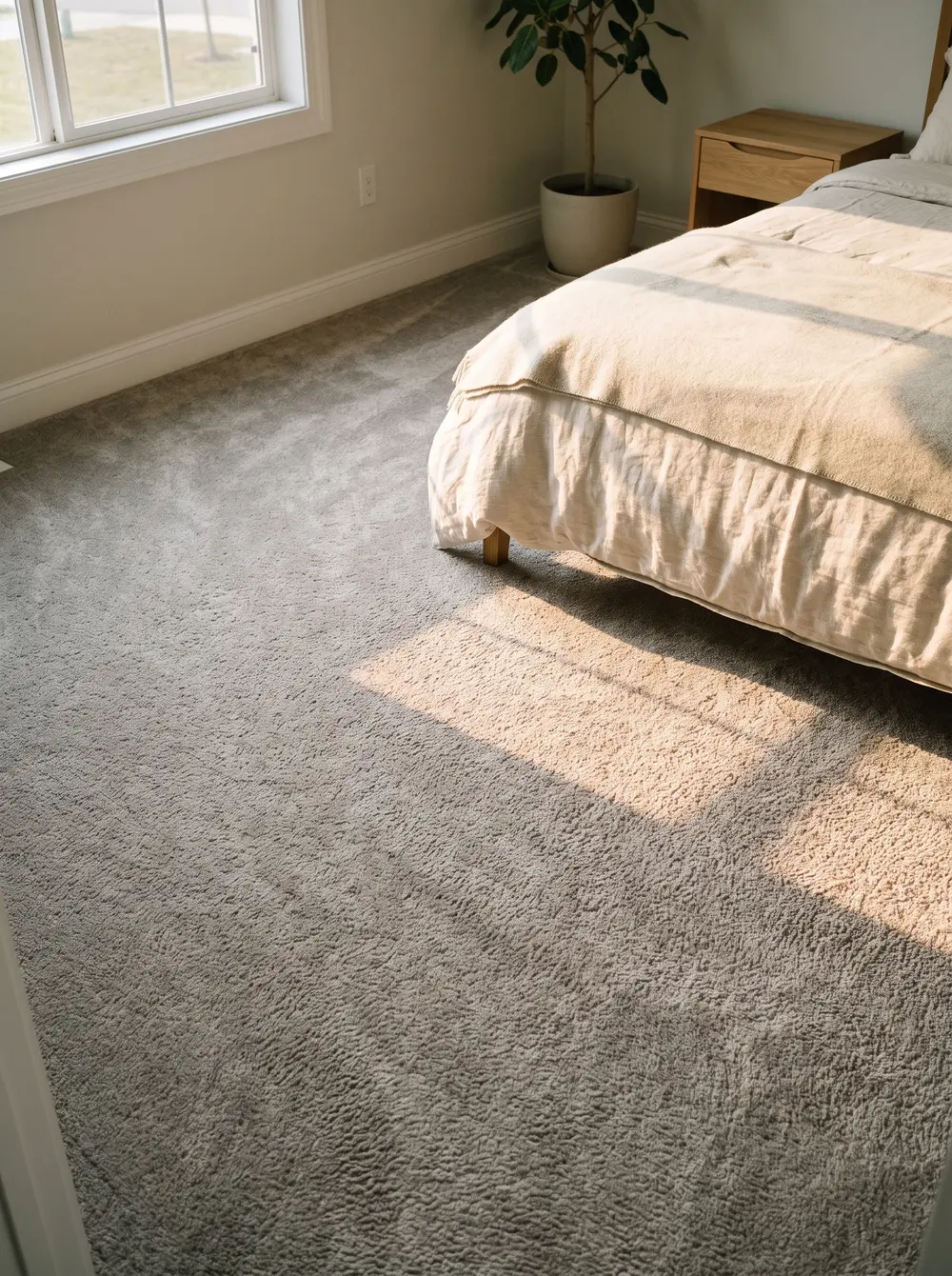
Bedrooms and living rooms. A good-density rebond is the standard choice. A memory foam pad works if the carpet maker allows it and the carpet is cut pile.
Halls, family rooms and busy areas. Go denser: high-density rebond, frothed foam or flat rubber. These rooms flatten a soft pad first.
Stairs. A firm, dense pad, often thinner than the rest of the house. Comfort matters less here than a stable nosing.
Berber and loop carpet. A thin, firm pad or a synthetic felt, within the carpet maker's limits.
Basements. A synthetic pad with a moisture barrier, over a slab that has passed a moisture check.
Homes with pets. A pad with a moisture barrier keeps accidents out of the pad and subfloor. Combine it with a stain-resistant carpet, and keep up with cleaning; our carpet care guide covers spills.
Agora installs carpet and carpet tile across Ottawa, along with the pad that goes under it. Our carpet installation page has more on how we approach a job.
Frequently asked questions
What is the best carpet underpad?
The best pad is a dense one that meets your carpet maker's limits for thickness and density. For most homes that is a good-density rebond. Frothed foam and flat rubber last longer in busy areas, and loop carpet needs a thinner, firmer pad.
What thickness of carpet padding is best?
Industry guidance for homes commonly caps the pad at about 7/16" under cut pile carpet, with thinner pads, often 3/8" or less, under berber and loop carpet. Follow the carpet maker's figures where they differ.
Is thicker carpet padding better?
No. A thick, soft pad lets the carpet backing flex with every step, which leads to wrinkles and early wear. Density matters more than thickness.
What is rebond underpad?
Rebond is pad made from scraps of urethane foam bonded together, the speckled pad found under most carpet. It is sold by density in pounds per cubic foot, and denser grades are firmer and last longer.
Do I need new underpad with new carpet?
Yes. An old pad has lost much of its support and may hold dirt and odours. Many carpet warranties also depend on a pad that meets the maker's requirements.
Is memory foam underpad good?
It feels soft and luxurious in bedrooms. Check that your carpet maker allows it, and avoid it on stairs and under loop carpet, where a firmer pad lasts better.
Can you put carpet and underpad over a heated floor?
Often, yes, but carpet and pad insulate the floor and slow the heat. A thinner, denser pad lets more heat through. Check the heating system maker's limits and the carpet maker's instructions first, and see are heated floors worth it?