
Short answer
Asbestos floor tile is common in homes built or renovated before roughly the 1990s. Old 9" × 9" tiles, some 12" × 12" vinyl tiles, the backing of old sheet vinyl and black mastic adhesive may all contain it. You can't tell by looking. Don't sand, scrape, grind or break a suspect floor. Have a sample tested by a lab, and if it is positive, use a qualified abatement contractor to remove it, or ask an abatement professional whether covering it in place is a safe option.
Asbestos floor tile is one of the most common surprises in an older home renovation. You lift a corner of carpet or an old floating floor, and underneath is a layer of small square tiles or a dark, tar-like adhesive. It may be perfectly harmless, or it may contain asbestos. This guide explains which floors are suspect, why the risk comes from disturbing them, how testing works, and how to plan your renovation around the answer. It is general safety information, not a substitute for advice from a qualified asbestos professional.
Which old floors may contain asbestos
Asbestos is a natural mineral fibre that was added to many building products for strength and fire resistance. In flooring, it was commonly used in several materials.
9" × 9" floor tiles. Small square tiles, often in muted greens, browns, greys, reds or speckled patterns, are the classic suspect. Vinyl asbestos tile and older asphalt tile were often made in this size. Not every 9" tile contains asbestos, but many older ones do, and the size alone is reason enough to test.
Some 12" × 12" vinyl tiles. Asbestos was also used in some larger vinyl tiles. Size doesn't rule it out.
Sheet vinyl backing. Older sheet vinyl and linoleum-style flooring sometimes had a paper-like backing that contained asbestos. The top looks like any old vinyl floor; the backing is the concern, and it is exactly the part that gets torn and scraped during removal.
Black mastic. Dark, tar-like adhesive, often called cutback adhesive, was used to glue down tile and sheet flooring. Some of it contains asbestos, even when the tile on top does not.
These materials are commonly found in homes built before roughly the 1990s, and in older homes that had floors replaced during that time. Canada has since banned asbestos products, but floors put down earlier are still in many Ottawa houses, often hidden under one or two newer layers. Basements, kitchens, bathrooms and laundry rooms are the usual places to find them.
Flooring isn't the only suspect material in an older home. Some drywall joint compound, textured ceilings, vermiculite insulation and old pipe insulation may also contain asbestos. If your renovation goes beyond the floor, ask the assessor to look at those as well.
You can't identify asbestos floor tile by looking
There is no visual test. Asbestos fibres are microscopic, and tiles with and without asbestos can look identical. Age, size, colour and the presence of black adhesive are all reasons for suspicion, not proof either way. Online photo guides can help you decide whether to test, but they can't tell you what is in your floor.
The only way to know is a laboratory analysis of a sample. Until then, the safe approach is to treat a suspect floor as if it contains asbestos. That means leaving it alone and not starting demolition until you have a result.
Why intact tile is lower risk and disturbed tile is not
Asbestos is a health hazard when its fibres become airborne and are breathed in. Inhaled fibres can lodge in the lungs and are linked to serious diseases, including asbestosis, lung cancer and mesothelioma, which often appear many years after exposure. That is why health agencies, including Health Canada, treat it seriously.
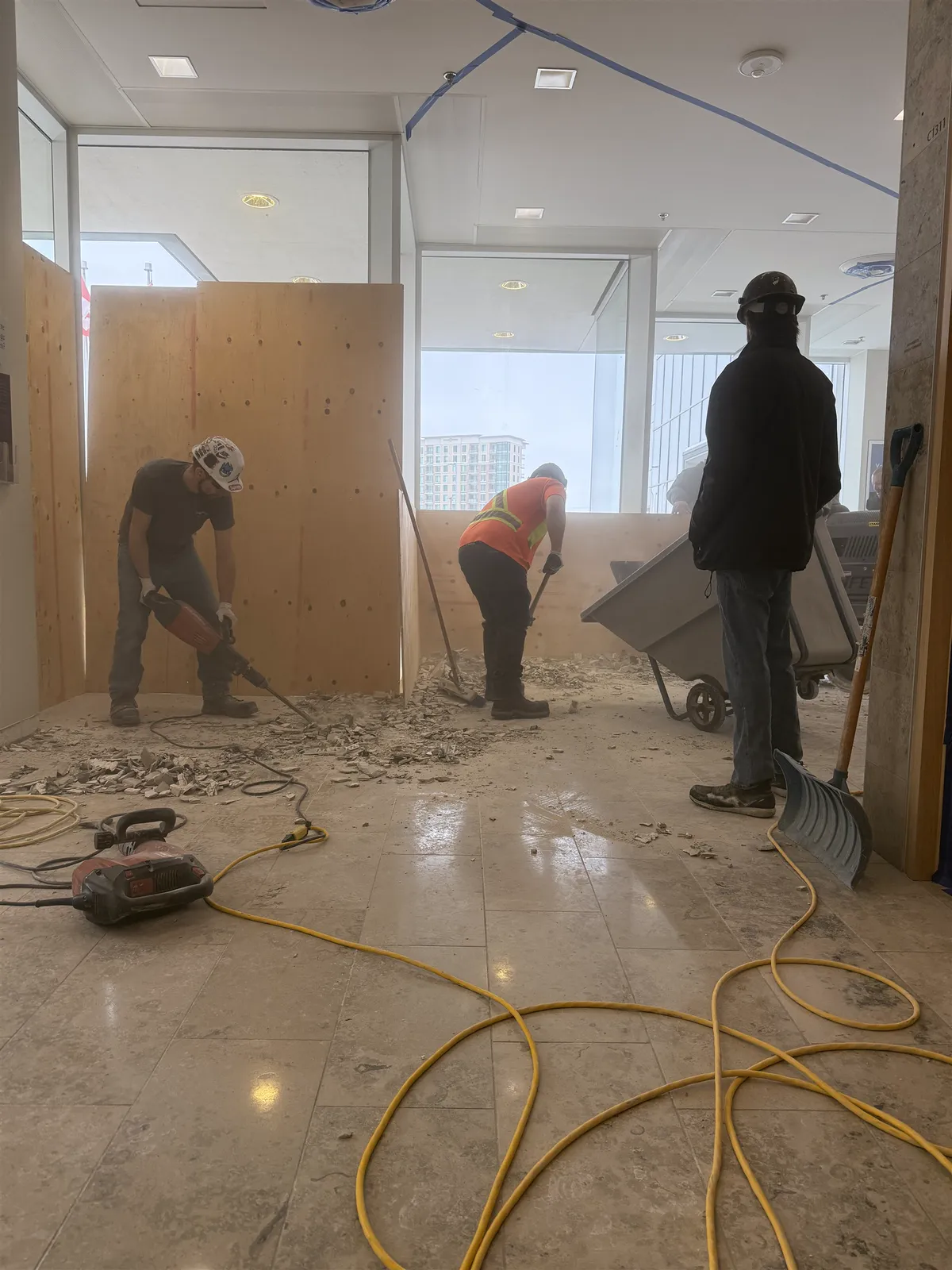
In floor tile and sheet vinyl, the fibres are bound into the vinyl, asphalt or adhesive. Health guidance generally says that asbestos materials in good condition, left undisturbed, pose little risk. The danger starts when the material is broken down. Sanding, grinding and scraping release fibres. So do breaking tiles with a hammer, tearing up sheet vinyl and its backing, power-scraping mastic, and drilling or cutting into it. Dry sweeping the debris spreads them further, and a regular household vacuum can blow fine fibres back into the room.
This is why the decision about an old floor is really a decision about how much it will be disturbed. A floor that stays where it is, intact and covered, is a very different situation from one that is about to be ripped out.
What not to do with a suspect floor
If you find a floor that might contain asbestos, stop work on it until it has been tested. In particular:
- Don't sand, grind or scrape the tile or the black adhesive.
- Don't break tiles up with a hammer, chisel or floor scraper.
- Don't tear up old sheet vinyl or pull its backing off the floor.
- Don't drill, nail or cut through the material.
- Don't use solvents or heat to soften old mastic.
- Don't dry sweep or use a household vacuum on any debris.
If tiles are already broken or loose, keep people and pets out of the area and avoid walking through the debris. Turn off forced-air fans that could spread dust, and call an asbestos professional for advice on cleanup. Don't try to clean up a large amount of broken material yourself.
Asbestos testing in Ottawa: how it works
Testing means taking a small sample of each suspect material and sending it to a laboratory for analysis. There are two common routes. You can hire an asbestos consultant or environmental assessment company to inspect the area, take samples and interpret the results. Or, for a single simple material, some homeowners take a sample and send it to an accredited lab themselves.
Taking a sample disturbs the material, even if only a little. Professionals wet the area, wear protection, take a small piece with minimal breakage and seal the spot afterwards. For that reason, and because a professional can also identify other suspect materials, hiring a consultant is usually the better choice, especially before a large renovation. If you do sample yourself, follow the lab's instructions carefully, and choose a lab that is accredited for asbestos analysis.
Test each different material separately. The tile, the black mastic under it and any second layer of flooring are separate samples, because one can contain asbestos when another doesn't. Lab results often come back within a few days, depending on the lab and the service you choose. Keep the report: it is useful for your contractor now and for future work or a sale later.
The Ottawa area has several environmental consultants and labs that do residential asbestos testing. Look for clear sampling procedures, accredited lab analysis and a written report that names each material tested.
If the test is positive: leave it, cover it or remove it
A positive result doesn't always mean the floor has to come out. There are three broad options, and an abatement professional can tell you which suits your situation.
Leave it alone. If the floor is intact and you aren't renovating that room, leaving it undisturbed is often acceptable. Keep it in good condition and record where it is.
Cover it (encapsulation). Covering an intact asbestos floor with a new floor is a commonly used option, because it avoids disturbing the old material. It is covered in more detail below.
Remove it. If the floor is damaged, if the new floor needs the old one gone, or if the height of an extra layer won't work, removal by a qualified abatement contractor is the answer.
If the test is negative, the old floor can be removed as normal demolition. Our guide to how to remove tile explains what that involves and what is usually found underneath.
Can you cover asbestos floor tile?
Often, yes. When the old tile or sheet vinyl is intact and well bonded, covering it is a common way to deal with it. The new floor seals the old material in place, and nothing is released as long as it stays undisturbed.
Floating floors are the usual choice, because they don't need to be fastened or glued to the old floor. Click vinyl plank and laminate can float over a flat, solid old floor with the underlay the maker approves. Our guides to putting vinyl plank over tile and underlayment for vinyl and laminate explain the conditions: the old floor must be flat, solid and dry, and the extra height must work at doors, cabinets and appliances.
Underlayment panels or a new layer bonded on top are sometimes used too, but they raise more questions. Nailing or screwing panels down drives fasteners through the old tile, and preparing the surface for a bonded floor can mean grinding or scraping. Ask an abatement professional before anything is nailed, screwed, ground or bonded through or onto a known asbestos floor, and follow their advice on how it can be done.
Covering has limits. It isn't suitable over loose, cracked or crumbling tiles, over a floor that will be cut into later for plumbing or a floor drain, or where the height won't work. It also leaves the material in the house, so keep the test report with your home records and tell future contractors before they open the floor.
Removal: qualified abatement and Ontario's rules
Ontario regulates asbestos work under its occupational health and safety rules. In general terms, the rules classify asbestos work by risk, and they set out requirements for training, containment, wetting, protective equipment, cleanup and disposal, which become stricter as the risk rises. Asbestos waste has to be packaged, labelled and disposed of as the regulations require, not put out with regular renovation debris.
For a homeowner, the practical point is simple: hire a licensed, experienced asbestos abatement contractor to remove asbestos flooring. They set up containment, keep the material wet to control fibres, use proper respiratory protection and negative air where needed, and dispose of the waste legally. Many also arrange clearance testing at the end, so you know the area is safe before other trades come back in. Ask for their training records, insurance and a written scope that covers the tile, the mastic and the disposal.
Black mastic left on the subfloor is part of the job. Removing it, or treating it so new flooring can go over it, is a decision for the abatement contractor and the flooring installer together, because some new adhesives and levelling products don't bond well to old mastic or its residue.
What asbestos means for your renovation schedule
The biggest effect of asbestos on a renovation is time, so the best defence is to find out early. If your home is older and the floor might be original, test it at the planning stage, before you order flooring and book trades. A surprise found on demolition day stops the job, and every trade behind the flooring waits.
A typical sequence looks like this:
- Identify suspect materials and have them sampled and tested.
- If positive, get abatement quotes and decide whether to cover or remove.
- Schedule abatement, with containment, removal and any clearance testing.
- Once the area is cleared, the flooring installer checks the subfloor and does the prep.
- Install the new floor, then baseboards and transitions.
Build some slack into the plan for testing and abatement, and remember that removal also changes the floor height and may reveal subfloor repairs. Our flooring installation checklist covers the rest of the preparation, and our guide to self-levelling compound explains what often happens to a subfloor after old flooring and adhesive come up. If the work is part of a bigger project, such as a basement bathroom renovation, plan the testing before any concrete is cut or walls are opened.
What a reputable flooring installer will do
A reputable installer will stop and ask for testing when a floor looks suspect, rather than tearing it out and hoping for the best. Agora does not do asbestos abatement, and we don't remove suspected asbestos materials until testing clears them. When a suspect floor turns up at a site visit, we explain the options, and once the floor is tested, and removed by an abatement contractor if needed, we take over from the prepared subfloor.
When the old floor can safely stay, a floating floor over it is often the simplest path. Our vinyl plank installation page covers that option, and our guide to sheet vinyl flooring has more on older sheet floors. For what affects the cost of a new floor, including removal of old flooring that is not asbestos, see flooring cost in Ottawa.
Frequently asked questions
Do all 9x9 floor tiles contain asbestos?
No, but many older ones do, and the size is a strong reason to test. Only a lab analysis of a sample can tell you.
Is it safe to live with asbestos floor tile?
Health guidance generally says intact, undisturbed asbestos materials pose little risk. The danger comes from sanding, scraping, breaking or tearing them, which releases fibres.
Can I put new flooring over asbestos tile?
Often, if the tile is intact and well bonded. A floating floor is the usual choice because nothing is fastened through the old tile. Check with an abatement professional first, especially before nailing, screwing or bonding anything to it.
Does black mastic contain asbestos?
Some does. Black cutback adhesive under old tile and sheet flooring is a common suspect, even when the tile itself tests negative, so test it as a separate sample.
How do I get floor tile tested for asbestos in Ottawa?
Hire an asbestos consultant or environmental assessment company to take samples, or send a sample to an accredited lab yourself following its instructions. A professional sampler is the safer choice before a renovation.
Can I remove asbestos floor tile myself?
It is not recommended. Removal releases fibres if it isn't done with proper containment, wetting, protection and disposal, and Ontario has rules for asbestos work and waste. Use a qualified abatement contractor.
Will a flooring installer remove asbestos tile?
A reputable flooring installer will stop and ask for testing instead. Removal of asbestos materials is a job for a qualified abatement contractor.