
Short answer
Broadloom (wall-to-wall carpet from a roll) is softer and more comfortable, and suits bedrooms, living rooms and family rooms. Carpet tile (modular squares or planks) is tougher, handles heavy traffic and lets you replace damaged sections, which makes it the standard for condo corridors, offices and many basements.
Carpet comes in two very different formats. Most homeowners picture broadloom: a single piece of carpet stretched from wall to wall over a cushioned pad. Walk down a condo hallway or through an office, though, and you are almost always on carpet tile. Each has a clear place.
Broadloom
Broadloom is manufactured in wide rolls (commonly 12 feet) and cut to fit the room. It is installed over an underpad and held in place by tack strips around the edges, then power-stretched so it lies tight and flat.
- Pros: the softest, warmest feel; very few seams; huge choice of textures and colours; quieter underfoot.
- Cons: damage or a permanent stain affects the whole piece; seams have to be planned carefully in large rooms; water damage often means replacing the carpet and pad.
- Best for: bedrooms, living rooms, family rooms and basement TV rooms.
The underpad matters as much as the carpet. It affects comfort, sound and how long the carpet lasts; a pad that is too soft or too thick can shorten a carpet's life and void some warranties.
Carpet tile
Carpet tile comes in squares (often 24 × 24 inches) or planks, with a stiff, stable backing. Tiles are laid individually, usually with a releasable adhesive, and can be arranged in patterns.
- Pros: very durable; individual tiles can be lifted and replaced; less waste in odd-shaped rooms; easy to carry into buildings and up elevators; great pattern options.
- Cons: firmer underfoot than broadloom; seams are part of the look; not as plush for bedrooms.
- Best for: condo corridors, offices, common areas, basements and rec rooms.
Side by side
| Broadloom | Carpet tile | |
|---|---|---|
| Comfort | Softest | Firmer |
| Durability in heavy traffic | Good (depends on the product) | Excellent |
| Repairs | Patch or replace the piece | Swap individual tiles |
| Water damage | Often replace carpet and pad | Lift and replace affected tiles |
| Seams | Few, hidden if planned well | Every tile; part of the design |
| Typical use | Bedrooms, living rooms | Corridors, offices, basements |
Fibre choices
- Nylon: resilient and hard-wearing; springs back from footsteps. A common choice for stairs, hallways and commercial carpet.
- Polyester: soft, rich colours and good stain resistance, with less bounce-back than nylon in heavy traffic.
- Wool: natural, luxurious and durable, but more expensive and not ideal where moisture is a risk, such as basements.
Why condo corridors use carpet tile
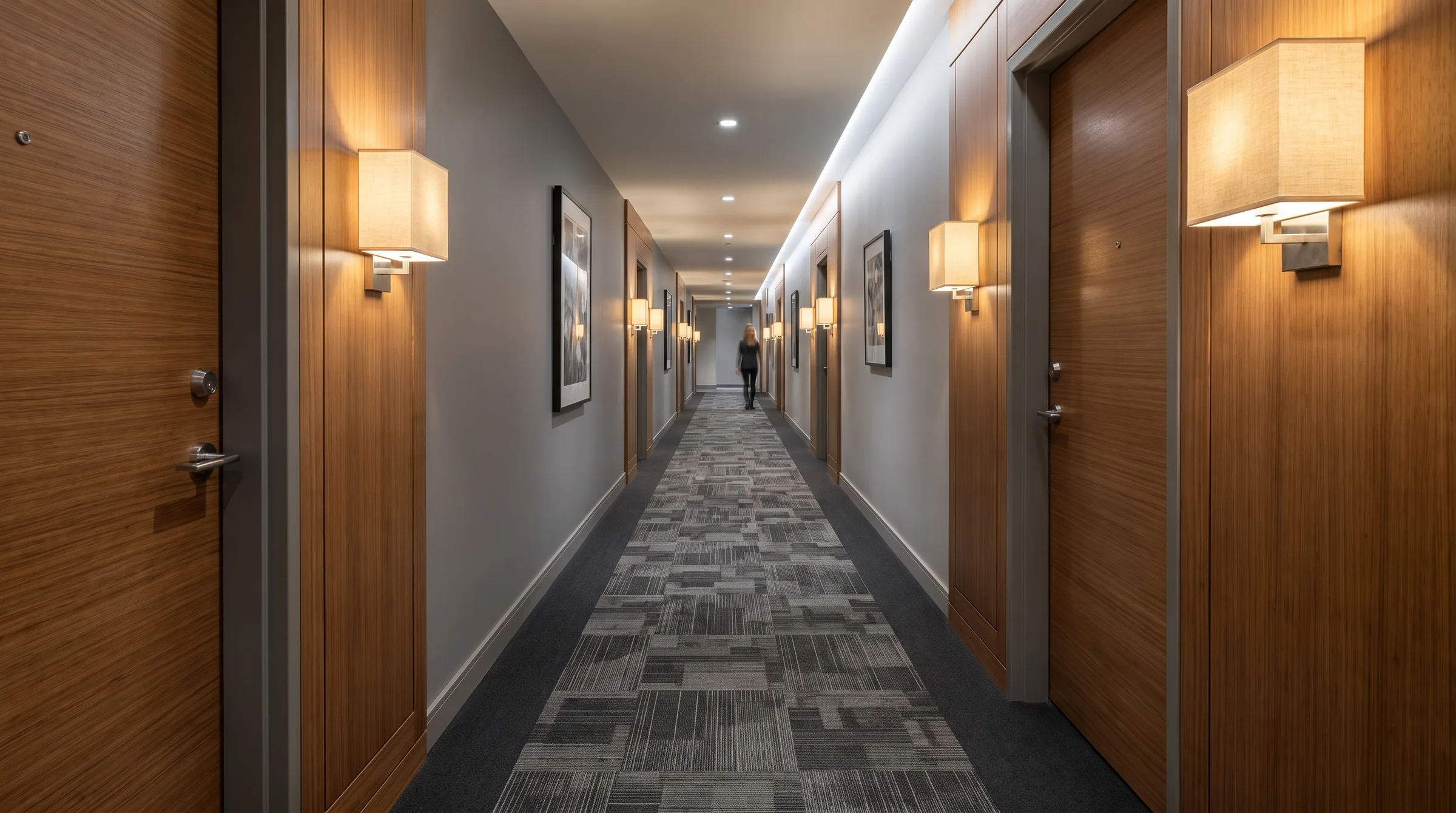
A corridor gets foot traffic, luggage, moving carts and wet boots all year. With carpet tile, a stained or worn section can be replaced in minutes with spare tiles from the same batch, and patterns can hide wear. Installing it pattern-true, with the design lined up from the elevator to the last suite door, is what makes a corridor look finished. See our commercial flooring work.
Tip: keep spares
Whichever you choose, keep the leftover pieces. Carpet colours vary between production runs, and matching spares from your original batch make future repairs almost invisible.