Short answer
Basement carpet works well in bedrooms, TV rooms and playrooms, where warmth and quiet matter, but only over a dry slab. Check the concrete for moisture and fix any water problem first; no carpet belongs on a damp slab. Choose synthetic fibres such as nylon, polyester or olefin, a synthetic pad suited to concrete, and consider carpet tile, which can be lifted and replaced if water gets in. Where flooding is a real risk, luxury vinyl plank or porcelain tile is the safer floor.
Basement carpet has a mixed reputation. Many people have pulled up a musty, stained carpet from an old basement and sworn never again. Yet carpet is still one of the most comfortable floors you can put over a cold concrete slab. The difference between the two outcomes is almost never the carpet itself. It is whether the basement was dry, and whether the carpet, pad and installation suited a floor on concrete.
This guide covers when carpet makes sense in a basement, the moisture checks that come first, how carpet goes down on concrete or over subfloor panels, the right pad and fibres, carpet tile, flood risk and the alternatives. For a comparison of every basement floor, see our guide to the best basement flooring.
When carpet makes sense in a basement
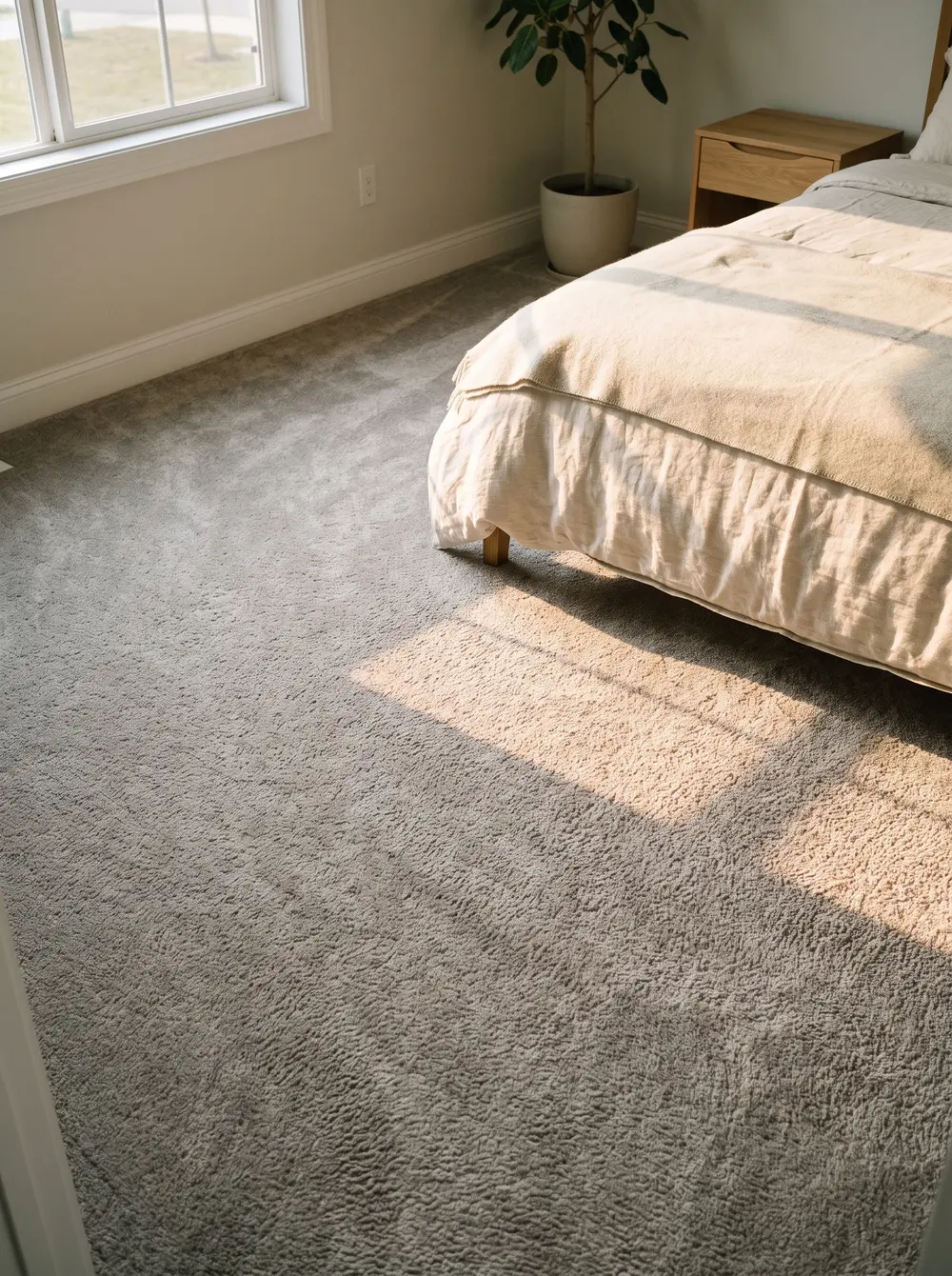
A concrete slab stays cool all year, and in an Ottawa winter it is the coldest floor in the house. Carpet and pad add a soft, insulating layer between your feet and the concrete. They also soak up sound. Basements with hard floors often echo, and footsteps and voices carry up through the house. Carpet makes a basement room feel quiet and warm, like the rest of the home.
That makes carpet a good fit for basement bedrooms, TV rooms and home theatres, playrooms where kids sit on the floor, and guest rooms. It is less suited to rooms where water is likely. Keep carpet out of basement bathrooms, laundry rooms and mechanical rooms. Keep it away from sump pits, floor drains and cleanouts, and away from walkout doors where snow and slush come in. Those areas are better in porcelain tile or luxury vinyl plank.
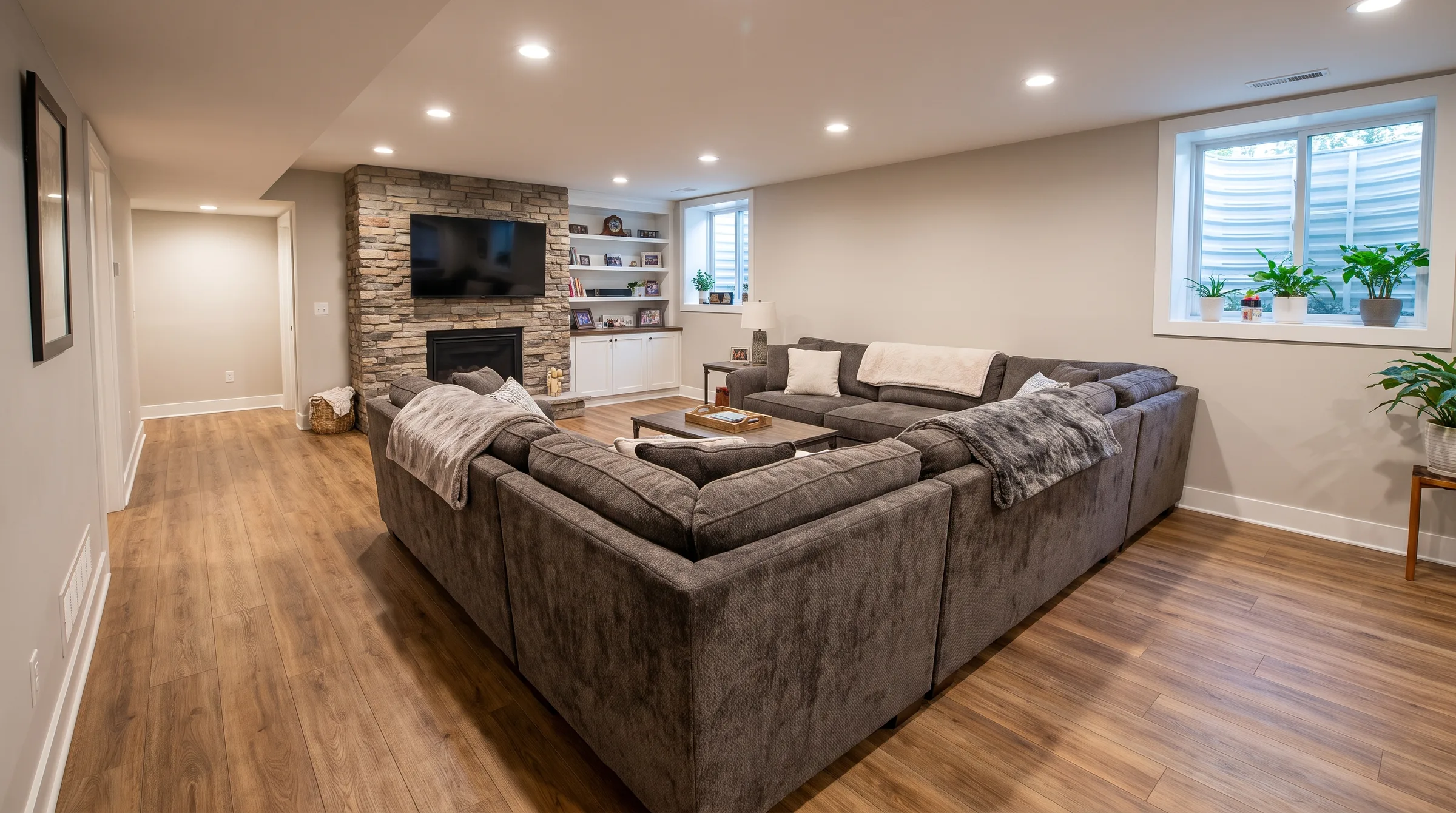
Many basements end up with a mix: a hard, water-tolerant floor in the open areas, laundry and bathroom, and carpet in the bedrooms and TV room. Planned well, with transitions at doorways, that combination gives you the best of both.
Check for moisture before carpet goes down
This is the step that decides whether basement carpet lasts. Carpet and pad hold moisture. On a damp slab they stay damp, and damp carpet grows mould and smells. No pad, barrier or carpet fixes a wet basement.
Start by looking for the signs. A history of leaks, damp patches after rain or snowmelt, white chalky deposits on the concrete, a musty smell, rust on metal feet, and stains or mould low on the walls all point to moisture. If water is actually coming in, fix the source first. That usually starts outside: grading that slopes away from the house, clear gutters and downspouts that carry water away from the walls. Foundation cracks may need a basement waterproofing contractor.
Even a dry-looking slab can release moisture vapour. A simple first check is to tape a square of clear plastic tightly to the floor for a day or two. Condensation underneath, or darker concrete under the plastic, means moisture is coming through. It is only a rough check. Some carpet and pad makers ask for a measured test, and an installer can do one. Our guide to the best basement flooring covers the slab checks and radon testing in more detail.
Humidity matters too. In an Ottawa summer, warm, humid air meets a cool slab and moisture can condense on and under the floor. A dehumidifier that runs through the humid months keeps a carpeted basement drier and fresher.
Basement carpet on concrete
Carpet can go directly over a dry, sound concrete slab. The installation is similar to carpet upstairs, with a few changes for concrete.
The slab is cleaned, and loose material, paint flakes and old adhesive are scraped off. Carpet is more forgiving of small bumps and dips than a click floor, but large humps, ridges and holes still show through. Those are ground down or filled first. The tack strip around the room is fastened with nails made for concrete, or glued. The pad is glued to the slab rather than stapled, and its seams are taped. Then the carpet is laid, seamed and power-stretched onto the tack strip, just as it would be upstairs.
Carpet directly on concrete is the simplest and lowest build-up option. It also feels the coolest of the options, because only the pad separates the carpet from the slab. A denser, good-quality pad helps with that.
Subfloor panels under basement carpet
Raised subfloor panels lift the floor off the slab. Some are dimple membranes, plastic sheets with raised dimples that leave a small air gap, usually covered with plywood or OSB or sold with a wood top attached. Others are insulated panels with rigid foam between the slab and the wood top. Both add some warmth, and the insulated systems feel noticeably warmer. Both also give the installer a wood surface for staples and tack strip.
Panels have trade-offs. They add height, which affects the bottom stair, door bottoms and transitions to other floors. They follow the slab, so big dips still need levelling first. And they handle normal slab moisture, not leaks. Check that the carpet and pad makers allow installation over the system you choose. Our guide to best basement flooring compares dimple and insulated systems, and our guide to self-levelling compound covers levelling the slab.
Choosing the pad for basement carpet
A basement pad has to tolerate a cool, sometimes damp floor. Synthetic pads, such as rebond, frothed foam and rubber, are the usual choices. Many basement pads add a moisture barrier film, and some an antimicrobial treatment. Natural fibre felt and jute pads are best kept out of basements, because they absorb water and can hold odours.
A film on the pad slows moisture on its way to the carpet and keeps spills out of the pad. It doesn't make a damp slab safe, and water can still collect underneath it. Choose the pad from the carpet maker's requirements, which set limits on thickness and density. Our guide to carpet underpad explains the types and why a dense pad beats a thick one.
The best basement carpet: fibres and construction
Synthetic fibres cope with basement conditions better than natural ones. Wool absorbs moisture and is better kept upstairs.
Nylon is the most resilient common fibre and holds its look in busy family rooms. Polyester and triexta are soft and stain-resistant, and suit basement bedrooms and guest rooms. Olefin resists moisture and mildew and is inexpensive. It is common in berber loops, though it crushes more easily than nylon.
Look for solution-dyed fibres, where the colour runs all the way through. They resist fading and bleach better, which helps if a spot ever needs a strong cleaner. For construction, a dense, low to medium pile is practical. It is easier to clean and dry than a deep plush or shag. A dense berber or a textured cut pile both work well downstairs. Our guide to carpet types explains each fibre and construction.
Basement carpet tile: the replaceable option
Carpet tile comes in squares or planks with a stiff, stable backing. The tiles are laid one by one over the slab, usually with a releasable adhesive or connector tabs, and don't need a separate pad. They aren't stretched, so there is no tack strip.
The big advantage downstairs is repair. If one area gets wet or stained, the affected tiles can be lifted, dried or replaced, instead of the whole room. Keep a box of spare tiles from the same lot for that reason, because colours vary between production runs. Carpet tile also has less waste in odd-shaped basement rooms, and comes in patterns that hide wear.
The trade-off is comfort. Carpet tile is firmer than broadloom over a pad, and the seams are part of the look. For basement offices, playrooms and rec rooms, many people find that a fair trade. Our guide to carpet tile vs broadloom compares the two in detail.
Flood risk, sump pumps and wet carpet
Basements are where water ends up when something goes wrong. That is worth planning for before choosing a carpet. If your basement has a sump pump, make sure it works and that the discharge carries water well away from the house. Many homeowners add a backup for power failures or pump failure. A backwater valve on the main sewer line helps stop sewer backups into the basement. A plumber installs it, with a permit where one is required. These are plumbing decisions, not flooring ones, but they protect whatever floor you choose.
If broadloom carpet does get wet, speed matters. Mould can start to grow on wet materials within a day or two. With clean water from a burst pipe or a leaking appliance, the carpet can sometimes be dried and saved if it is dealt with quickly. The pad usually has to be replaced, because it soaks up water and is hard to dry. After a sewer backup or water from outside, the carpet and pad usually have to come out. Carpet tile makes all of this easier, because only the wet tiles come up.
If your basement has flooded before, or the sump runs often, think hard before choosing broadloom. Carpet tile, or a hard floor with area rugs, is the safer choice.
Basement carpet vs LVP and other alternatives
The most common alternative is luxury vinyl plank. It isn't harmed by moisture from the slab or a minor leak, looks like wood, and floats over an underlay. It is cooler and harder than carpet and can sound hollow, but area rugs fix much of that. Our guide is luxury vinyl plank waterproof? explains what waterproof really covers.
Porcelain tile is the most water-tolerant floor of all and suits basement bathrooms, laundry rooms and walkouts. It feels cold on a slab unless you add floor heating. Engineered hardwood can work below grade only when the maker approves the exact product and the slab and humidity stay in range.
Carpet wins on warmth, softness and quiet. LVP and tile win on water. The right answer often uses both, room by room.
Planning a carpeted basement
Carpet goes in near the end of a basement finish. Water problems are fixed first, and the slab and radon are tested. Then come framing, insulation, services and drywall, then paint. The slab is prepared and any subfloor panels go down, and the carpet goes in last, followed by baseboards and transitions.
Think about heights early. Carpet and pad, plus any subfloor panels, raise the floor. That affects the bottom step, door clearance and the transitions to tile or vinyl. Leave access to cleanouts, the sump pit and floor drains. If the basement stairs are being carpeted at the same time, see our guide to the best carpet for stairs.
Agora installs carpet, carpet tile, luxury vinyl plank and tile in basements across Ottawa. See our carpet installation page, and our guide to carpet installation cost in Ottawa for what drives the price.
Frequently asked questions
Is it OK to put carpet in a basement?
Yes, in a dry basement. Check the slab for moisture and fix any water problems first. Use synthetic fibres and a pad suited to concrete, and keep carpet out of bathrooms, laundry rooms and areas near drains.
Can you put carpet directly on a concrete basement floor?
Yes, if the slab is dry, clean and reasonably flat. The tack strip is fastened with concrete nails or glue, and the pad is glued down. Subfloor panels are an option for extra warmth.
What is the best carpet for a basement?
Synthetic fibres such as nylon, polyester, triexta or olefin, ideally solution-dyed, in a dense, low to medium pile. Carpet tile is the best choice where there is any risk of water.
Do you need a vapour barrier under basement carpet?
It depends on the pad and carpet makers. Many basement pads have a moisture barrier film built in. A barrier slows vapour from a dry slab, but it doesn't make a damp slab acceptable.
Is carpet tile good for basements?
Yes. It needs no separate pad, and if an area gets wet or stained, only those tiles come up. Keep spare tiles from the same lot for repairs.
What happens if basement carpet gets wet?
With clean water, carpet can sometimes be dried if it is dealt with quickly, but the pad usually has to be replaced. After a sewer backup or outside water, the carpet and pad usually have to come out.
Is carpet or vinyl plank better for a basement?
Carpet is warmer, softer and quieter. Vinyl plank handles moisture and leaks much better. Many basements use vinyl plank in the open areas and carpet in the bedrooms and TV room.