
Short answer
On a floor or backsplash, new tile can go over old tile if the old tile is firmly bonded, flat and uncracked, the surface is properly prepared, and you can live with the extra height. In a shower, we don't recommend it: the old tile hides the condition of the wall and waterproofing, and the extra layer causes problems at the valve, edges and tub. Strip it and start from a waterproofed wall.
Tiling over tile saves demolition time and mess, which is why it's so tempting. Done in the right place, it works. Done in the wrong place, it just covers up a problem.
Check these first
- Bond. Tap every tile. Any hollow, loose or cracked tile has to come out and be patched. New tile is only as solid as the layer under it.
- Flatness. The old floor has to be flat enough for the new tile, and large-format tile needs the flattest surface. Lippage in the old tile shows through.
- Height. A new layer adds roughly 10 to 15 mm. Check doors, transitions to other floors, the toilet flange, the dishwasher opening, and under-cabinet clearance.
- Movement. If the old grout or tiles are cracking because the floor flexes, new tile will crack too. Fix the cause first; see why grout cracks.
- Weight. Two layers of tile and mortar are heavy, which matters on walls and on upper floors.
Floors
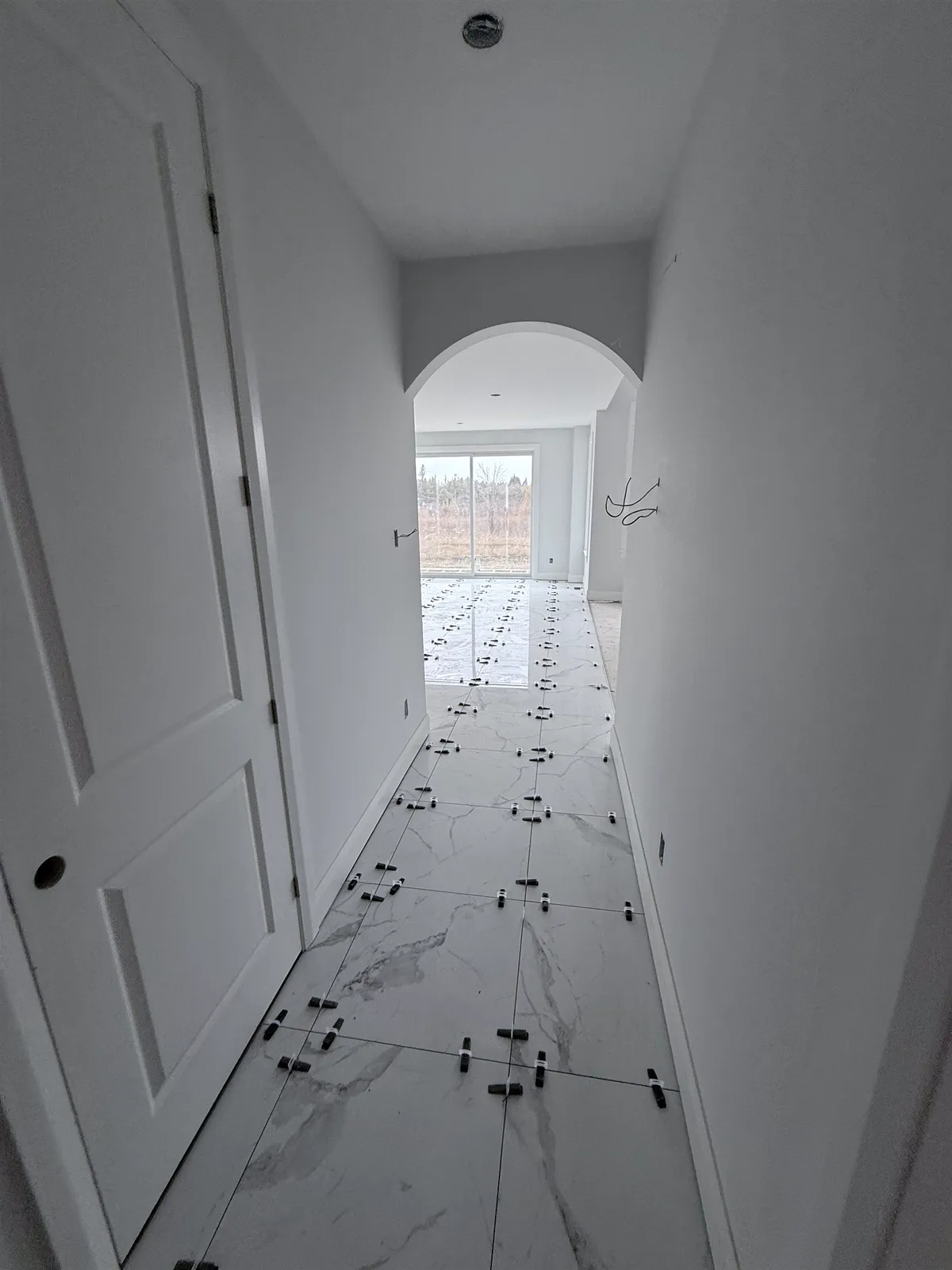
Often possible. The glaze on the old tile is cleaned and scuffed or primed so the new mortar can grip, and the new tile is set in a polymer-modified mortar suited to tile-over-tile. In many cases, though, removing the old tile and installing over an uncoupling membrane such as Schluter-DITRA gives a better long-term floor for not much more cost, especially when the old tile is near the end of its life.
Backsplashes
Usually possible if the old tile is solid. Watch the outlets (they need box extenders to sit flush with the new face), the edge where the tile meets the cabinets, and the countertop joint, which gets fresh sealant. See backsplash installation.
Showers and tub surrounds
This is where we say no. Reasons:
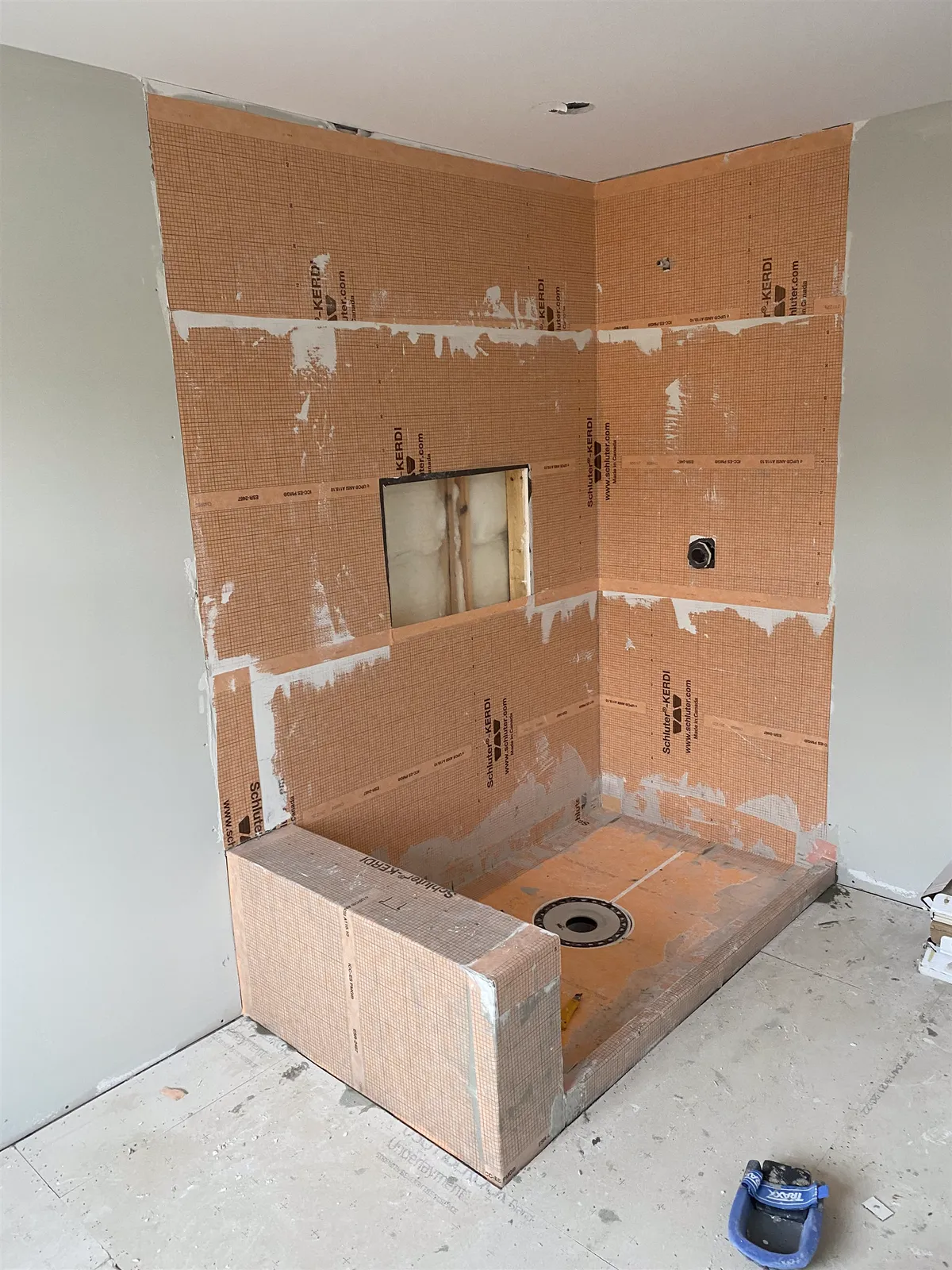
- You can't see the waterproofing. Most old showers that need new tile have a moisture problem somewhere. Tiling over it seals the problem in.
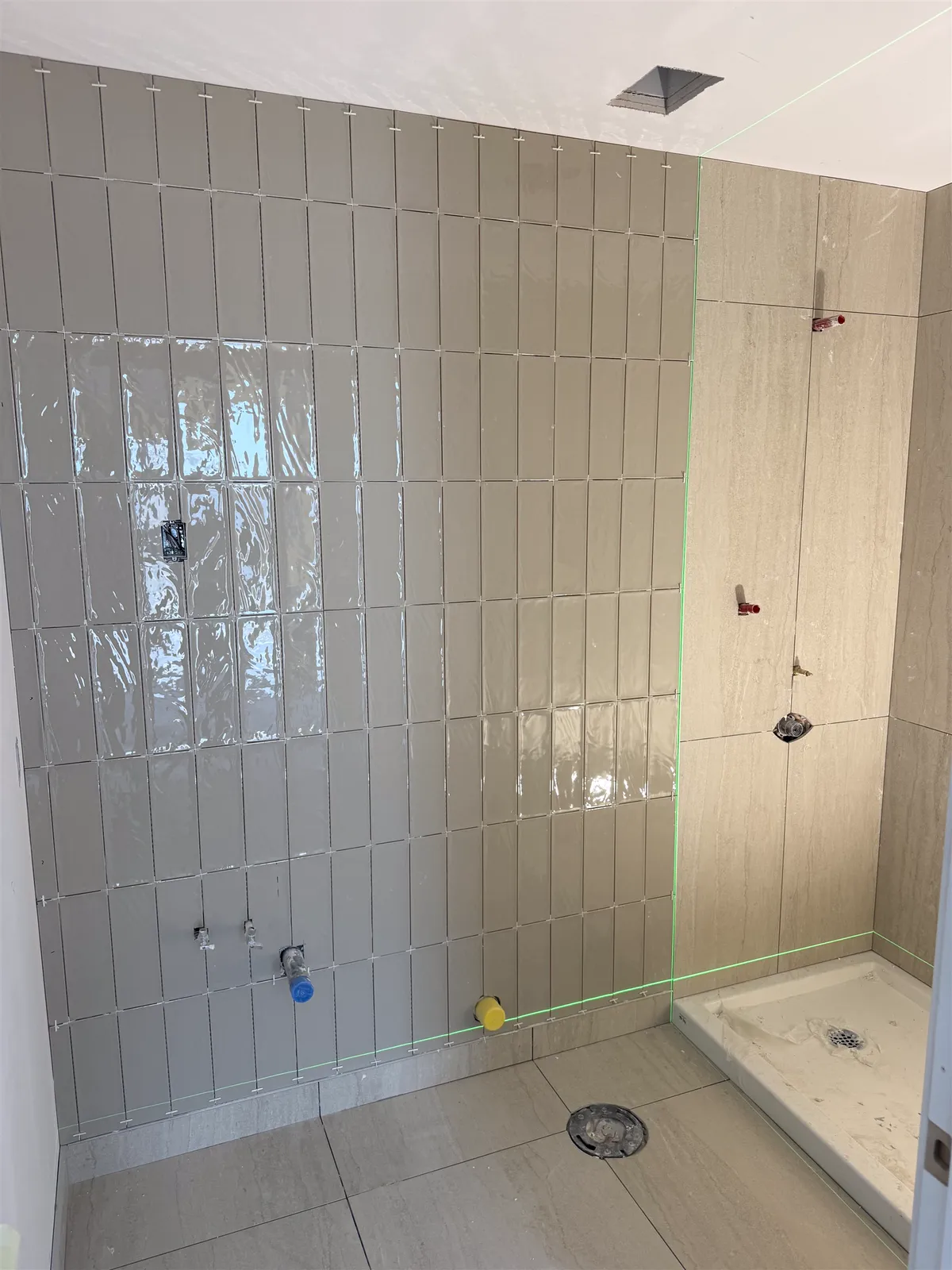
- The valve and trim may no longer reach through the thicker wall.
- Edges and the tub lip end up awkward, with a thick tile edge that's hard to finish and waterproof.
- Weight on a wall that may already be compromised.
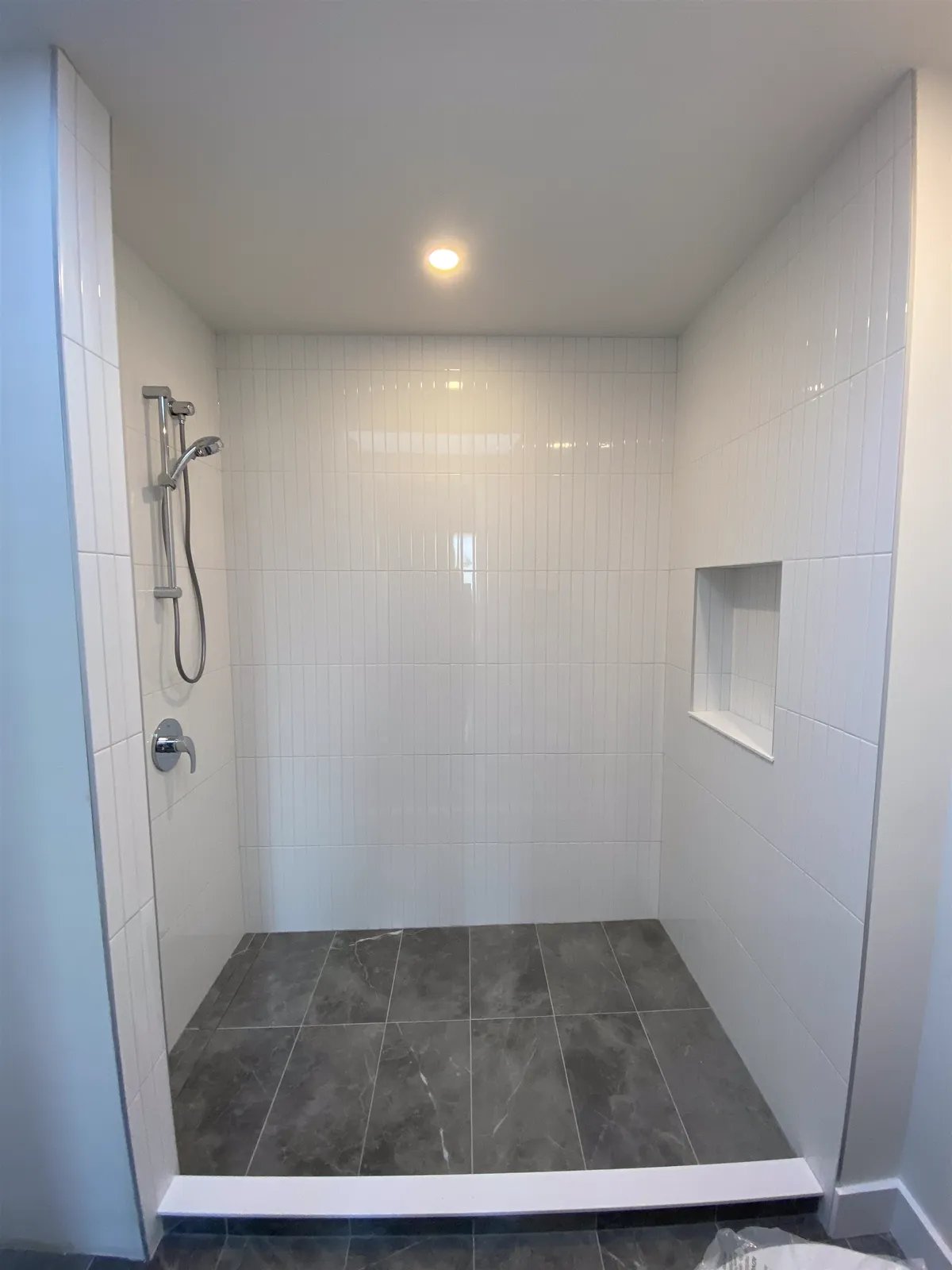
The lasting fix is to remove the tile to the studs, install a proper waterproofing system, and tile once. See how showers are waterproofed and what a new shower costs.
Frequently asked questions
Is tiling over tile cheaper?
It saves demolition and disposal, but adds preparation and sometimes trim, transitions and plumbing adjustments. On floors the saving is often smaller than expected.
Can I paint old tile instead?
On walls with light use, tile paint can be a short-term refresh. It doesn't last on floors or inside showers.