
Short answer
Cement board is strong and won't rot, but it is not waterproof, so in a shower it needs a membrane over it. Foam boards such as KERDI-BOARD and Wedi are light, flat and waterproof once their seams are sealed. Drywall (including green board) should never be the only thing behind shower tile, though some membrane systems allow regular drywall underneath the membrane. In every case, the waterproofing layer is what keeps the shower dry. The board is just the base.
The three main options
Cement board (Durock, HardieBacker, PermaBase)
A rigid panel made from cement and fibreglass mesh or fibres. It is dimensionally stable and is not damaged by water. That is different from being waterproof: water passes through it. In a shower, cement board is covered with a sheet or liquid membrane. It is heavy, cutting it is dusty, and the joints are taped and filled before waterproofing.
Foam boards (KERDI-BOARD, Wedi, GoBoard)
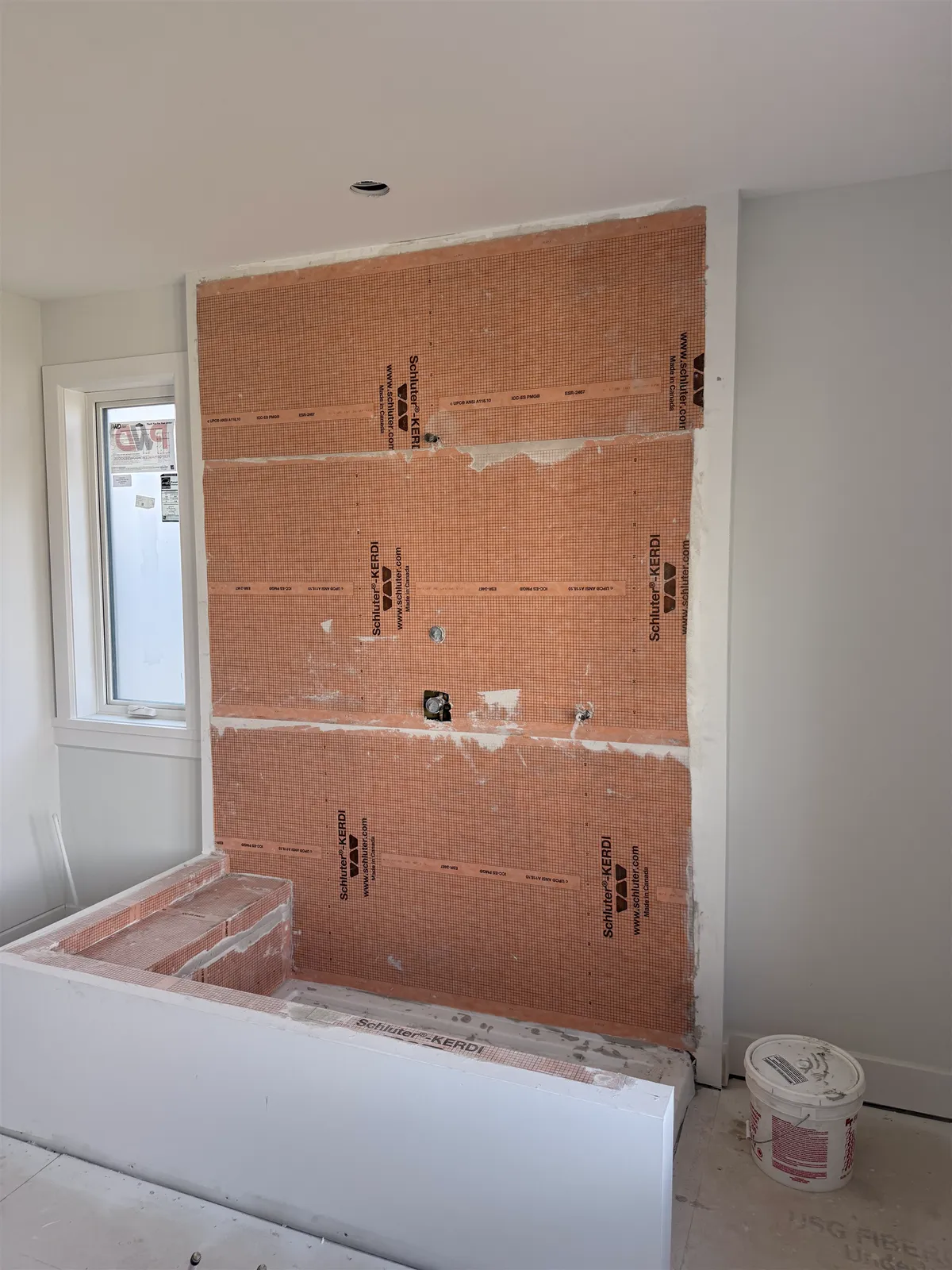
Extruded polystyrene foam panels with a coated or fleece-covered face. They weigh a fraction of cement board, cut cleanly with a utility knife, and are very flat. They become a waterproof wall once the seams are sealed with the maker's band or sealant and fastened with their own screws and washers. They cost more per sheet but save time, and are popular for niches, benches and curbs. Each brand has its own seam method, so the board, seam sealer and fasteners have to match.
Drywall and green board
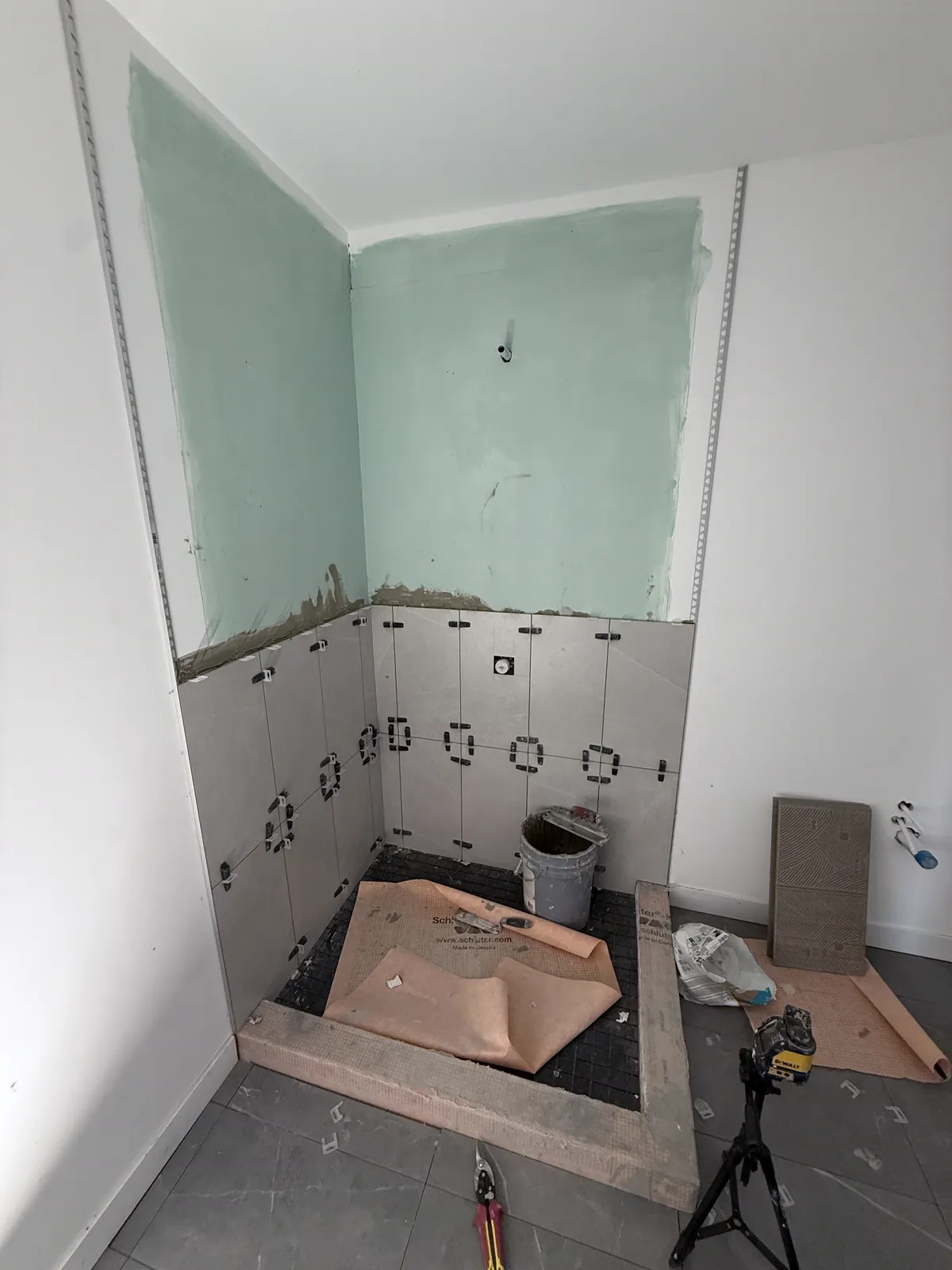
Moisture-resistant "green board" resists humidity, not water. On its own it doesn't belong behind tile in a wet area. Some bonded membrane systems, including Schluter-KERDI, do permit regular gypsum board as the substrate under the membrane. The membrane does the waterproofing, and the drywall only needs to be flat and solid. If you see tile set directly on drywall in a shower with no membrane, expect problems.
Side-by-side
| Cement board | Foam board | Drywall + membrane | |
|---|---|---|---|
| Waterproof on its own | No | Yes, with sealed seams | No (the membrane is) |
| Weight | Heavy | Very light | Medium |
| Cutting | Dusty, scoring or blade | Utility knife | Utility knife |
| Flatness | Good | Very good | Good |
| Material cost | Low | Higher | Lowest board, plus membrane |
| Best for | Floors and walls with a membrane | Showers, niches, benches, steam rooms (per maker) | Systems that allow it |
What about the tub surround?
A tub surround gets far less direct water than a shower floor, but water still runs down the walls and gets into the grout. The same rule applies: a membrane over cement board or drywall, or a foam board system, carried down over the tub flange as the manufacturer shows.
How the backer affects the tile job
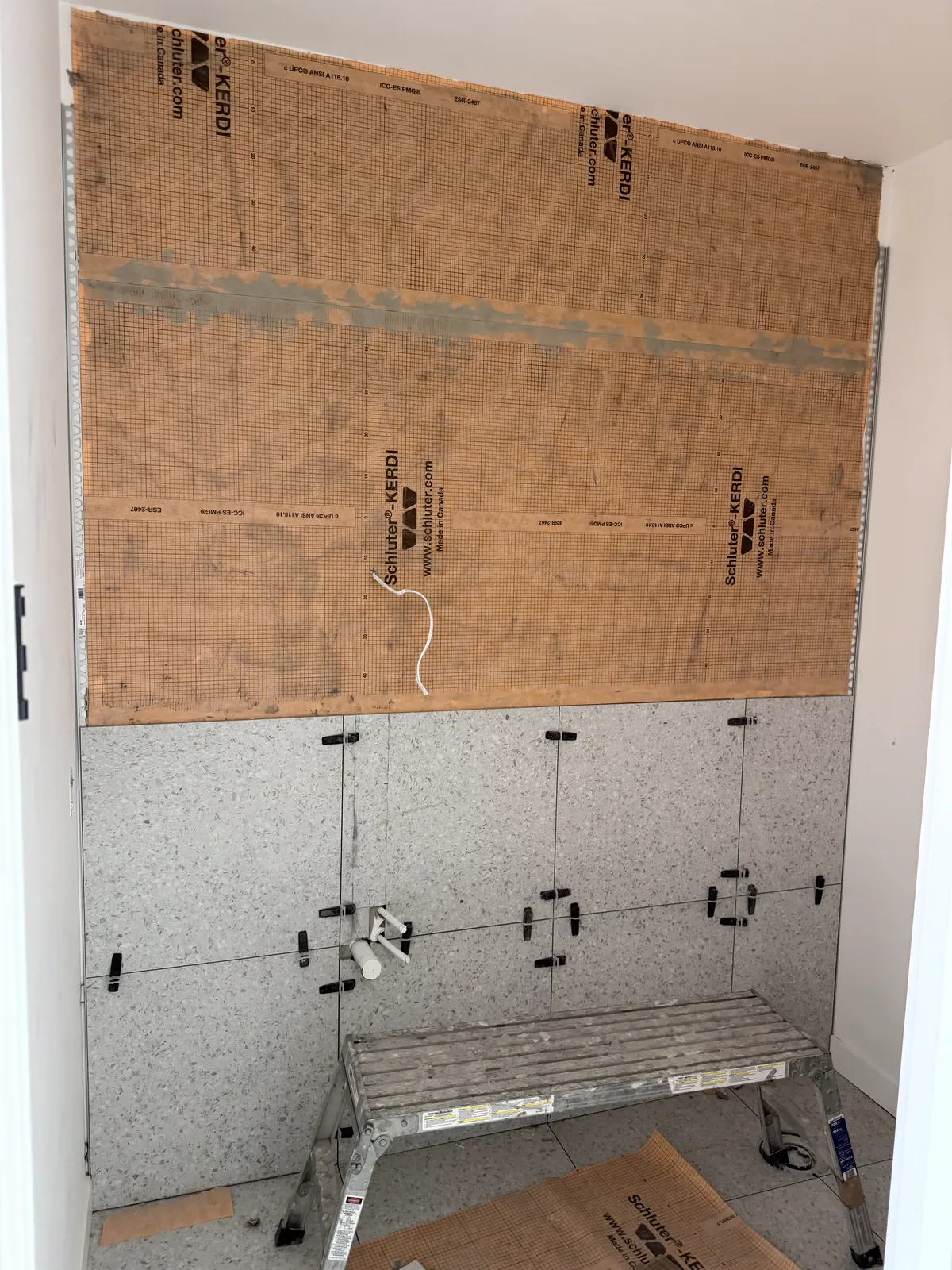
- Flat walls matter more with large tile. A 24 × 48 inch tile shows every bump. Foam boards help here, or walls are shimmed and straightened first (see our large-format tile guide).
- Heavy tile needs proper fastening. Follow the board maker's screw spacing, and check its weight limits for stone and thick porcelain.
- Plan blocking for grab bars and glass doors before the board goes up.
What we usually use
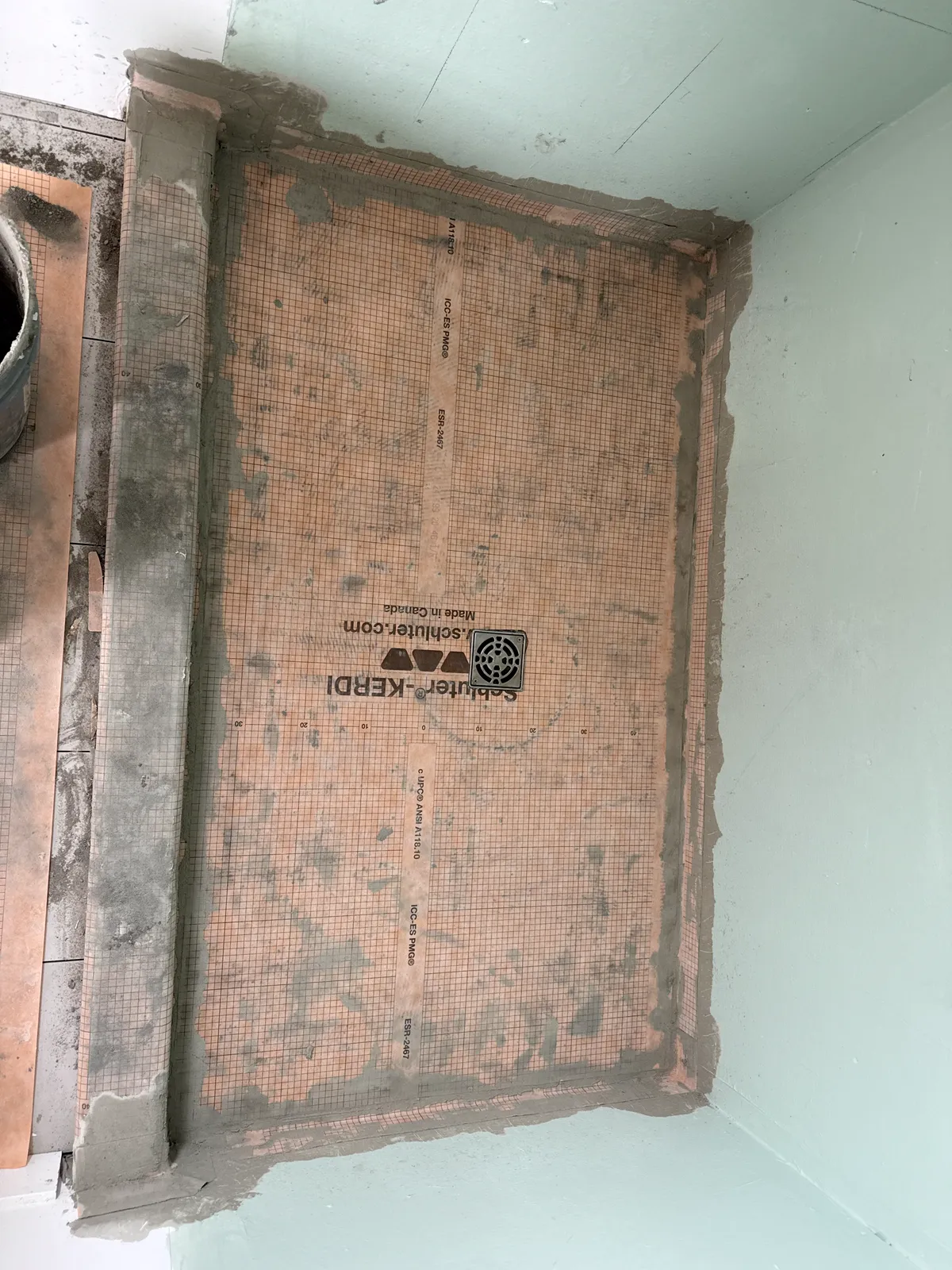
For most showers we build with Schluter's system: KERDI membrane over a solid, flat substrate, or KERDI-BOARD where weight, niches or speed make sense, all sealed and flood tested before tiling. See what KERDI is and how a shower is waterproofed step by step.