
Short answer
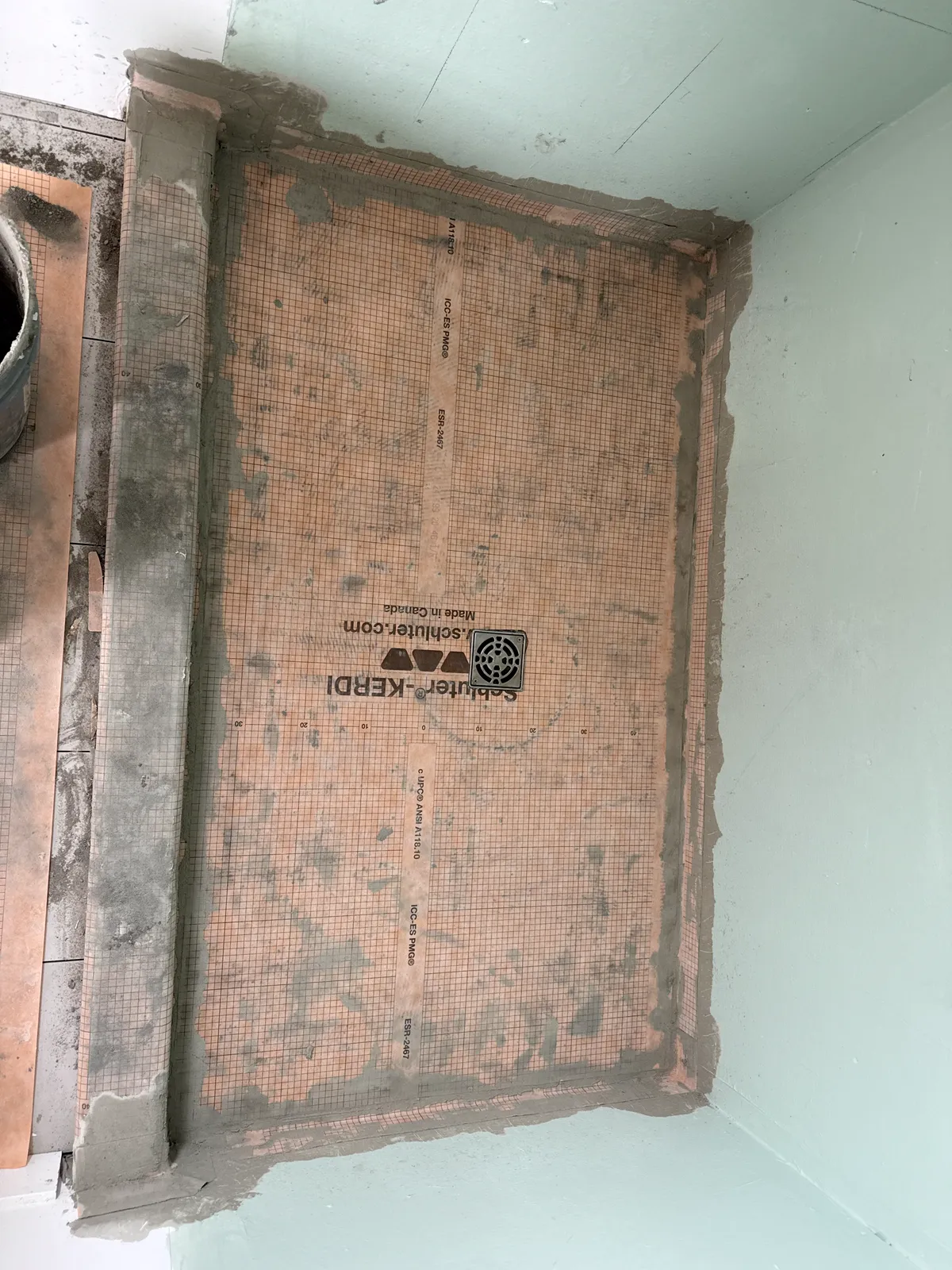
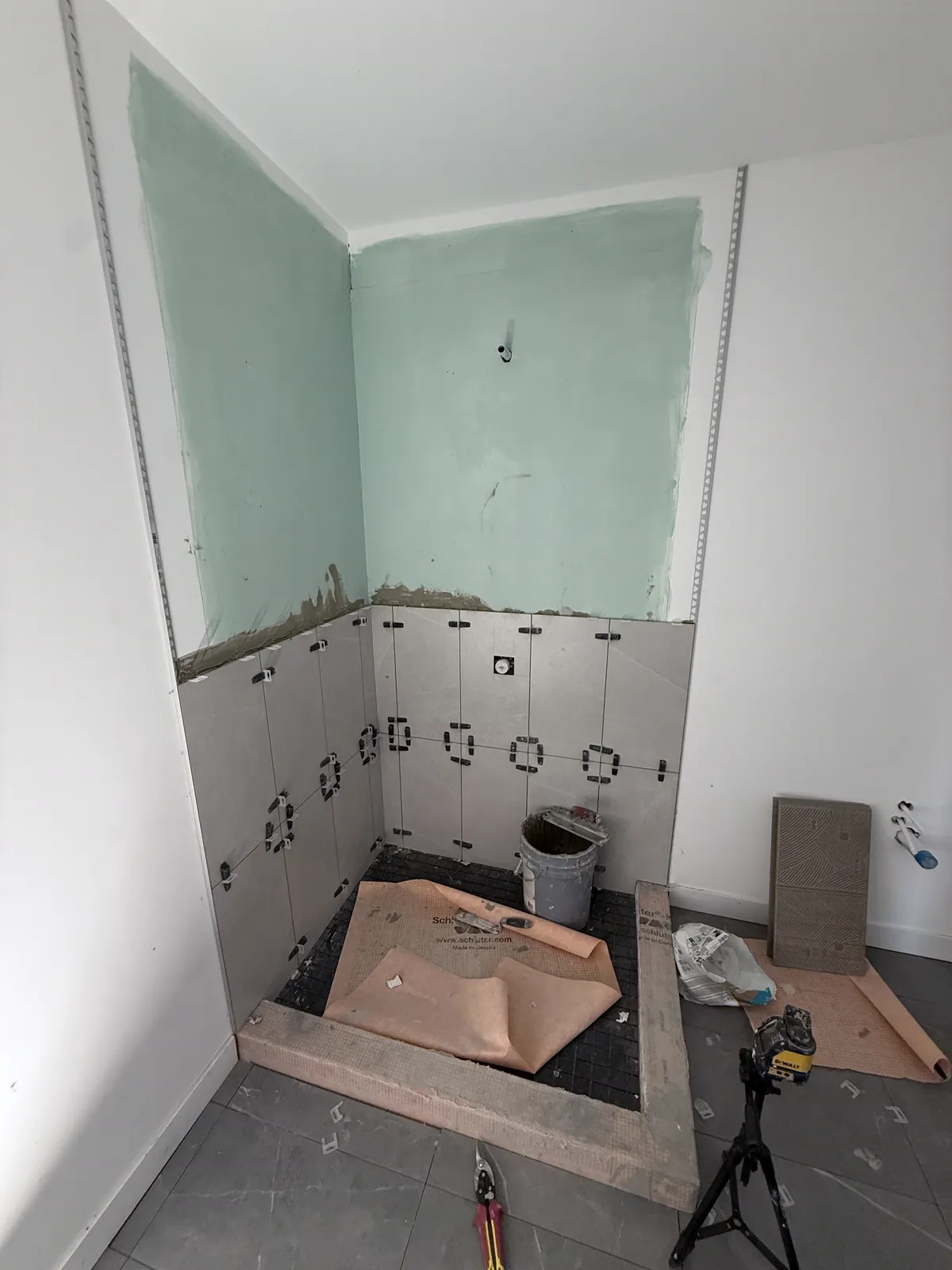
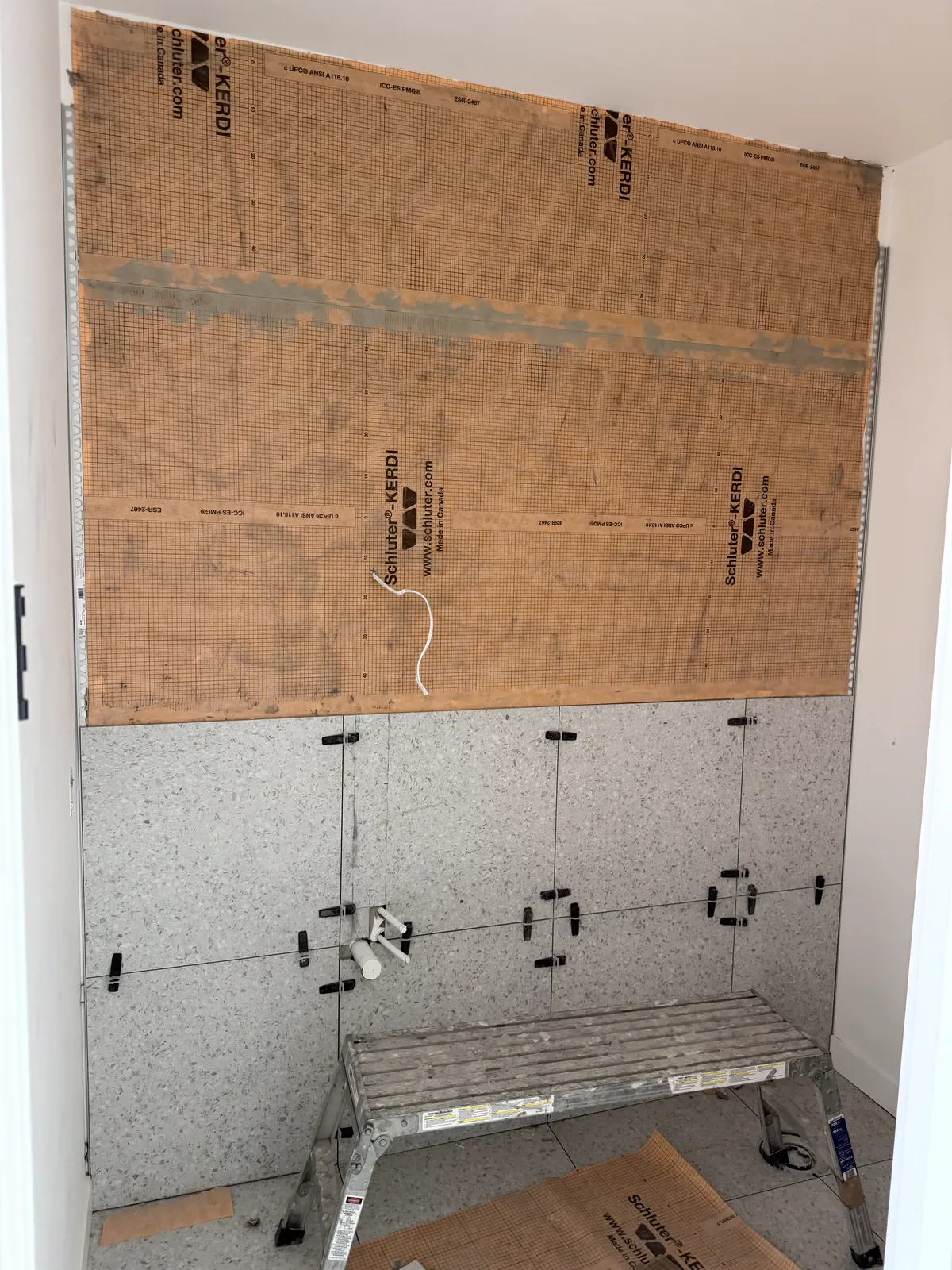
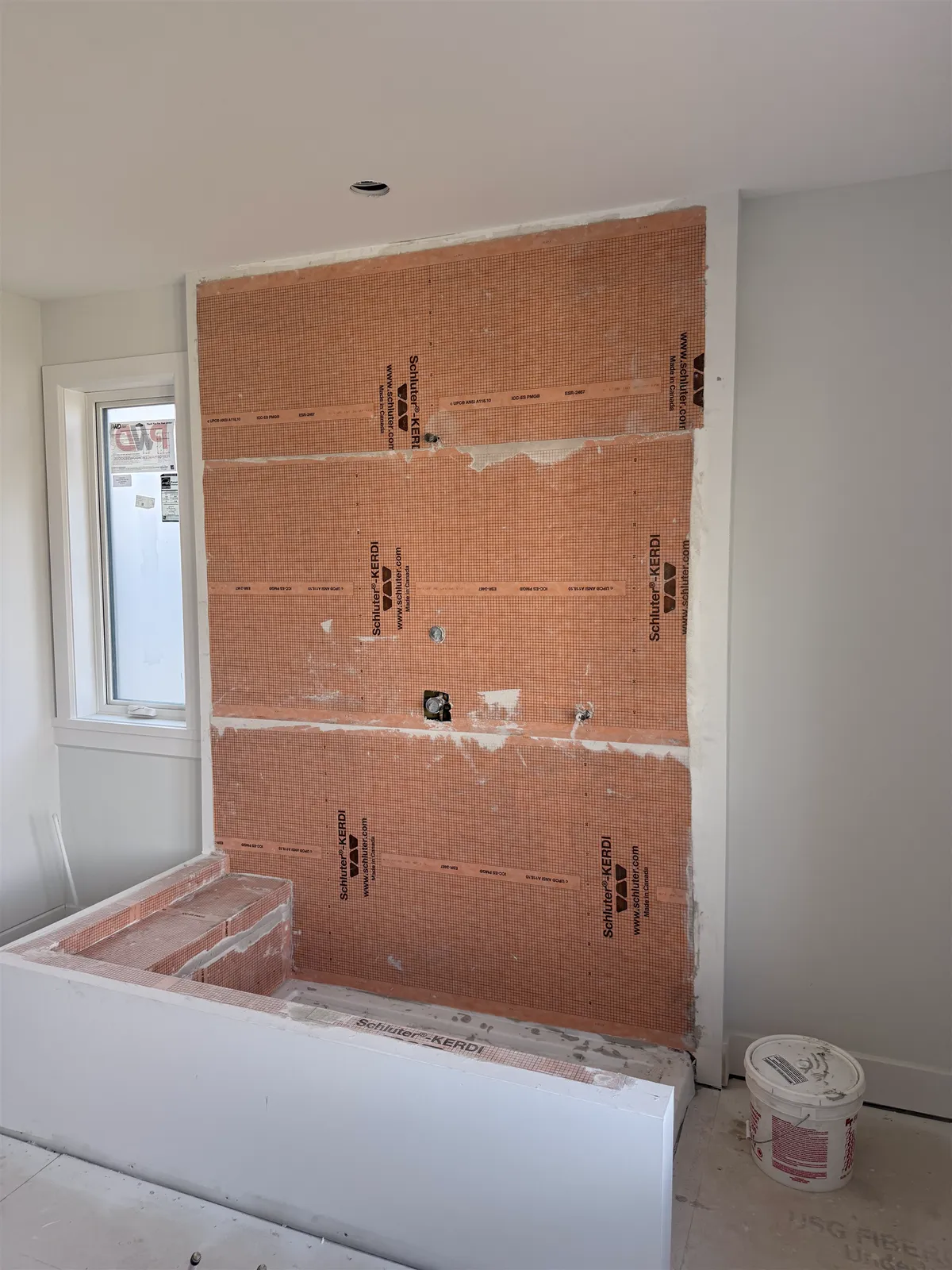
Schluter-KERDI is a thin, waterproof polyethylene sheet with fleece on both sides. It is bonded to shower walls and floors with thin-set mortar, and tile is set directly on top of it. With its seams sealed using KERDI-BAND and connected to a KERDI-DRAIN, it creates a continuous waterproof layer right under the tile, so water never soaks into the wall or floor behind it.
If you have seen a bathroom renovation with bright orange walls, that's KERDI. It is one of the most common ways tiled showers are waterproofed in Canada, and it's the system we use on most of our showers, including every shower at 404 Ashbee Court.
How KERDI works
Older showers relied on a plastic sheet behind cement board, plus a liner buried under a mortar floor. Water soaked through the grout and the board before reaching the waterproofing, so the layers behind the tile stayed damp. KERDI moves the waterproofing to the surface, directly under the tile. Water that gets through the grout stops at the membrane and runs down to the drain. The wall and floor behind it stay dry.
The KERDI family
| Part | What it does |
|---|---|
| KERDI membrane | The waterproof sheet for walls and floors. |
| KERDI-BAND | A narrow strip for sealing seams and the joint where walls meet the floor. |
| KERDI-KERECK | Pre-formed inside and outside corners, so corners don't have to be folded. |
| KERDI-SEAL | Collars that seal around the valve and shower arm. |
| KERDI-DRAIN / KERDI-LINE | Point (centre) drains and linear drains with a flange the membrane bonds to. |
| KERDI-SHOWER trays and kits | Pre-sloped foam floors, curbs and benches. |
| KERDI-BOARD | A lightweight foam panel that is itself waterproof, used instead of cement board (see KERDI-BOARD vs cement board). |
| KERDI-DS | A version with higher vapour resistance for steam showers and other high-humidity rooms. |
How KERDI is installed
- The walls (drywall or board, as Schluter allows) and the sloped floor are prepared flat and clean.
- Thin-set mortar is spread with a fine notched trowel, and the membrane is pressed in and flattened so there are no air pockets.
- Seams are overlapped or covered with KERDI-BAND, and corners, collars and the drain connection are sealed.
- The shower is flood tested before any tile is set.
- Tile goes directly on the membrane. Unlike most liquid membranes, there is no long drying time before tiling.
The thin-set matters. Schluter publishes which mortars its warranty covers and sells its own (SET, ALL-SET and FAST-SET). See modified vs unmodified thin-set.
KERDI vs other systems
- KERDI vs RedGard or Hydro Ban: those are liquid membranes rolled on in coats. Both approaches work when installed correctly. Sheets give a factory-controlled thickness; liquids are easier around complicated shapes. See liquid vs sheet membranes.
- KERDI vs Wedi: Wedi is a foam-board system with its own sealant joints. It compares more directly with KERDI-BOARD than with the membrane.
- KERDI vs cement board: cement board on its own is not waterproof. It needs a membrane (KERDI or a liquid) over it in a shower.
- KERDI vs DITRA: DITRA is Schluter's floor membrane for uncoupling tile from the subfloor. KERDI is for waterproofing showers. See what DITRA does.
Is KERDI worth it?
For a tiled shower, yes. The membrane is a small part of the cost of a shower, and it decides whether the shower is still dry in twenty years. What matters even more than the brand is the installation: every seam lapped, every corner sealed, the drain properly connected, and a flood test before tile.