
Short answer
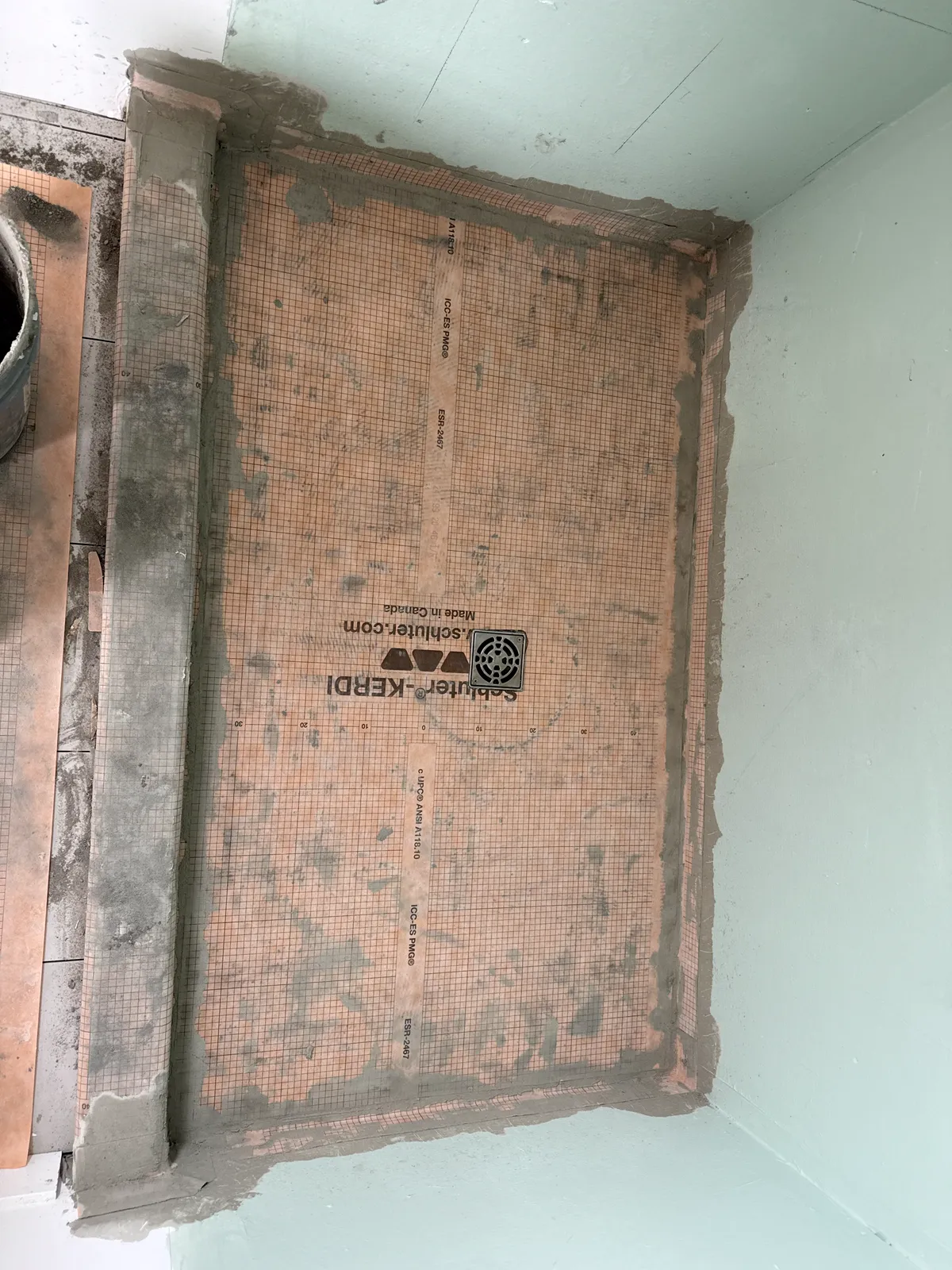
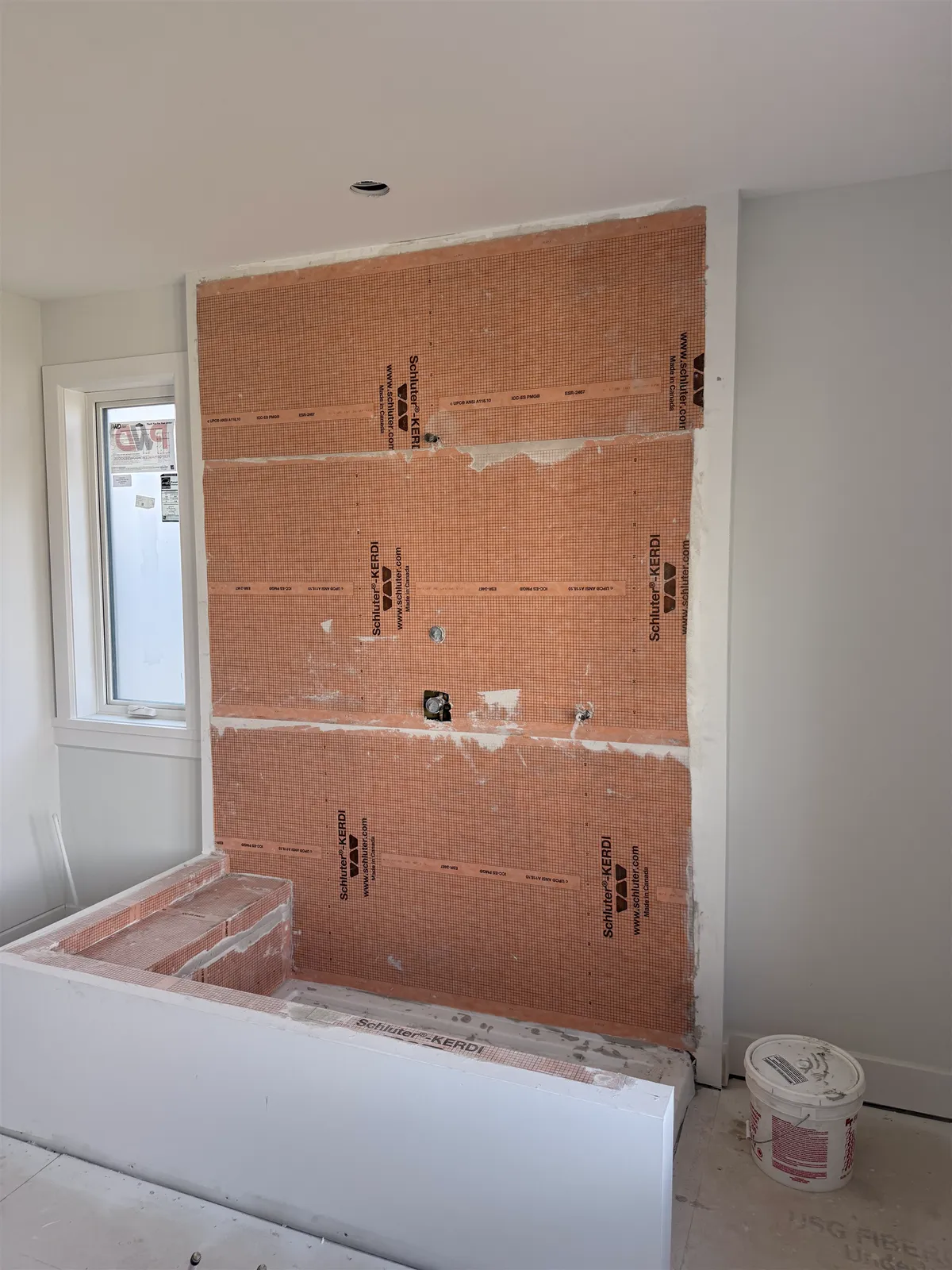
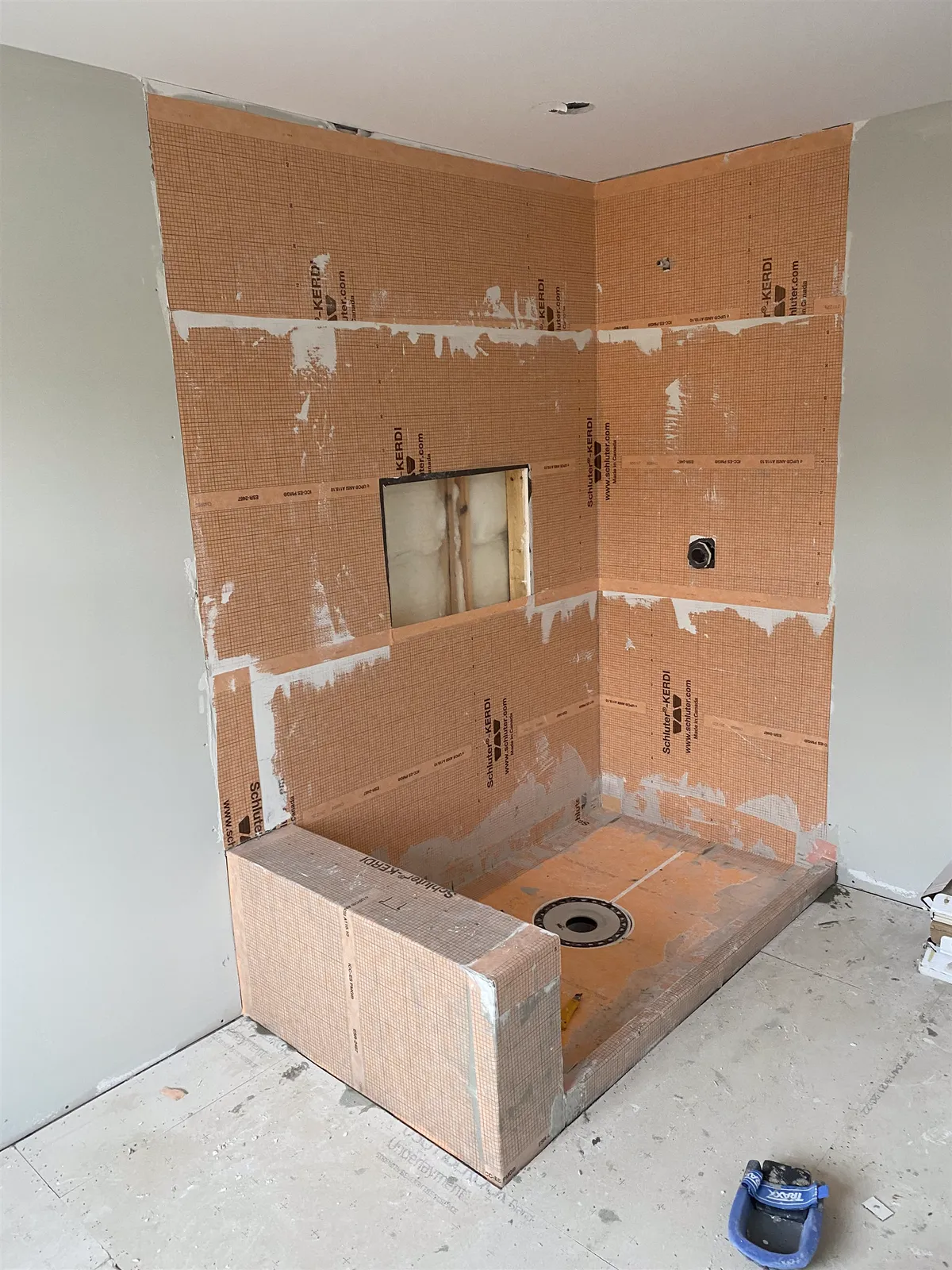
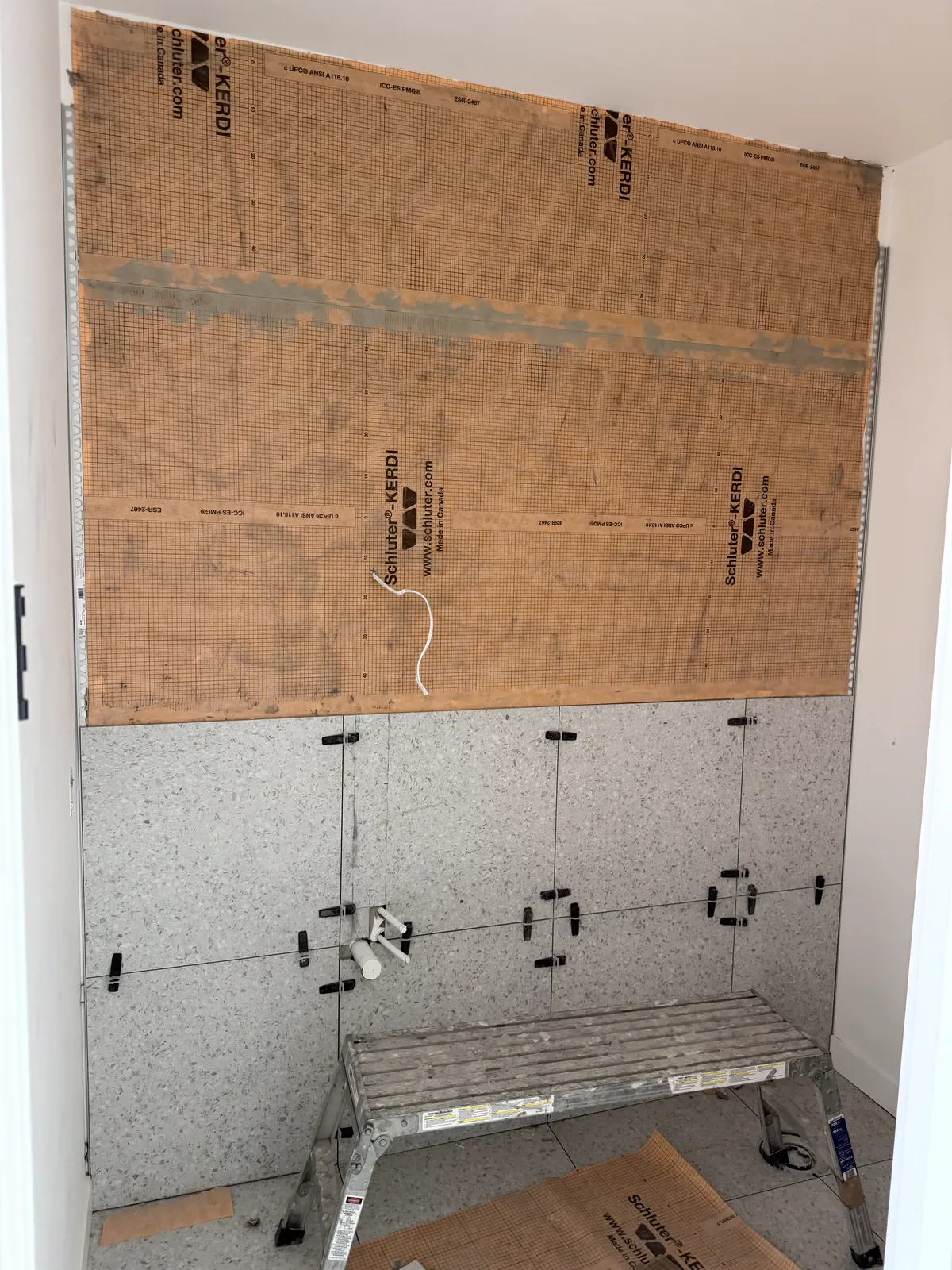
Both work when installed exactly as the maker specifies. Sheet membranes (such as Schluter-KERDI) have a guaranteed thickness from the factory and can be tiled right away, but every seam has to be lapped or banded. Liquid membranes (such as RedGard, Laticrete Hydro Ban and Mapei AquaDefense) are seamless and easy around odd shapes, but they only work at the specified thickness and need to cure before tile and flood testing. Pick one system and use its matching drain, tape and accessories.
How each one works
Both are bonded membranes: they sit directly under the tile, so water that gets through the grout stops right there and runs to the drain. Most are tested to the same North American standard for tile waterproofing membranes (ANSI A118.10). The difference is how the waterproof layer gets onto the wall.
- Sheet: a pre-made membrane bonded in thin-set. Its thickness is consistent because the factory made it.
- Liquid: a paste or gel rolled, brushed or troweled on in coats. It cures into a rubbery film. The thickness depends on the installer applying enough.
Side by side
| Sheet (e.g. KERDI) | Liquid (e.g. RedGard, Hydro Ban) | |
|---|---|---|
| Thickness control | Factory-set | Depends on coats; checked with a wet-film gauge or colour change |
| Seams | Overlapped or banded at every joint | Seamless film; fabric or tape at board joints and corners as specified |
| Complex shapes | Pre-formed corners and collars help, but fiddly | Easy around niches, benches and pipes |
| Wait before tile | Tile right away | Must dry between coats and before tiling |
| Flood test | After the thin-set sets | After full cure, per the label |
| Common failure | Unsealed seam or corner, air pockets | Applied too thin, pinholes, skipped corners |
Where liquid makes sense
- Showers with lots of corners, benches, niches and pipe penetrations.
- Small areas such as a tub surround or the strip around a tub deck.
- Over a foam or cement board system where the maker specifies its liquid for seams.
Where sheet makes sense
- When consistency matters most. You can see that the whole surface is covered at full thickness.
- When the schedule is tight, since there's no drying time between coats.
- Steam showers and high-humidity rooms, where some sheet products (such as KERDI-DS) have much higher vapour resistance.
"RedGard vs KERDI": which is better?
Neither is better in every shower. A correctly built RedGard shower and a correctly built KERDI shower will both stay dry. A badly installed one of either will leak. What to check:
- Is the floor sloped and the drain designed for a bonded membrane?
- For liquid: how many coats, and how is the thickness verified?
- For sheet: are all seams lapped or banded, and corners pre-formed or sealed?
- Is the shower flood tested before tile?
Can you mix them?
Using a liquid to detail a few spots in a sheet system, or vice versa, is only safe when the manufacturer approves that combination. Otherwise you lose the warranty and risk the two products not bonding. Stay within one system.
For the full order of work, see how to waterproof a shower step by step.