Short answer
In the laminate vs hardwood choice, laminate is more scratch-resistant, easier to install and usually costs less, but it is a printed image on a wood-fibre core and can't be refinished. Hardwood is real wood: warmer, quieter when nailed or glued, and able to be sanded and refinished, but it scratches and dents more easily. Choose laminate for busy dry rooms and tighter budgets, and hardwood for main living areas in a home you plan to keep.
Laminate and hardwood can look very similar in a photo. Underfoot, and over the years, they are very different floors. The laminate vs hardwood decision comes down to how each handles wear, water and time, and how much the real thing matters to you. This guide compares them honestly, with a side-by-side table, so you can decide which floor belongs in each room.
How laminate and hardwood are made
Laminate is a layered product. On top is a clear, very hard wear layer, usually a resin with hard mineral particles such as aluminum oxide. Under it is a decor layer, a high-resolution photograph of wood. The core is high-density fibreboard (HDF), made of compressed wood fibres, and a backing layer on the bottom keeps the board flat. Laminate is commonly sold in thicknesses of around 7 mm to 12 mm, and it clicks together as a floating floor.
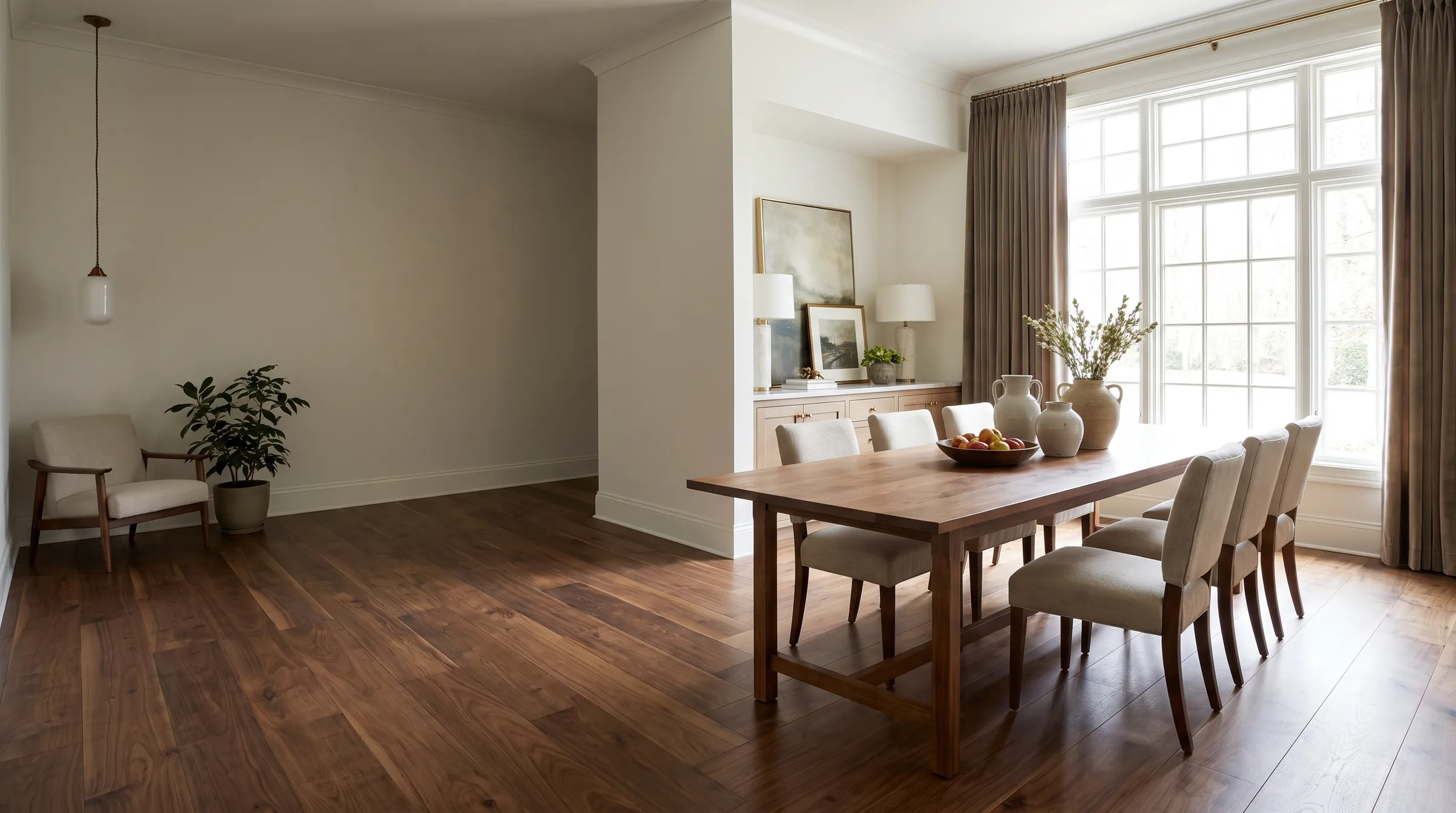
Hardwood comes in two forms. Solid hardwood is one piece of wood from top to bottom, usually about 3/4" thick, nailed to a wood subfloor. Engineered hardwood has a real wood top layer bonded to a cross-layered core, which makes it more stable. It can be nailed, glued or floated. Our guide to engineered vs solid hardwood explains the difference. In both, the surface you walk on is real wood.
So the basic difference is simple. Laminate is a picture of wood under a tough clear coat. Hardwood is wood under a finish.
Laminate vs hardwood: side by side
| Point | Laminate | Hardwood |
|---|---|---|
| Surface | Photo of wood under a hard wear layer | Real wood under a factory or site finish |
| Scratches | Very good resistance | Scratches show, more on dark glossy floors |
| Dents | Good resistance | Depends on species; softer woods dent |
| Refinishing | Not possible | Solid: many times; engineered: depends on wear layer |
| Water | Core can swell at the joints; water-resistant lines do better | Standing water swells, stains and cups the boards |
| Sound and feel | Firm, can sound hollow; needs a good underlay | Warm, natural, solid when nailed or glued |
| Installation | Click floating; DIY-friendly in simple rooms | Nail, glue or float; more skill and tools |
| Repair | Damaged boards replaced | Boards replaced, or surface refinished |
| Cost | Usually lower | Usually higher |
Durability: AC ratings vs wood finishes
Laminate durability is rated on the AC scale (abrasion class), from AC1 to AC5, under the European laminate standard. Higher numbers mean the wear layer stands up to more traffic. AC3 is typical for busy residential rooms, and AC4 and up for heavier use, including light commercial. The rating tests abrasion, impact and stains, so it is a useful quick comparison between laminate products.
That wear layer is the reason laminate resists scratches so well. Grit, chair legs and pet claws mark it far less than a wood finish. Laminate also resists dents better than many wood species. Its weak points are elsewhere: the joints and the edges, where water or a hard knock can damage the core.
Hardwood has no AC rating. Its durability depends on the species, the finish and the colour. Harder species resist dents better than softer ones. Factory finishes on prefinished boards are tough, but no wood finish is as scratch-resistant as a laminate wear layer. What you see also matters: matte finishes, mid-tone colours and wire-brushed textures hide wear far better than glossy dark floors.
The difference shows over time. Laminate stays looking new until it is damaged or worn, then it can't be renewed. Hardwood collects small marks along the way, but its surface can be refinished.
Is laminate as good as hardwood? Looks and feel
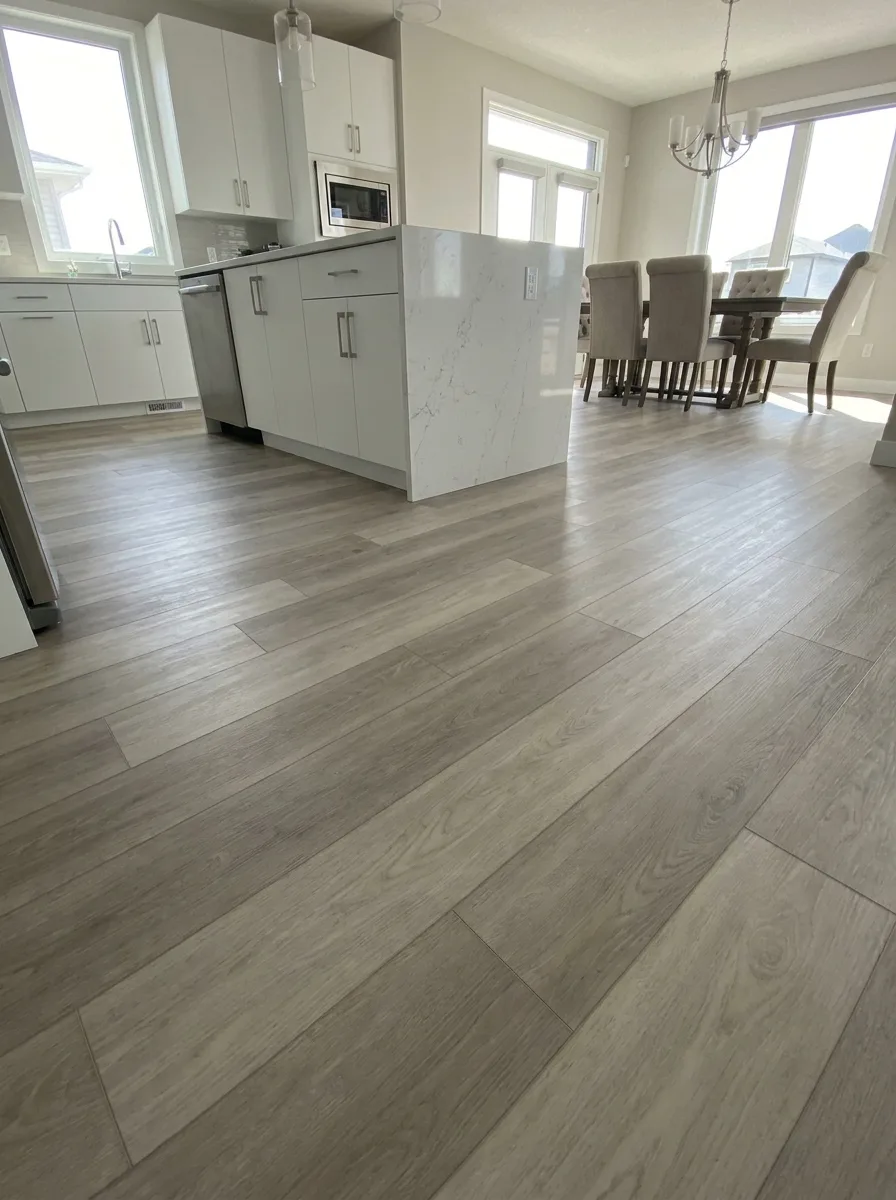
Good laminate is convincing. Better products have long boards, many different plank patterns, bevelled edges and embossed texture that lines up with the printed grain. From standing height, many people can't tell at first glance. Up close, the repeat gives it away: the same knot or grain pattern shows up every few boards. Hardwood never repeats, because every board is a different piece of a tree, and it takes on a patina as it ages.
Feel is the bigger difference. Laminate is firm and a little cold, with a hard surface. As a floating floor, it can sound hollow or clicky under hard shoes. Hardwood is warmer to the touch, has a slight natural give, and sounds solid when it is nailed or glued down. Floating engineered hardwood sits in between.
So is laminate as good as hardwood? For scratch resistance and price, it is often better. For the look up close, the feel underfoot and the ability to be renewed, it isn't the same thing. Which matters more depends on the room and the people in it.
Water resistance
Neither floor likes water, but they fail in different ways. Standard laminate's HDF core absorbs water that gets into the joints. The edges swell and peak, and that damage doesn't go away when the floor dries. Wet mopping, a leaking dishwasher and wet boots at the door are the usual causes.
Water-resistant laminates have treated cores and sealed or coated edges, and they handle spills much better. Their warranties set the limits, such as how long surface water is covered and which rooms are allowed. Our guide to waterproof laminate explains what those claims mean in practice.
Hardwood handles a spill that is wiped up quickly. Standing water soaks into the seams and board edges and can cause swelling, staining and cupping. A larger leak can ruin a whole section.
The practical rule: neither belongs in a full bathroom or a laundry room. For kitchens and entries, a water-resistant laminate or a well-finished hardwood can work with care. For basements, vinyl plank or tile is usually the safer choice; see the best basement flooring. If water is your main worry, also read LVP vs laminate.
Refinishing and repair
This is hardwood's biggest advantage. When the finish wears, a hardwood floor can be lightly abraded and recoated. When the wood is scratched or worn, it can be sanded back to bare wood and refinished, even in a new colour. Solid hardwood can be sanded many times over its life. Engineered hardwood can be sanded as many times as its wear layer allows, which may be once, several times or not at all for very thin veneers. Sanding and refinishing is specialist work; Agora installs floors but doesn't sand or refinish them.
Laminate can't be sanded or refinished. The wood look is a photograph, and sanding would go straight through it. When boards are chipped, swollen or deeply scratched, they are replaced. With a click floor, that usually means unclicking rows from the nearest wall, or cutting out the damaged board and gluing in a new one. Keep a box of spare boards from the same batch, because designs and colours change between production runs.
Sound, underlay and comfort
Laminate always floats over an underlay. The underlay smooths minor texture in the subfloor, takes the edge off the hollow sound, and over concrete it adds a vapour barrier. Some boards come with an attached pad. Never add a second pad under them, because a soft, doubled cushion lets the boards flex and breaks the joints. Our guide to underlayment for vinyl and laminate compares the types.
Nail-down hardwood sits directly on the subfloor, often over a vapour retarder paper the maker specifies, and sounds solid. Glue-down engineered hardwood is the quietest wood floor. Floating engineered hardwood uses an underlay, like laminate.
In condos, the building usually sets rules for sound, and often for the underlay and installation method. Both laminate and engineered hardwood can be used where the rules allow; check before you choose. See condo flooring rules.
Installation: laminate is easier, hardwood takes more skill
Laminate is one of the most DIY-friendly floors. The boards click together, the floor floats, and a square bedroom over a flat wood subfloor is a reasonable first project. Its rules are strict, though: a flat subfloor, the right underlay, acclimation as the maker asks, and an expansion gap at every wall that nothing pins. Most laminate problems come from breaking those rules. Our guide on how to install laminate flooring covers each step.
Hardwood takes more skill and more tools. Installers take moisture readings of the wood and the subfloor and compare them with the maker's limits. Nail-down floors need a flooring nailer, the right fasteners and a careful nailing schedule. Glue-down floors need adhesive skill and clean work, because cured adhesive on a finish is hard to remove. See how to install hardwood flooring.
Both floors move with Ottawa's seasons. Laminate's fibre core and real wood both take on moisture in humid summers and give it up in dry winters. Keeping indoor humidity within the maker's range protects either floor. Our guide to hardwood floors in an Ottawa winter explains seasonal gaps and cupping.
Laminate or hardwood for resale
Many buyers see hardwood as a premium feature, especially in main living areas, front halls and dining rooms. Listings often mention it by name. Laminate is widely accepted in bedrooms, basements, rentals and starter homes, and good laminate in good condition looks better than worn hardwood that needs refinishing.
Nobody can honestly put a number on how much either floor adds to a sale price. It depends on the house, the neighbourhood and what similar homes have. What helps most is a floor that suits the house, looks good, and runs consistently through connected rooms. A patchwork of different floors in one open space usually looks worse to buyers than one good floor of either type.
Where each floor fits
Laminate suits bedrooms, living rooms, home offices, hallways and playrooms. It is a strong choice for busy homes with pets in dry rooms, because its surface resists scratches so well. Water-resistant laminate can work in kitchens and entries with care. For dog owners, our guide to the best flooring for dogs compares the options.
Hardwood suits main floors, dining rooms, living rooms and bedrooms in a home you plan to keep. Solid hardwood belongs above grade on a wood subfloor. Engineered hardwood is the version for concrete, condos, wide planks and approved basements.
Many homes mix them sensibly: hardwood on the main floor, laminate or vinyl in the basement and bedrooms, tile in the bathrooms and entry. If you are also weighing vinyl against wood, see LVP vs engineered hardwood.
What drives the cost
Laminate usually costs less than hardwood, for the material and the installation. With laminate, the price follows the AC rating, the thickness, water resistance, board size and realism. With hardwood, it follows the species, grade, plank width, solid or engineered construction, wear layer and finish. For both, installation depends on the subfloor work needed, removal of the old floor, stairs, transitions and trim.
For typical Ottawa ranges, see laminate flooring installation cost and hardwood floor installation cost. Agora installs both. A free written quote can price each option for the same rooms, including the subfloor preparation each floor needs. Our hardwood flooring page shows the wood side.
Frequently asked questions
Is laminate as good as hardwood?
It is better at resisting scratches and usually costs less. It isn't real wood, though, and it can't be refinished, so hardwood lasts longer as a surface you can renew.
Which is more scratch resistant, laminate or hardwood?
Laminate. Its hard wear layer resists scratches from grit, furniture and pet claws far better than a wood finish.
Can laminate be refinished like hardwood?
No. The wood look is a printed layer, so sanding would remove it. Damaged laminate boards are replaced instead.
Is laminate or hardwood better for resale?
Many buyers see hardwood as a premium in main living areas. Good laminate is widely accepted in bedrooms, basements and rentals, and a consistent, well-kept floor matters more than the material.
Is laminate waterproof?
Standard laminate isn't; water in the joints can swell its core. Water-resistant laminates handle spills much better, within the limits in their warranty. See waterproof laminate.
Does laminate sound different from hardwood?
Yes. Floating laminate can sound hollow or clicky, while nailed or glued hardwood sounds solid. A good underlay reduces the difference.
Can I install laminate myself?
In a simple room over a flat subfloor, yes. Follow the maker's rules for underlay, acclimation and expansion gaps, and get help with stairs, concrete and long open runs.