Short answer
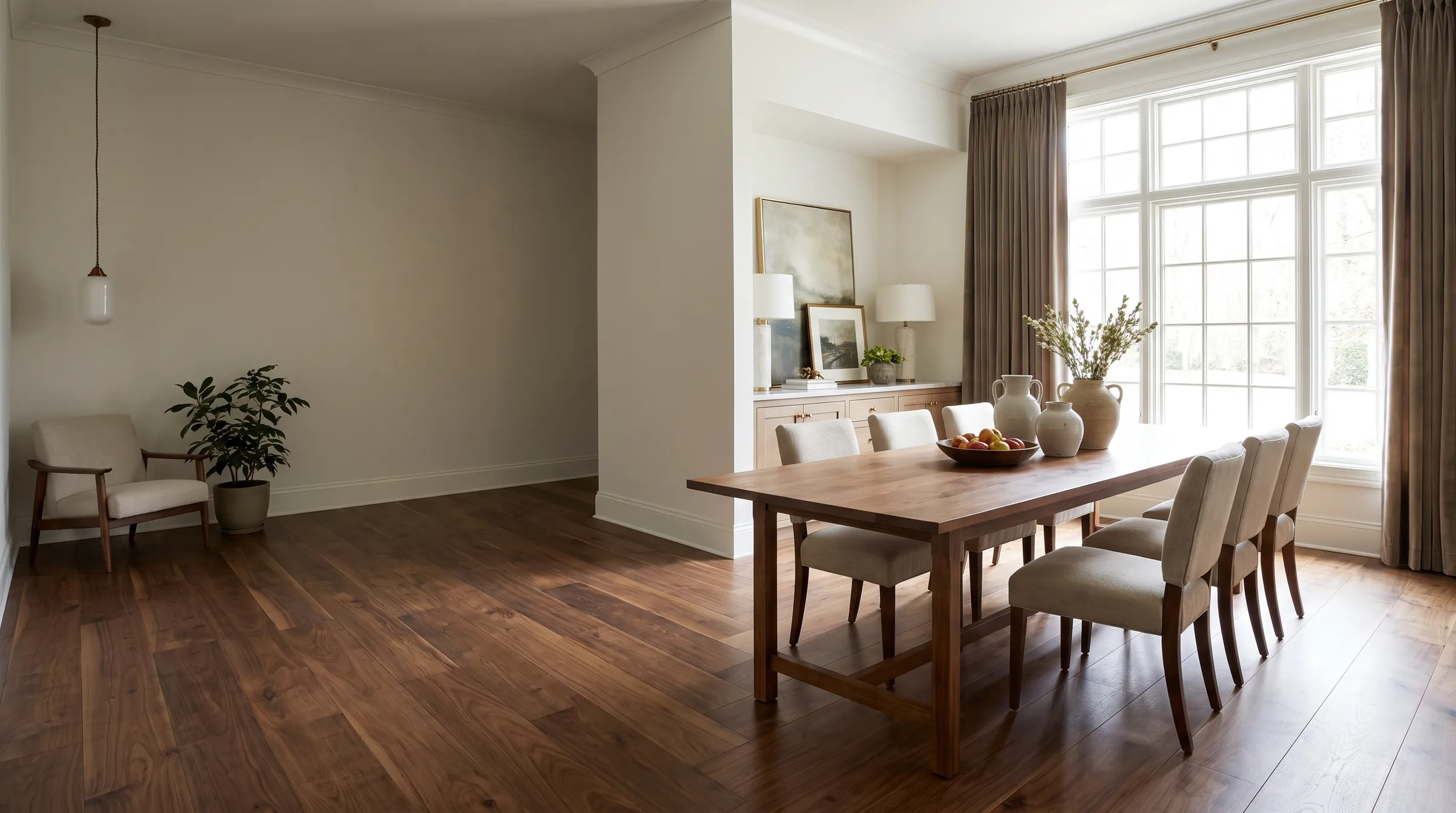
Wide plank flooring usually means boards of about 7" or wider. Wide boards look calm and modern, but a wide solid board moves more across its width as humidity changes, so it shows bigger seasonal gaps and cups more easily. That is why engineered hardwood is the usual choice for wide planks, especially over concrete or radiant heat. Whatever the product, steady indoor humidity, a flat subfloor and the maker's fastening method are what keep wide boards flat.
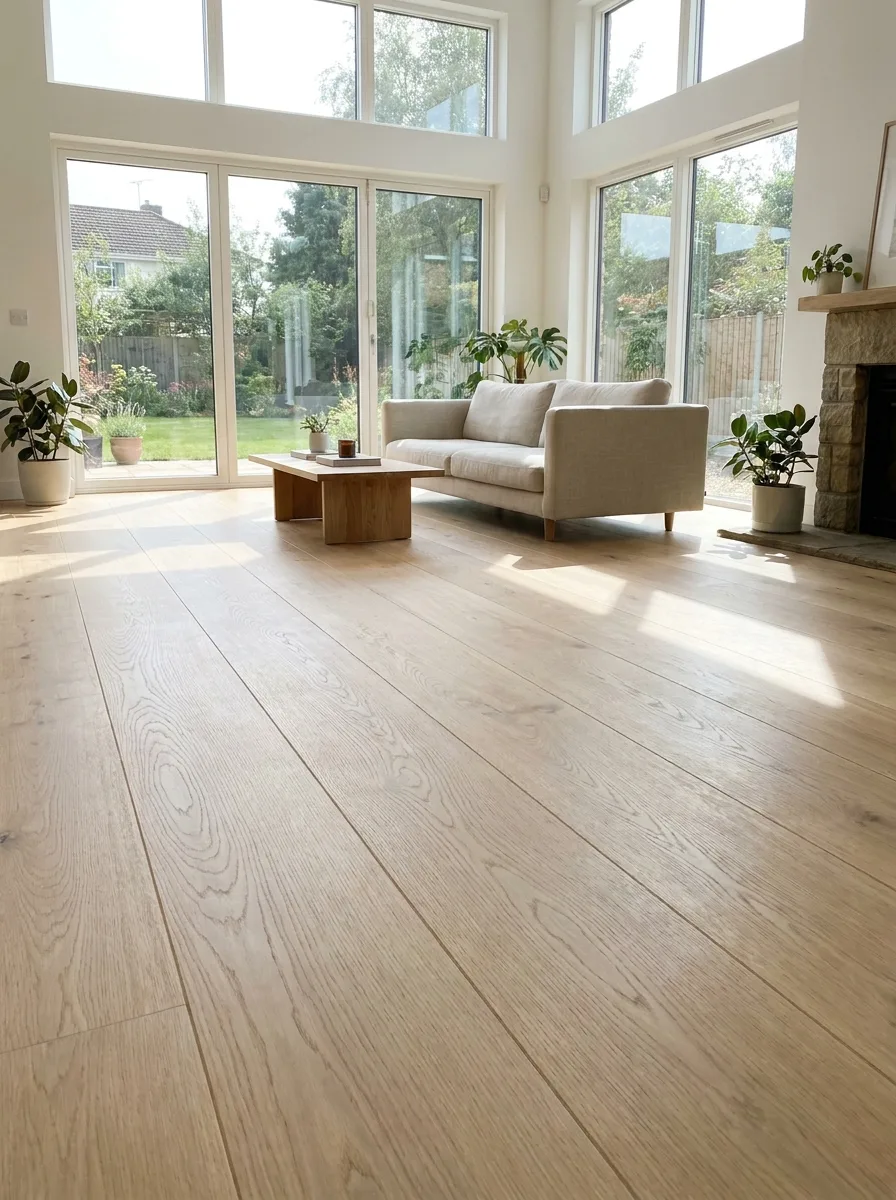
Wide plank flooring has replaced the narrow strip floor as the look most people ask for. Fewer seams, longer boards and more visible grain make a room feel calmer and larger. The width that makes the floor look good is also what makes it harder to keep flat. This guide explains why, what product to choose and what a good installation of wide boards needs. It covers wide plank hardwood, wide plank engineered floors and wide plank vinyl and laminate.
What counts as wide plank flooring
There is no official definition. Traditional oak strip flooring was about 2 1/4" wide. Boards from about 3" to 5" are usually called plank. In stores today, "wide plank" generally means boards of about 7" and up, and premium engineered lines go wider still. Our guide to engineered vs solid hardwood uses the same rough line: around 7" and up, engineered is usually the safer choice.
Width usually comes with length. Wide boards look best long, and many wide plank lines include boards several feet long. Ask about the length mix in each box. A floor with many short pieces breaks up the long, calm look that wide planks are bought for. Some floors also mix widths, such as three widths in a repeating or random pattern, which gives a traditional, hand-built look.
Species and cut also play a part. White oak is the most common wide plank species, often rift and quarter sawn or live sawn. Our white oak flooring guide explains the cuts and why rift and quarter sawn boards move less.
Why wide planks move more
Wood takes on moisture from humid air and gives it up in dry air. As it does, it swells and shrinks, mostly across the width of the board, not along its length. The amount of movement grows with the width. A board twice as wide moves about twice as much.
On a narrow strip floor, that movement is shared among many joints. Each joint opens a tiny amount in winter, and the eye barely sees it. On a wide plank floor, the same room has far fewer joints, so each one opens more. The total movement of the floor is similar, but it is concentrated in fewer, more visible gaps.
Width also affects cupping. A board cups when its bottom face is wetter than its top face: the bottom swells more and the edges rise. On a narrow board, the rise is small. On a wide board, the same moisture difference lifts the edges more and the dip in the middle is easier to see and feel. Wide boards are also more likely to show crowning, the opposite shape, if a cupped floor is sanded flat before it has dried out.
Solid wide plank hardwood: what it takes
Solid wide plank hardwood can work, and wide solid boards have been laid in old houses for centuries. Many of those floors show wide winter gaps, cupping or both, and that was accepted as part of the look. Today most people expect a flatter, tighter floor, so solid wide planks need more care at every step.
The wood has to be at the right moisture content for the house when it is installed, checked with a meter against the maker's limits. The house needs steady humidity all year. The subfloor needs to be solid, flat and dry, with the vapour retarder the maker calls for. The fastening is usually heavier than for narrow boards, often with adhesive added, as described below.
Solid wide planks are not a good fit over concrete, below grade or over radiant heat. Most solid hardwood makers don't approve those uses at all, and wide boards make the risk worse. Rift and quarter sawn solid boards move less than plain sawn ones, which helps if you want solid wide planks. Expect them to cost more.
Why engineered is the usual choice for wide plank flooring
Engineered hardwood has a real wood top layer on a core made of layers laid in alternating directions. Each layer resists the movement of the next, so the board as a whole moves far less with humidity than a solid board of the same width. That stability is what lets makers sell boards much wider than solid wood can manage.
Wide plank engineered floors also install in more places. Depending on the product, they can be glued to concrete, floated over an underlay or nailed to a wood subfloor. That makes them the practical choice for condos, basements rated for them, new builds on slabs and homes with radiant heat. Our guide to engineered hardwood on concrete covers slab installs in detail.
Engineered does not mean immune. A wide engineered board still reacts to humidity, just less. Very dry winter air can still open small gaps or cause surface checking in the top layer, and very humid air or moisture from below can still cause cupping. The core matters too. Multi-ply plywood cores and composite cores behave differently, and the maker states the conditions each one needs. Look at the wear layer as well: a thicker top layer can be sanded more times later, while a thin veneer may not be sandable at all.
Cupping, gapping and Ottawa humidity
Ottawa's climate is hard on wide boards. In January, furnace heat can make indoor air very dry. In July and August, the air is humid and windows are often open. A wide solid board floor installed in summer can show clear gaps by midwinter. One installed in winter can be tight and pushing against itself by August.
Most flooring makers ask for indoor humidity somewhere around 35 to 55 percent, with a stated temperature range. Holding that range is the single most useful thing you can do for a wide plank floor. In winter, that usually means a furnace humidifier or room humidifiers. In summer, air conditioning or a dehumidifier keeps humidity from climbing. A cheap hygrometer in a couple of rooms tells you where you are. Our guide to hardwood through an Ottawa winter explains seasonal gaps and what is normal.
Cupping that appears in summer and settles in winter is usually humidity in the room. Cupping that stays, or that shows mainly in one area, often points to moisture from below. Common sources are a damp basement or crawlspace, a slab without the right moisture control, a leak, or a floor installed before the house was dry. The source has to be found and fixed before anything is done to the boards. Sanding a cupped floor flat too early leaves it crowned once it dries.
Two habits help in the first year. Don't fill winter gaps with filler or caulk, because the boards will crush or push it out in summer. Watch the floor through a full year of seasons before deciding something is wrong.
Fastening: nails, glue-assist and glue-down
Wide boards have more leverage to cup and twist, so they need more holding than narrow ones. The maker's instructions set the method, the fastener type and length, and the spacing. Follow them exactly, because the warranty depends on it.
For nail-down floors on plywood or OSB, makers often call for closer fastener spacing on wide boards than on strip floors. Many also call for glue-assist: adhesive applied to the subfloor, in beads or a full spread, in addition to the nails or staples. The adhesive keeps the middle of each wide board in contact with the subfloor, where nails along the tongue can't reach. Traditionally, very wide solid boards were also face-fastened and plugged, which some people still choose for the look.
For glue-down floors, the whole board is bonded with the adhesive the flooring maker approves, spread with the trowel notch the adhesive maker lists. Full contact matters more on wide boards. The installer lifts a board now and then to check the transfer on the back. For floating floors, the boards connect to each other and rest on an underlay. Not every wide plank product is approved for floating, and the ones that are need a very flat subfloor and the full expansion space at every wall. Our guide to installing hardwood flooring explains each method step by step.
Subfloor flatness for wide boards
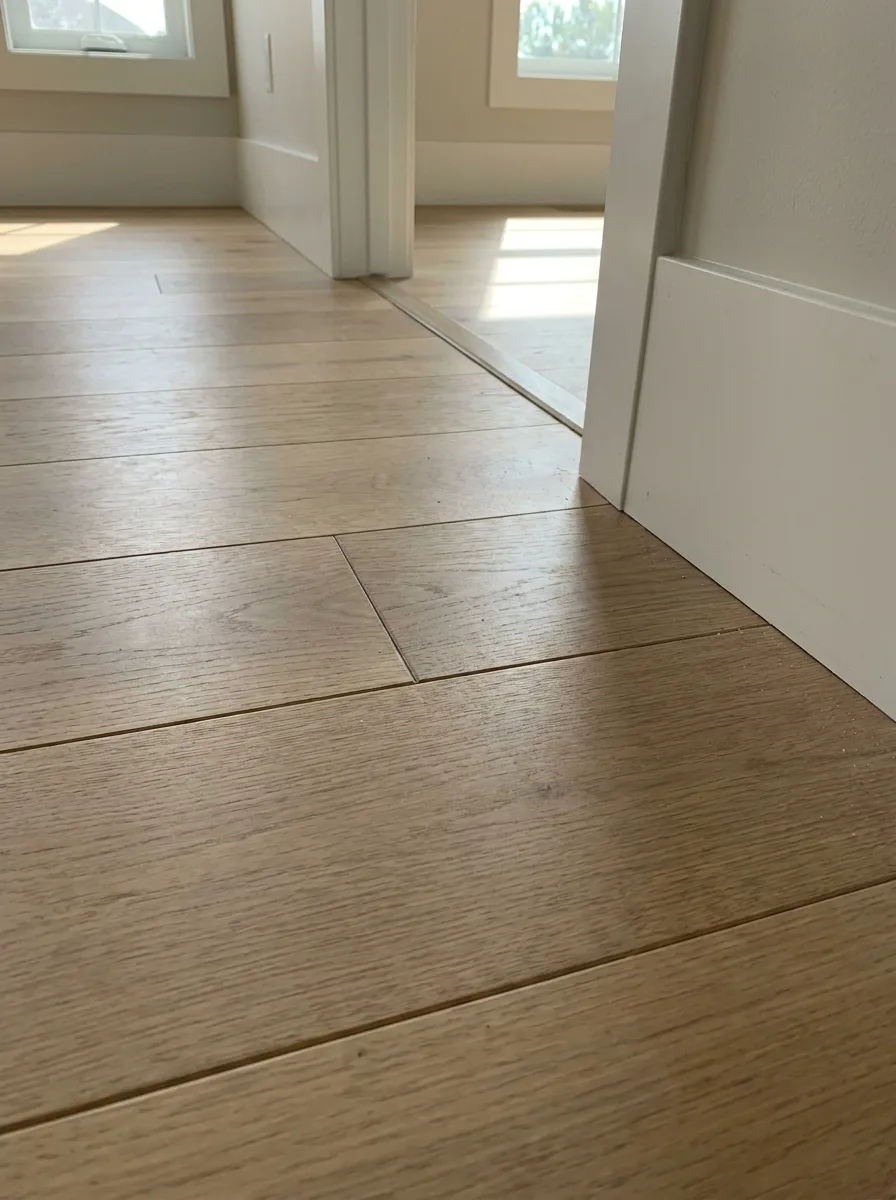
Wide, long boards bridge across dips instead of following them. A narrow strip can bend a little into a low spot. A 9" wide board that is several feet long sits on the high points and rocks or flexes over the low ones. That shows up as hollow spots, squeaks, uneven edges between boards and, in glue-down floors, areas where the adhesive never made contact.
Makers commonly set a flatness tolerance around 3/16" in 10 ft, and some ask for tighter over shorter distances; check your product. On wood subfloors, high seams are sanded or planed, loose panels screwed down and low spots filled. On concrete, high spots are ground and low areas filled with a patch or self-levelling compound. This preparation takes time, and it is the step most often rushed. With wide planks, it is also the step that shows most when it is skipped.
The subfloor also needs to be dry. On a wood subfloor, the installer compares its moisture reading with the boards. On concrete, the slab is tested by the method the maker asks for, as described in our basement flooring guide.
Room size, direction and proportions
Wide planks suit large, open rooms, where narrow strips can look busy. They also work in small rooms. Fewer seams can make a small room feel simpler and larger, though a very narrow room may show only a few boards across. Look at a full-size layout, or a photo of the product in a room of similar size, before deciding.
Direction matters more with wide boards, because each seam is more visible. The boards usually run along the longest dimension of the room or toward the main source of light, and the same way through connected rooms. For nail-down floors on a joist system, they run across the joists where possible. The installer plans the first and last rows so neither wall ends with a thin sliver, which looks worse with wide boards than narrow ones.
Wide planks also make end joints more visible. The installer racks out the floor from several boxes, keeps end joints offset by at least the maker's minimum, and avoids repeating patterns. Stairs, landings and transitions need planning too, since a wide board may need to be ripped to fit a nosing or a doorway. See hardwood stairs and floor transition strips.
Wide plank vinyl and laminate
If you want the wide plank look with less concern about humidity, luxury vinyl plank and laminate both come in wide, long boards. Wide plank vinyl doesn't take on moisture from the air, so it doesn't cup or gap with the seasons the way wood does. It is often the better choice for basements and kitchens. Our guide to choosing vinyl plank flooring covers wear layers and cores.
Wide plank vinyl still moves with temperature, so it needs the expansion space the maker sets, and large sunny windows can make it expand more. Wide, long click planks also need a flat subfloor. A board that flexes over a dip stresses its locking joint every time someone steps on it, and joints can open or break. Laminate has a fibreboard core that can swell if water gets in, so check the water rating; see LVP vs laminate. Both products have printed surfaces, so check how often the pattern repeats across a box, since repeats show more on wide boards. Agora installs vinyl plank, laminate and hardwood, so one free estimate can compare all three for the same rooms.
Wide plank flooring checklist
- Engineered for widths around 7" and up, and always over concrete or radiant heat.
- Indoor humidity held in the maker's range, all year.
- Moisture readings of the boards and subfloor within the maker's limits before work starts.
- A flat subfloor, levelled to the maker's tolerance.
- The maker's fastening method, including any glue-assist.
- Expansion space at every wall and fixed object.
- Boards racked from several boxes, with long lengths spread through the room.
Wider and longer boards usually cost more per square foot, and subfloor preparation can add labour. Our guide to hardwood floor installation cost explains what moves the price.
Frequently asked questions
What width is considered wide plank flooring?
There is no official standard, but boards of about 7" and wider are usually called wide plank. Boards from about 3" to 5" are standard plank, and traditional strip flooring is narrower.
Do wide plank floors cup?
They can, more than narrow boards, because the same moisture difference lifts a wide board's edges further. Engineered boards, steady indoor humidity and a dry subfloor keep cupping in check.
Is engineered or solid better for wide plank flooring?
Engineered is usually the better choice, because its cross-layered core moves much less with humidity. Solid wide planks can work on a wood subfloor with careful humidity control and the maker's fastening method.
Do wide planks make a room look bigger?
Often, because fewer seams make the floor look calmer. In a very narrow room, only a few boards show across, so look at a full-size layout first.
Should wide plank hardwood be glued and nailed?
Many makers call for glue-assist on wide boards, meaning adhesive on the subfloor in addition to nails or staples. Follow the instructions for your exact product.
Is wide plank vinyl a good alternative?
Yes, especially in basements and kitchens. It doesn't gap or cup with humidity, but it needs a flat subfloor and the maker's expansion space.