
Short answer
Grout cracks when something moves and the grout can't. The most common causes are grout used where a flexible sealant belongs (shower corners, tub edges, floor-to-wall joints), a floor that flexes, missing movement joints in large tiled areas, and grout that was mixed too wet or used in joints too wide for it. Find the cause before regrouting, or the new grout will crack in the same place.
Cracked grout is rarely just a grout problem. Where and how it cracks tells you what is going on underneath.
Cracks in shower corners and along the tub
This is the most common one. Where two walls meet, or a wall meets the tub, base or floor, the surfaces move slightly differently as the house heats, cools and settles, and a filled tub flexes under the weight of water. Rigid grout there will always crack eventually.
Fix: rake the grout out of those joints and fill them with a colour-matched silicone sealant. That's what tile standards call for at every change of plane. Don't regrout them.
Cracks running across a tile floor
If cracks run in lines through the grout, and especially if tiles beside them crack too, the floor underneath is flexing or moving. Typical causes are joists that are too springy for tile, a single thin layer of subfloor, or a crack in a concrete slab carrying up through the tile.
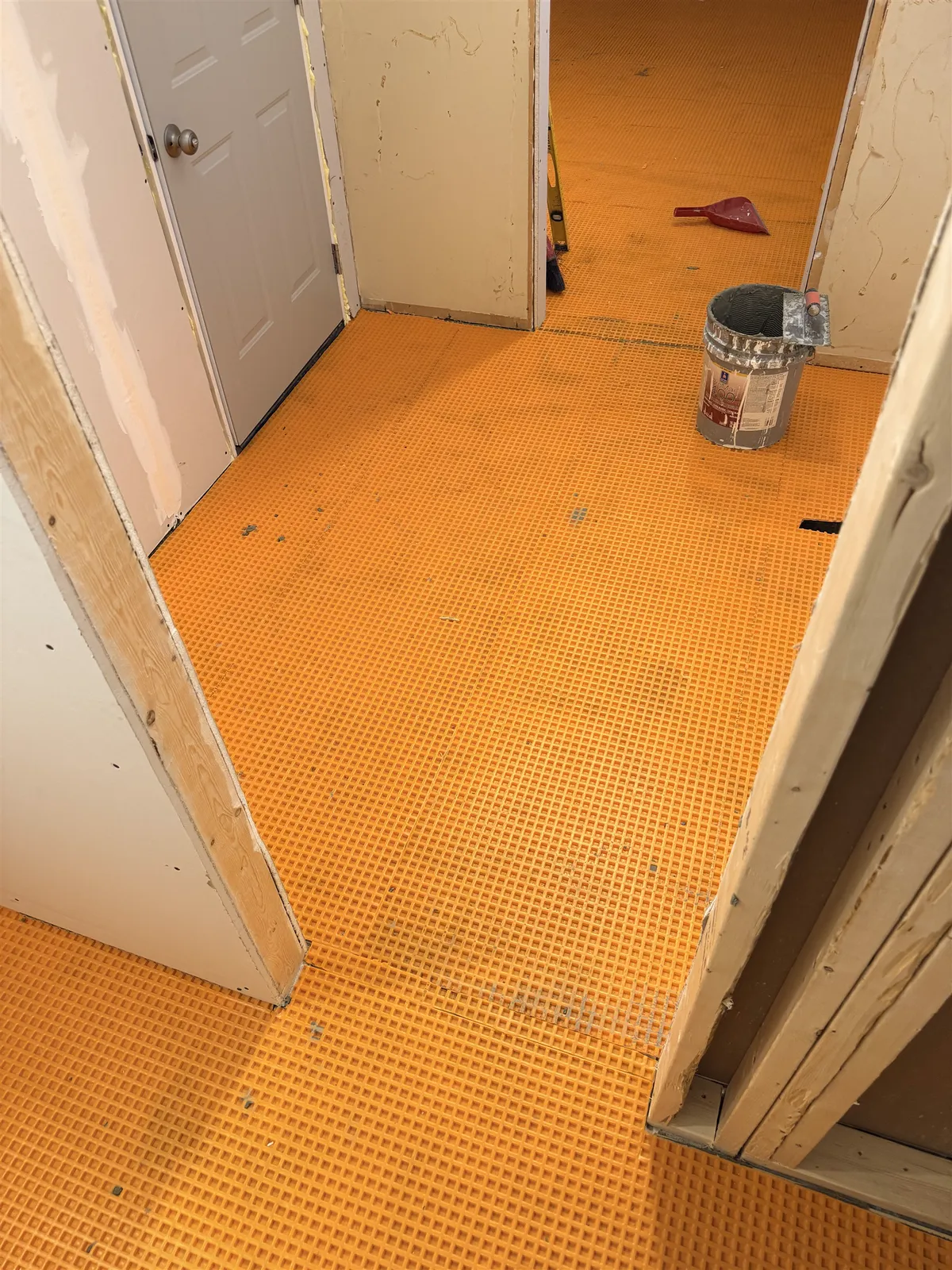
Fix: stiffen the floor or bridge the slab crack, then re-tile, ideally over an uncoupling membrane such as Schluter-DITRA, which absorbs small movements. New grout alone will crack again.
Cracks at the edges of a large tiled area
Big floors and long walls expand and contract. Without movement joints (soft, sealant-filled joints at the perimeter and through large areas), that movement shows up as cracked grout or tiles lifting near walls. This is common in sunrooms and rooms with in-floor heating.
Fix: cut in movement joints at the perimeter and at the spacing the tile standards require, and fill them with sealant.
Cracks or crumbling soon after installation
- Too much water in the mix makes weak, porous grout that shrinks and crumbles.
- The wrong grout for the joint. Unsanded grout in wide joints shrinks and cracks; sanded grout can't fill very tight joints. See grout types.
- Joints not packed full, leaving shallow grout over hollows.
- Too much traffic or water too soon, before the grout cured. See cure times.
Fix: rake out and regrout with the right product, mixed to the manufacturer's water ratio.
Crumbling grout in a shower
Grout that keeps going soft and falling out in one part of a shower is a warning sign. It usually means water is sitting behind the tile. Tap the tiles: if they sound hollow or move, the bond and possibly the waterproofing have failed, and regrouting won't fix it.
Quick diagnosis
| What you see | Likely cause |
|---|---|
| Cracks only in corners or along the tub | Grout where sealant belongs |
| Long cracks through the floor, cracked tiles | Floor flexing or slab crack |
| Cracks near walls, tiles lifting | No movement joints |
| Fine cracks everywhere within months | Weak mix or wrong grout type |
| Grout crumbling in one area of a shower | Water behind the tile |
Frequently asked questions
Is a hairline crack in grout a problem?
One small crack is cosmetic. In a shower, though, any opening lets water reach the setting material, so seal or repair it. If cracks keep spreading, look for movement underneath.
Can I just fill cracked grout with caulk?
In corners and changes of plane, yes. Silicone is the right material there. In flat field joints, rake out the cracked grout and regrout instead.