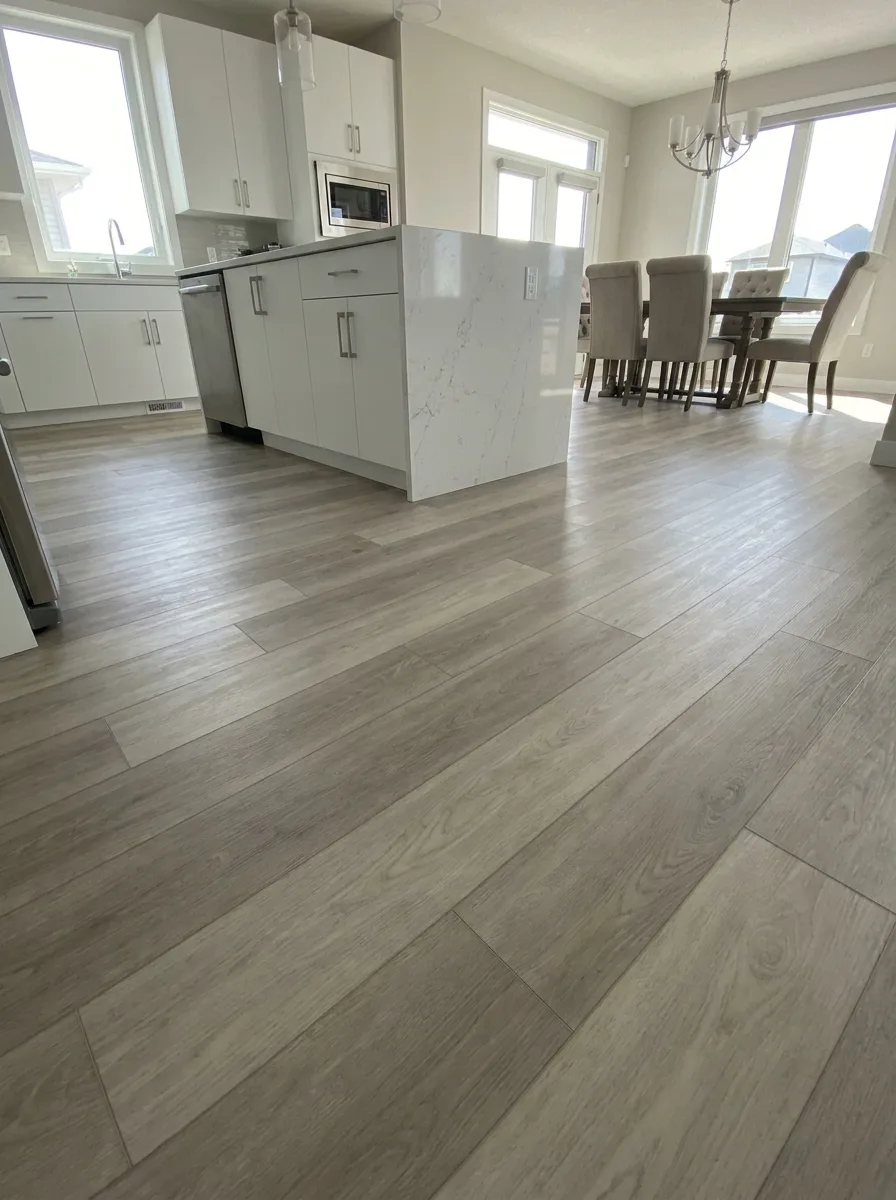


Short answer
Often yes. Click-together rigid-core vinyl plank can usually be installed over tile, concrete, sheet vinyl, linoleum and hardwood, as long as the old floor is flat, solid and firmly attached. Deep or wide grout lines get filled first, and you have to plan for the extra height at doors, cabinets and appliances. Vinyl plank should not go over carpet, cushioned floors, or anything loose or damp.
The three rules
- Flat: within the plank maker's tolerance, commonly around 3/16 inch over 10 feet (see levelling a floor).
- Solid: no loose or hollow tiles, no bounce, no soft spots.
- Dry: no moisture problems underneath, especially on concrete.
Over ceramic or porcelain tile
This is the most common question, and it often works well, because tile is flat and stable. Watch for:
- Grout lines: wide or deep grout joints can show through ("telegraph") over time. They're filled flush with a patching compound first. Many plank makers set a limit on grout joint width and depth.
- Loose or cracked tiles: fix or remove them first.
- Height: new plank plus the old tile can stop doors, the dishwasher or the fridge from fitting. Check the clearances before you decide.
Glue-down (thin) vinyl is far less forgiving over tile. The whole floor usually needs a skim coat first (see click vs glue-down).
Over concrete
Yes, and vinyl is one of the best choices for basements (see basement flooring). Concrete should be tested for moisture, and many products call for a vapour barrier or an approved underlayment over slabs. Cracks and low spots are patched first.
Over hardwood
Usually yes, if the hardwood is well fastened, flat and not cupped. Install the planks perpendicular to the hardwood strips where the instructions recommend it. If the hardwood is worth refinishing, that may be the better option.
Over linoleum or sheet vinyl
Usually yes, over a single layer that's fully stuck down and not cushioned. Don't sand, scrape or remove old sheet flooring or its adhesive if you don't know what it is. Flooring and adhesives from before the 1990s can contain asbestos. Covering it is often the safer option. If it has to come out, have it tested first.
Over laminate or another floating floor
No. Installing a floating floor on top of another floating floor gives a spongy, unstable base, and the click joints fail. Remove the old floating floor first.
Over carpet
No. Carpet is too soft. The joints will flex and break. The carpet and pad have to come up.
Over heated floors
Some vinyl planks allow radiant heat underneath, with a maximum floor surface temperature and only certain heating types. Check the product's instructions before buying.
Should you remove the old floor anyway?
Going over is faster and cheaper, and avoids demolition dust. Removing gives a lower floor height, a chance to fix the subfloor, and no risk of old problems showing through. At your estimate we'll check flatness, height at the doors and appliances, and moisture, and tell you which makes sense for your room.