Short answer
Dust-mop or vacuum often, and clean with a barely damp mop and the cleaner your floor's manufacturer recommends. Never wet-mop or steam-mop wood. Keep indoor humidity steady (most manufacturers ask for roughly 35 to 55%, which in Ottawa usually means a humidifier in winter), use mats and felt pads, and recoat the finish before it wears through.
Hardwood lasts for decades with simple care. The biggest threats are grit, standing water and big swings in humidity. Ottawa's dry winters and humid summers make the last one matter.
How to clean hardwood floors, step by step
Most of the work is dry cleaning. Grit, dirt and debris are what dull and scratch the finish. Dust-mop or vacuum a few times a week, and wipe spills right away. Damp-mop only when the floor needs it. When it does, follow these steps:
- Clear the floor. Pick up rugs and small items.
- Dry clean first. Vacuum or dust-mop everywhere, including edges. Mopping over grit scratches the finish.
- Mix the cleaner as the label says. Use the cleaning solution your floor's maker recommends. Extra cleaner leaves a film.
- Dampen the mop, don't soak it. Mist the pad lightly, or wring the mop until it is almost dry.
- Mop along the boards. Following the boards lifts dirt from the seams and leaves fewer streaks.
- Work toward the door. Start at the far side so you don't walk on the clean floor.
- Swap the pad when it's dirty. A dirty pad spreads grime.
- Check that it dries fast. The floor should dry within a minute or two. Wipe wet spots with a dry cloth.
Choosing a hardwood floor cleaner
Use the cleaner your floor's manufacturer recommends. If it doesn't name one, use a pH-neutral cleaner made for finished wood floors. Avoid products that promise to shine or restore. Many leave a film that dulls the floor. That film also makes recoating harder later.
Never on hardwood
Keep these cleaning products and tools off wood floors:
- Wet mops and steam mops. Water and heat get into the joints. They cause swelling, cupping and finish damage.
- Vinegar, ammonia and oil soaps. They dull modern finishes or leave residue.
- Wax or polish on a urethane-finished floor, unless the manufacturer calls for it. It makes future recoating difficult.
- All-purpose and kitchen cleaners.
- Bleach and harsh chemicals.
- Abrasive powders, scouring pads and steel wool.
- Furniture polish and silicone sprays. They make floors slippery. They can also stop a new coat of finish from bonding.
The right tools for cleaning wood floors
- Microfibre flat mop: the best everyday tool. It traps dust and uses little liquid.
- Mop and bucket: a string mop holds too much water. If you use a mop and bucket, wring it almost dry.
- Spray mop: you control the liquid. Mist lightly. Fill it only with a cleaner approved for your floor, never a homemade mix.
- Vacuum: hard-floor setting, no beater bar or brush roll, clean soft wheels.
- Robot vacuum: fine for daily dust and pet hair. If it mops, it should use very little water.
Cleaning different hardwood finishes
You are really cleaning the finish. Check which one you have.
Site-finished polyurethane
The finish is applied after the floor goes in and forms a clear film on top. Use a cleaner made for urethane-finished wood floors.
Pre-finished (factory finish)
Most pre-finished floors have a very hard factory coating, often with aluminium oxide. Use the cleaner the maker names. Dirt collects in the small bevelled edges, so vacuum along the boards. Ask the maker before recoating, since a factory finish often needs special prep.
Oiled and hardwax-oil floors
These finishes soak into the wood. They need the maker's own soap and a maintenance oil from time to time. Regular floor cleaners can dry them out. Worn spots can often be touched up without sanding the whole room.
Deep cleaning a few times a year
- Move furniture and rugs and vacuum the hidden spots.
- Vacuum along baseboards with a soft brush attachment.
- Damp-mop with the maker's cleaner, changing pads often.
- Buff with a clean, dry microfibre pad to remove haze.
- If busy paths still look dull when clean, it may be time to recoat.
How to remove common stains
Start gentle, and test anything new in a hidden spot.
- Water rings: a white mark is usually moisture in the finish and may fade as it dries. A dark mark means water reached the wood, and a pro should look at it.
- Winter salt: vacuum first, since salt is gritty. Then damp-mop with the maker's cleaner, in two or three passes if needed. See hardwood floors and Ottawa winters.
- Pet urine: blot it right away, then clean with the maker's cleaner. Any pet-stain product should say it is safe for finished wood. Urine that soaks in can leave a dark stain.
- Grease: wipe up what you can with a dry cloth, then clean the spot.
- Crayon and gum: lift with a plastic scraper or old card. Harden gum with ice in a bag first.
Scratches and scuffs
- Scuffs from shoes usually rub off with a soft cloth and a little floor cleaner.
- Light scratches in the finish can often be hidden with a touch-up marker or kit from the floor's maker.
- Deep scratches and dents into the wood need a recoat or a refinish (see below), or a board replaced on engineered floors.
Humidity through the seasons
Wood shrinks when the air is dry and swells when it's humid.
- Winter: furnace heat dries the air, and gaps can open between boards. A humidifier helps keep humidity in the range your manufacturer asks for.
- Summer: high humidity can cause cupping. Air conditioning or a dehumidifier keeps it in check.
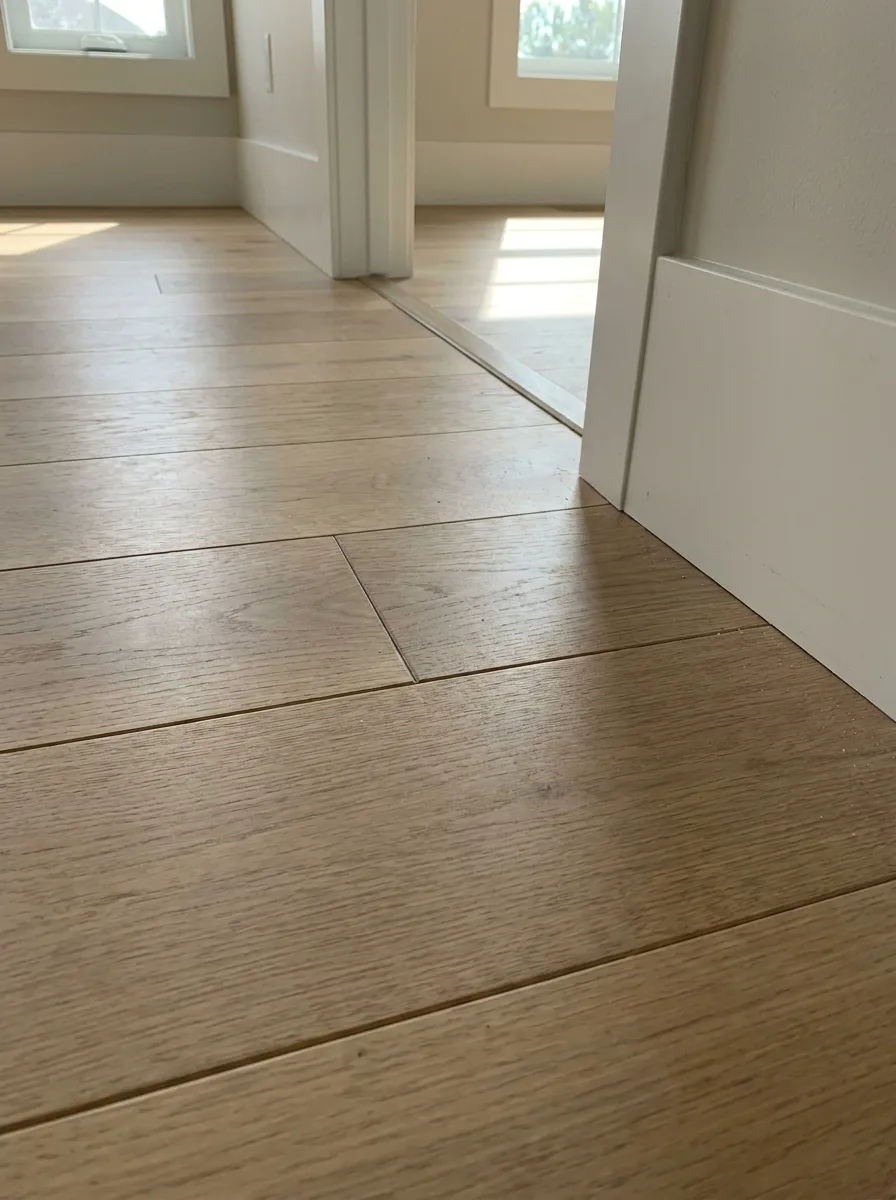
Seasonal gaps: what's normal
Small seasonal gaps that close again are normal. A few tips:
- Watch the gaps for a full year before you worry. If they close again in summer, it's normal movement.
- Don't fill seasonal gaps with wood filler or caulk. When the boards swell, the filler can be crushed or pushed up.
- Keep a humidity gauge in the room. It tells you when to run the humidifier.
- Gaps that stay open all year, or boards that cup or lift, are worth having a flooring pro look at.
See hardwood floors and Ottawa winters.
Protecting the floor
- Mats inside and outside every entrance to catch grit and salt, and runners in high traffic areas such as hallways, where foot traffic wears the finish first.
- Felt pads on furniture legs; chair mats under rolling chairs.
- No stiletto heels, if you can help it.
- Area rugs in busy paths, with rug pads that are safe for wood.
Pets and hardwood
Keep pets' nails trimmed. Put washable rugs where they run and turn. Wipe up water bowls and accidents right away. Matte finishes and wire-brushed or hand-scraped textures hide pet scratches better than glossy, smooth floors.
Protecting floors during a move
Moving day is hard on wood. Heavy items, grit and wet boots all arrive at once.
- Vacuum first, so grit isn't ground into the finish.
- Lay floor runners or protection board along the path from the door.
- Lift furniture. Don't drag it. Use sliders made for hard floors for short moves.
- Check dolly wheels for grit before they roll across the floor.
- Put felt pads on furniture legs before each piece is set down.
- Take up the coverings when you're done, then dry-clean and damp-mop.
Caring for hardwood in a rental
In a rental, the person cleaning the floor may not know the rules. A few habits help landlords and tenants:
- Give tenants the cleaning routine below in writing. Name the cleaner to use.
- Say plainly that wet mops and steam mops aren't allowed on the wood.
- Put mats at the entries and felt pads on any supplied furniture before move-in.
- Take dated photos of the floor at move-in and move-out.
- Check the finish in busy paths between tenants. Recoat before wear reaches the wood.
Recoat or refinish?
- Recoat (screen and recoat) when the finish looks dull or worn in traffic paths but the wood itself isn't damaged. It's quick and much cheaper than refinishing.
- Refinish (sand to bare wood) for deep scratches, grey worn wood or a colour change. Solid hardwood can be refinished several times.
Engineered hardwood is cleaned the same way as solid hardwood. But its wood top layer is thinner, so it can be sanded fewer times. How many depends on its wear-layer thickness. That makes protecting the finish even more important. See engineered vs solid hardwood.
Printable hardwood cleaning routine
| When | Task |
|---|---|
| Every day | Wipe spills. Sweep or dust-mop the kitchen, entry and other busy areas. |
| 2–3 times a week | Vacuum or dust-mop the whole floor. |
| Every week or two | Damp-mop busy rooms with the maker's cleaner, if the floor needs it. |
| Every few months | Deep clean. Replace worn felt pads. |
| Each season | Check indoor humidity. Shift rugs and furniture a little so the floor ages evenly in sunlight. |
| Winter | Vacuum salt at the door often. Wash mats. Check the humidifier. |
| Every few years | Check the finish in the busiest areas. Recoat before wear reaches the wood. |
| Oiled floors | Maintenance oil as often as the maker says. |
A steady cleaning routine does more than any product. Choosing a new floor? See our hardwood flooring installation page. More care guides: see all our floor care guides.
When refinishing isn't enough: signs it's time to replace a hardwood floor
Most worn hardwood doesn't need replacing. A recoat brings back a tired finish, a refinish removes deep scratches, and damaged boards can often be cut out and replaced on their own. Replacement makes sense when the wood itself can't be saved, or when the problem is under it:
- Engineered hardwood worn or sanded through its wear layer, with no wood left to sand
- Solid hardwood sanded so many times that nails or tongues are starting to show
- Boards that are black, soft or still cupped long after a leak was fixed and the room dried out
- Squeaks, soft spots or moving boards over a large area
- Gaps or cupping across the whole floor, year after year, with humidity in range
Black water stains usually mean water reached deep into the wood, and sanding rarely removes them. Widespread squeaks and movement often point to a loose or damaged subfloor. Gaps and cupping that never settle can come from moisture underneath or from how the floor was installed. A new finish won't fix any of these.
A replacement starts with taking up the old boards and checking the subfloor: it is fastened down, flattened, and dried out if there was a leak. The new flooring is brought to the room's conditions as the maker instructs, then installed. Our guide to installing hardwood flooring explains each step, and our hardwood flooring page covers solid and engineered options. For a basement or a room that stays damp, vinyl plank is often a safer choice than wood.
If you're not sure whether your floor needs a refinish or a new floor, we can look at it and give you a written quote: request a free estimate.
Frequently asked questions
Do you mop hardwood floors?
Yes, but only with a barely damp microfibre mop and a cleaner made for your floor's finish. Dust-mop or vacuum first to lift dirt and debris. A spray mop is fine if you mist lightly and use an approved cleaner. Never wet-mop or steam-mop.
How often should hardwood be cleaned?
Dust-mop or vacuum a few times a week. Damp-mop when the floor looks dull or sticky, usually every week or two in busy rooms.
Can I clean hardwood floors with vinegar and water?
It's best not to. Vinegar is acidic and can dull the finish over time. Use your floor maker's cleaner or a pH-neutral cleaner made for finished wood.
Can I clean hardwood floors with just water?
A microfibre pad barely damp with plain water is fine for a quick wipe on a sealed floor. Water alone doesn't cut grease well, and oiled floors need the maker's own soap. Never leave water standing on wood.
Is a robot vacuum safe on hardwood floors?
Generally, yes. Keep the wheels and brushes clean so they don't drag grit. Mopping robots should use very little water.
How do I get salt stains off hardwood?
Vacuum the salt first, then damp-mop with the maker's cleaner until the white film is gone. Mats inside and outside the door stop most of it.
How do I clean hardwood floors without streaks?
Use less cleaner and a clean microfibre pad. Mop along the boards, then buff with a dry pad. Streaks usually come from too much product or a dirty mop.